Jeffory A. Clymer - Böcker
Visar alla böcker från författaren Jeffory A. Clymer. Handla med fri frakt och snabb leverans.
2 produkter
2 produkter
528 kr
Skickas inom 5-8 vardagar
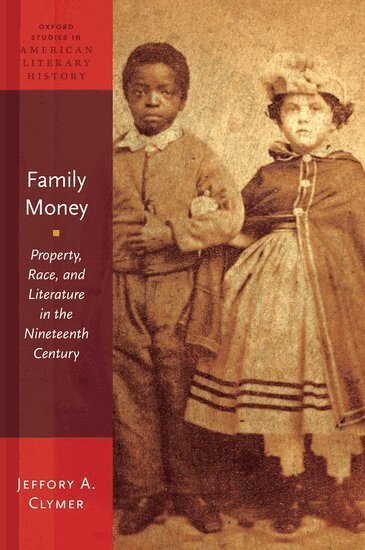
Family Money explores the histories of formerly enslaved women who tried to claim inheritances left to them by deceased owners; the household traumas of mixed-race slaves; post-Emancipation calls for reparations; and the economic fallout from anti-miscegenation marriage laws. Authors ranging from Nathaniel Hawthorne, Frank Webb, and Harriet Beecher Stowe to Charles Chesnutt and Lydia Maria Child recognized that intimate interracial relationships took myriad forms, often simultaneously sexual, marital, coercive, familial, pleasurable, and painful. Their fiction confirms that the consequences of these relationships for nineteenth-century Americans meant thinking about more than the legal structure of racial identity. Who could count as family (and when); who could own property (and when); and how racial difference was imagined (and why) were emphatically bound together. Demonstrating that notions of race were entwined with economics well beyond the direct issue of slavery, Family Money reveals interracial sexuality to be a volatile mixture of emotion, economics, and law that had dramatic, long-term financial consequences.
462 kr
Skickas inom 10-15 vardagar
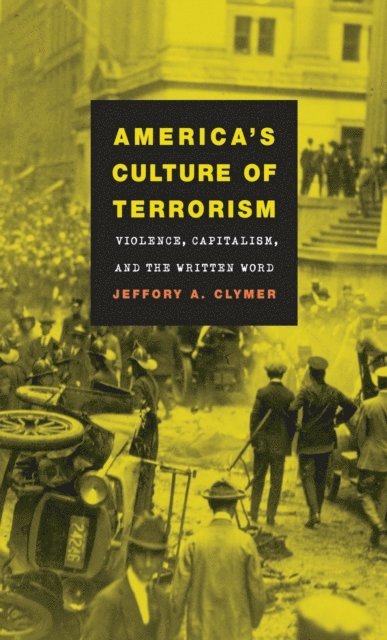
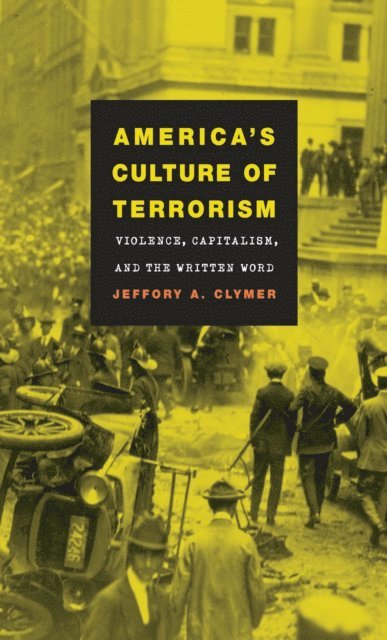
Although the terrorist attacks of 11 September 2001 shocked the world, America has confronted terrorism at home for well over a century. With the invention of dynamite in 1866, Americans began to worry about anonymous acts of mass violence in a way that differed from previous generations' fears of urban riots, slave uprisings, and mob violence. Focusing on the volatile period between the 1886 Haymarket bombing and the 1920 bombing outside J.P. Morgan's Wall Street office, Jeffory Clymer argues that economic and cultural displacements caused by the expansion of industrial capitalism directly influenced evolving ideas about terrorism. In this text, Clymer uncovers the roots of American terrorism and its impact on American identity by exploring the literary works of Henry James, Ida B. Wells, Jack London, Thomas Dixon and Covington Hall, as well as trial transcripts, media reports, and the cultural rhetoric surrounding terrorist acts of the day. He demonstrates that the rise of mass media and the pressures of the industrial wage-labour economy both fuelled the development of terrorism and shaped society's response to it. His analysis seeks to shed light on American literature and culture a century ago as well as to offer insights into the contemporary understanding of terrorism.