Jeffrey A. Kelly - Böcker
Visar alla böcker från författaren Jeffrey A. Kelly. Handla med fri frakt och snabb leverans.
3 produkter
3 produkter
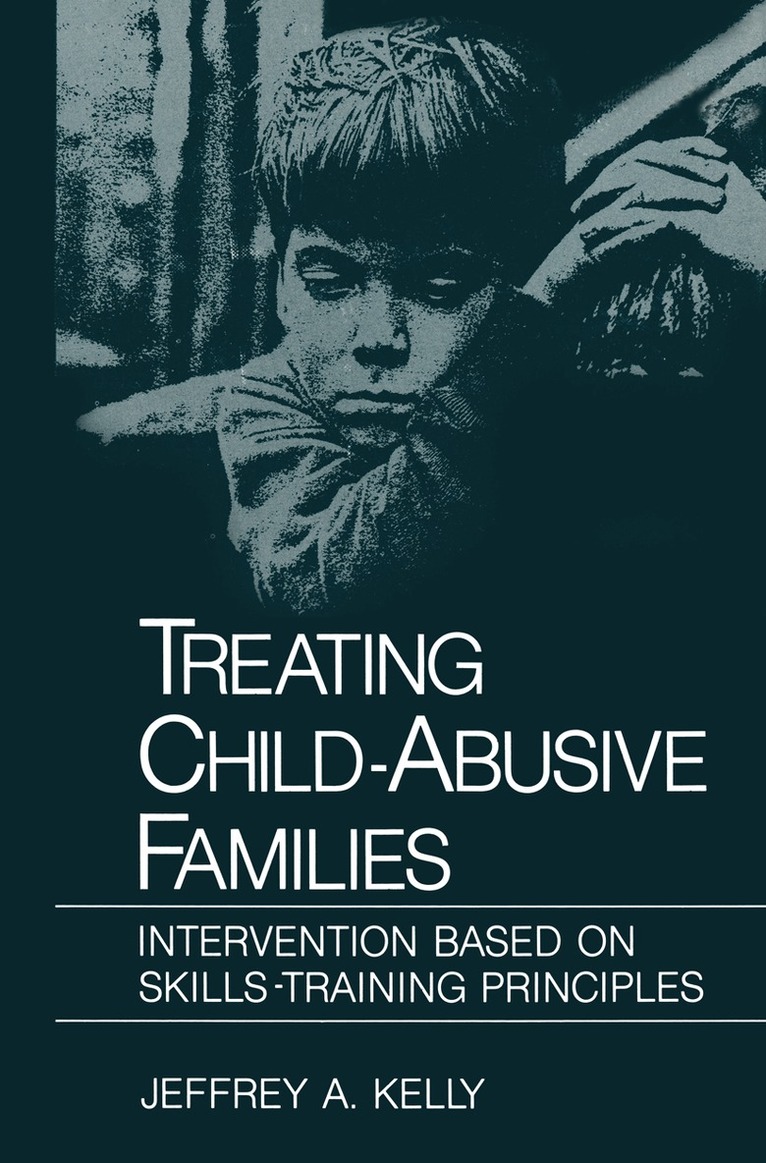
Treating Child-Abusive Families
Intervention Based on Skills-Training Principles
Inbunden, Engelska, 1983
520 kr
Skickas inom 10-15 vardagar
During the past ten years, the problem of child abuse has been the subject of increased attention both in the professional community and among the general public. The reasons for this widespread recogni tion are clear. First, professionals of many disciplines deal with child abusive families and do so in a variety of ways: Physicians, hospital staff, and teachers are often the first to assess a child as the victim of abuse; social workers and child-protective personnel investigate cases of suspected abuse; court and legal authorities make determinations concerning the needs of an abused child; and mental health profes sionals, including psychologists, social workers, and family coun selors, often have responsibility for treating abusive families. Few clinical problems have received this kind of widespread interdisci plinary recognition and, given the nature and seriousness of child abusive behavior, few problems receive such intensive attention within each profession's literature. A second factor responsible for increased study of child abuse is the fact that violence directed toward children is probably the most extreme form of family dysfunction seen by counselors, therapists, and other practitioners. While other types of child-management and anger-control problems occur far more frequently, the consequences of child-abusive behavior are much more serious than the conse quences of other problems seen in child or family clinics. It has been v vi PREFACE estimated that as many as 550,000 children are the targets of parental abuse in the country each year (Helfer & Kemper, 1976).
552 kr
Skickas inom 10-15 vardagar
Acquired immune deficiency syndrome (AIDS) poses a health threat unparalleled in modem times. Identified just a few years ago, AIDS and the human inunlmodeficiency virus (IDV) responsible for it affect millions of persons worldwide. AIDS has already become the leading cause of death among persons under 40 in some large American cities. From the beginning. it has been evident that AIDS carries unique psychological and social ramifications. In spite of its lethality, new cases of HIV infection are preventable if individuals can be assisted to make behavior changes to lessen or eliminate viral transmission. To the extent that we can develop effective primary prevention interventions, it will be possible to keep larger numbers of people from becoming infected with the mv virus. Psychological and social risk behavior change interventions, whether at the level of individual clients, groups, or entire communities, can playa key role-in fact, the only available role-in disease prevention. Patients with any life-threatening illness have psychological, social, and support needs. However, these needs are more pronounced and, often, less easily addressed for persons affected by AIDS. People in good clinical health but with HIV infection face years of worry concerning whether they will develop AIDS. Nearly 2 million Americans are currently in this precarious position; by 1991, 50 to 100 million persons worldwide are expected to share the same uncertainty.
Treating Child-Abusive Families
Intervention Based on Skills-Training Principles
Häftad, Engelska, 2013
552 kr
Skickas inom 10-15 vardagar
During the past ten years, the problem of child abuse has been the subject of increased attention both in the professional community and among the general public. The reasons for this widespread recogni tion are clear. First, professionals of many disciplines deal with child abusive families and do so in a variety of ways: Physicians, hospital staff, and teachers are often the first to assess a child as the victim of abuse; social workers and child-protective personnel investigate cases of suspected abuse; court and legal authorities make determinations concerning the needs of an abused child; and mental health profes sionals, including psychologists, social workers, and family coun selors, often have responsibility for treating abusive families. Few clinical problems have received this kind of widespread interdisci plinary recognition and, given the nature and seriousness of child abusive behavior, few problems receive such intensive attention within each profession's literature. A second factor responsible for increased study of child abuse is the fact that violence directed toward children is probably the most extreme form of family dysfunction seen by counselors, therapists, and other practitioners. While other types of child-management and anger-control problems occur far more frequently, the consequences of child-abusive behavior are much more serious than the conse quences of other problems seen in child or family clinics. It has been v vi PREFACE estimated that as many as 550,000 children are the targets of parental abuse in the country each year (Helfer & Kemper, 1976).