Jeffrey Poland - Böcker
Visar alla böcker från författaren Jeffrey Poland. Handla med fri frakt och snabb leverans.
4 produkter
4 produkter
1 688 kr
Skickas inom 5-8 vardagar
Physicalism is a programme for building a unified system of knowledge based on the view that everything is a manifestation of the physical aspects of existence. Jeffrey Poland presents a comprehensive exploration of the philosophical foundations of this programme. He investigates the core ideas, motivating values, and presuppositions of physicalism; the constraints upon an adequate formulation of physicalist doctrine; the epistemological and modal status, the scope, and the methodological roles of physicalist principles. He reviews and evaluates major objections to the programme, and considers its significance for philosophy, science, society, and individual persons. An important theme of the book is that recent attempts to formulate a `non-reductive' version of physicalism are inadequate and that the role of supervenience relations in expressions of physicalist thought is significantly limited.This is the first sustained and systematic discussion of the major philosophical aspects of the physicalist programme. Professor Poland also examines the relations between physicalism and other philosophical positions, such as realism, empiricism, and relativism, and suggests that physicalism is compatible with a tolerant pluralism in the philosophical, cultural, and personal domains.
404 kr
Tillfälligt slut
Extraordinary Science and Psychiatry
Responses to the Crisis in Mental Health Research
Häftad, Engelska, 2024
703 kr
Skickas inom 5-8 vardagar
580 kr
Skickas inom 10-15 vardagar
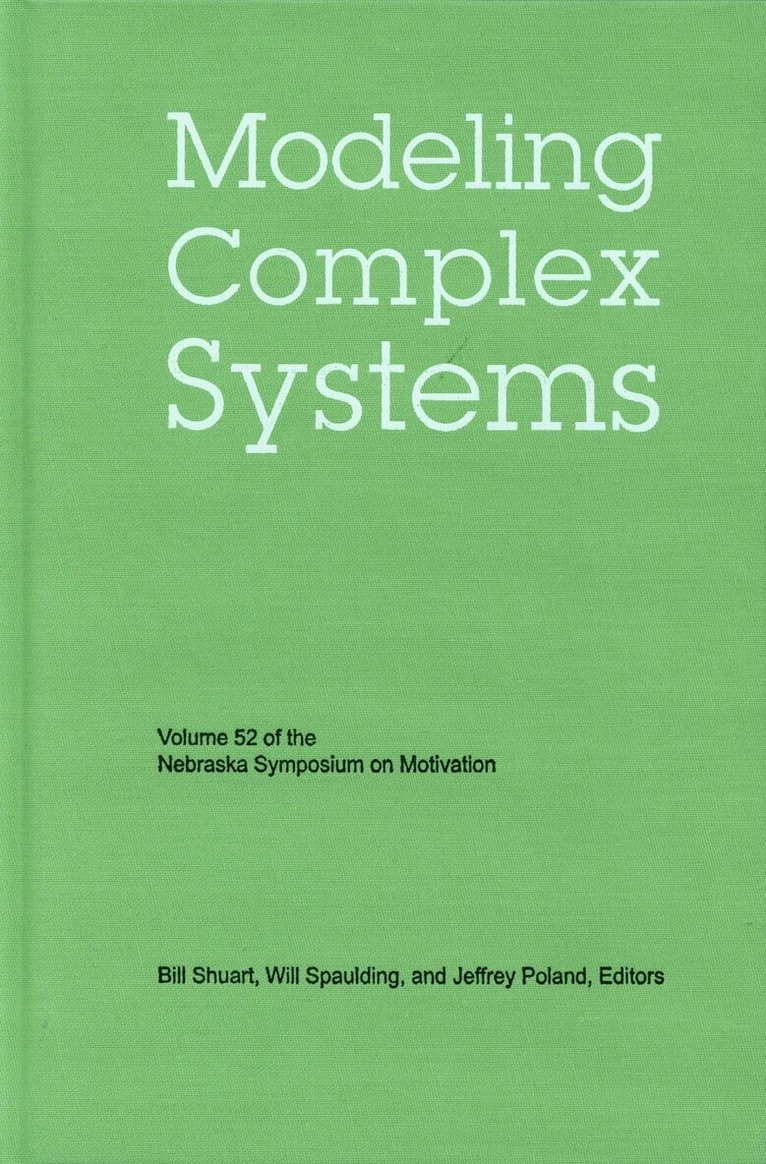
Capturing the complexity of human behavior has been a recurring theme in the Nebraska Symposium on Motivation. The contributors to this volume describe contemporary approaches to the modeling of complex cognitive and behavioral processes, ranging from molecular to molar phenomena. Although the essays reflect a wide range of theoretical and epistemic perspectives, they all incorporate complex frameworks of dynamic, systemlike relationships involving perception, learning, concept formation, emotion, motivation, intention, behavior, and the social context in which behavior occurs. The editors introduce the volume with a survey of the lifetime of the symposium, showing the development of ideas about behavioral and psychological complexity for over fifty years. A special feature of this collection is its emphasis on practical applications of the conceptual frameworks in which they work. The contributors provide examples of translational research ranging from clinical neuropsychology to self-actualization, from medical informatics to industrial psychology, from programmed learning to psychiatric rehabilitation.