Jeffrey Reeves - Böcker
Visar alla böcker från författaren Jeffrey Reeves. Handla med fri frakt och snabb leverans.
6 produkter
6 produkter
Chinese-Japanese Competition and the East Asian Security Complex
Vying for Influence
Häftad, Engelska, 2020
635 kr
Skickas inom 10-15 vardagar
This volume examines contemporary diplomatic, economic, and security competition between China and Japan in the Asia-Pacific region. The book outlines the role that Sino-Japanese competition plays in East Asian security, an area of study largely overlooked in contemporary writing on Asian security, which tends to focus on US–China relations and/or US hegemony in Asia. The volume focuses on Chinese and Japanese foreign policy under President Xi Jinping and Prime Minister Shinzō Abe, and regional security dynamics within and between Asian states/institutions since 2012. It employs regional security complex theory as a theoretical framework to view Chinese and Japanese competition in the Asian region. In doing so, the volume draws on a "levels of analysis" approach to demonstrate the value in looking at security in the Asia-Pacific from a regional rather than global perspective. The vast majority of existing research on the region’s security tends to focus on great power relations and treats Asia as a sub-region within the larger global security architecture. In contrast, this volume shows how competition between the two largest Asian economies shapes East Asia’s security environment and drives security priorities across Asia’s sub-regions. As such, this collection provides an important contribution to discussion on security in Asia; one with potential to influence both political and military policy makers, security practitioners, and scholars. This book will be of much interest to students of Asian politics, regional security, diplomacy, and international relations.
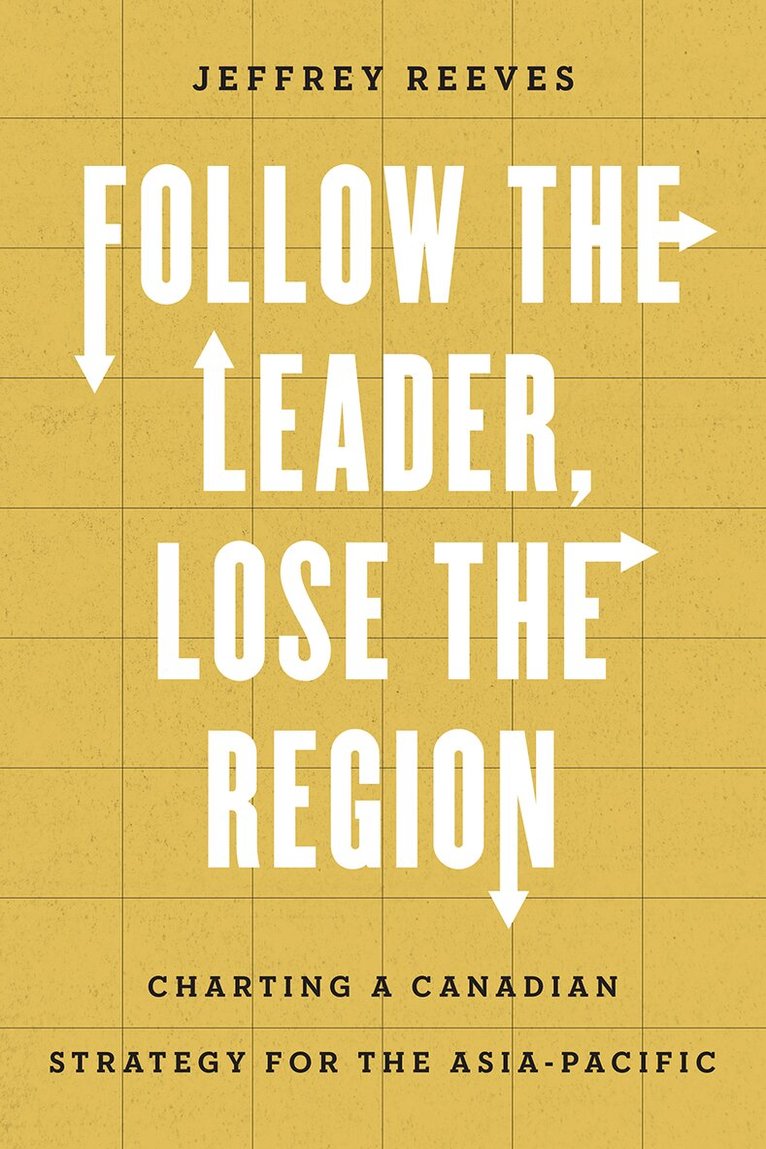
Follow the Leader, Lose the Region
Charting a Canadian Strategy for the Asia-Pacific
Inbunden, Engelska, 2023
533 kr
Skickas inom 7-10 vardagar
As competition among the traditional great powers in the Asia region intensifies, Canada faces a stark choice: Should it align its foreign policy with the US-led free and open Indo-Pacific strategy? Shared values and material ties give Canada a clear incentive to follow the lead of the United States and Western-aligned democracies in the region. However, there are other considerations to take into account.Follow the Leader presents the case for the development of a foreign policy based on understanding how Asia sees itself rather than Western presumptions. Examining a range of key issues, it draws on Asian scholarship, leadership statements, polling, and media to demonstrate Western misunderstanding of regional developments and to outline alternative, regionally based perspectives on Asia's contemporary dynamics.This critical analysis urges the Canadian government to chart an independent policy, arguing that whatever Canada might gain from following its traditional allies, it equally stands to lose by aligning itself with a consortium of states committed to self-preservation over regional stability.
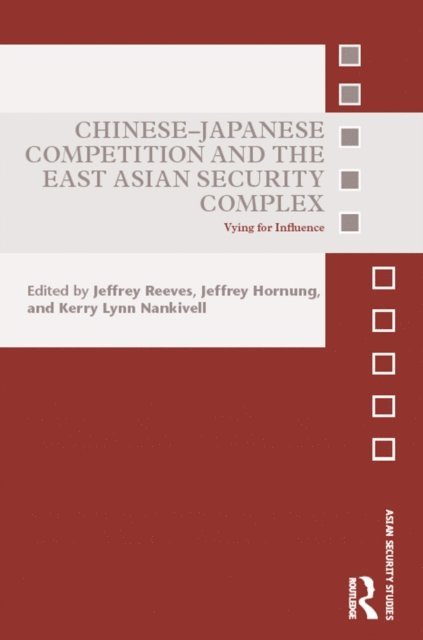
Chinese-Japanese Competition and the East Asian Security Complex
Vying for Influence
Inbunden, Engelska, 2017
2 021 kr
Skickas inom 10-15 vardagar
This volume examines contemporary diplomatic, economic, and security competition between China and Japan in the Asia-Pacific region. The book outlines the role that Sino-Japanese competition plays in East Asian security, an area of study largely overlooked in contemporary writing on Asian security, which tends to focus on US–China relations and/or US hegemony in Asia. The volume focuses on Chinese and Japanese foreign policy under President Xi Jinping and Prime Minister Shinzō Abe, and regional security dynamics within and between Asian states/institutions since 2012. It employs regional security complex theory as a theoretical framework to view Chinese and Japanese competition in the Asian region. In doing so, the volume draws on a "levels of analysis" approach to demonstrate the value in looking at security in the Asia-Pacific from a regional rather than global perspective. The vast majority of existing research on the region’s security tends to focus on great power relations and treats Asia as a sub-region within the larger global security architecture. In contrast, this volume shows how competition between the two largest Asian economies shapes East Asia’s security environment and drives security priorities across Asia’s sub-regions. As such, this collection provides an important contribution to discussion on security in Asia; one with potential to influence both political and military policy makers, security practitioners, and scholars. This book will be of much interest to students of Asian politics, regional security, diplomacy, and international relations.
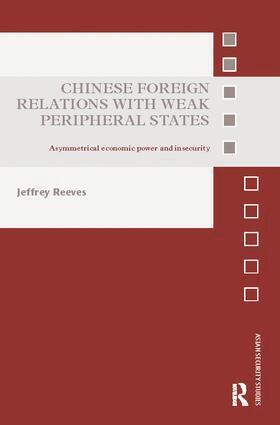
Chinese Foreign Relations with Weak Peripheral States
Asymmetrical Economic Power and Insecurity
Häftad, Engelska, 2017
671 kr
Skickas inom 10-15 vardagar
This book examines China’s relations with its weak peripheral states through the theoretical lens of structural power and structural violence. China’s foreign policy concepts toward its weak neighbouring states, such as the ‘One Belt, One Road’ strategy, are premised on the assumption that economic exchange and a commitment to common development are the most effective means of ensuring stability on its borders. This book, however, argues that China’s overreliance on economic exchange as the basis for its bilateral relations contains inherently self-defeating qualities that have contributed and can further contribute to instability and insecurity within China’s periphery. Unequal economic exchange between China and its weak neighbours results in Chinese influence over the state’s domestic institutions, what this book refers to as ‘structural power’. Chinese structural power, in turn, can undermine the state’s development, contribute to social unrest, and exacerbate existing state/society tensions—what this book refers to as ‘structural violence’. For China, such outcomes lead to instability within its peripheral environment and raise its vulnerability to security threats stemming from nationalism, separatism, terrorism, transnational organised crime, and drug trafficking, among others. This book explores the causality between China’s economically-reliant foreign policy and insecurity in its weak peripheral states and considers the implications for China’s security environment and foreign policy. This book will be of much interest to students of Chinese politics, Asian security studies, international political economy and IR in general.
Chinese Foreign Relations with Weak Peripheral States
Asymmetrical Economic Power and Insecurity
Inbunden, Engelska, 2015
2 222 kr
Skickas inom 10-15 vardagar
This book examines China’s relations with its weak peripheral states through the theoretical lens of structural power and structural violence. China’s foreign policy concepts toward its weak neighbouring states, such as the ‘One Belt, One Road’ strategy, are premised on the assumption that economic exchange and a commitment to common development are the most effective means of ensuring stability on its borders. This book, however, argues that China’s overreliance on economic exchange as the basis for its bilateral relations contains inherently self-defeating qualities that have contributed and can further contribute to instability and insecurity within China’s periphery. Unequal economic exchange between China and its weak neighbours results in Chinese influence over the state’s domestic institutions, what this book refers to as ‘structural power’. Chinese structural power, in turn, can undermine the state’s development, contribute to social unrest, and exacerbate existing state/society tensions—what this book refers to as ‘structural violence’. For China, such outcomes lead to instability within its peripheral environment and raise its vulnerability to security threats stemming from nationalism, separatism, terrorism, transnational organised crime, and drug trafficking, among others. This book explores the causality between China’s economically-reliant foreign policy and insecurity in its weak peripheral states and considers the implications for China’s security environment and foreign policy. This book will be of much interest to students of Chinese politics, Asian security studies, international political economy and IR in general.
1 486 kr
Skickas inom 5-8 vardagar
In a changing security environment shaken by the United States' pivot to Asia, China's rise, growing economic interdependence, new institutional frameworks, and long-standing tensions, regional security dynamics within East Asia have changed profoundly. Non-Traditional Security in East Asia assesses how and why these and other developments have affected East Asian security regimes in the early 21st Century. This volume brings together experts in different areas of traditional and non-traditional security — ranging from arms and weapons proliferation to climate change and biosecurity — to analyze the recent evolution, current state and possible future of East Asian security dynamics which have been built on dynamics dating back to the Cold War. This volume's holistic exploration of East Asian security makes it a sophisticated introduction for students, researchers and policymakers who are interested in East Asian security and international relations.