Jeffrey Richards – författare
730 kr
Skickas inom 10-15 vardagar
2 322 kr
Skickas inom 10-15 vardagar
2 756 kr
Skickas inom 10-15 vardagar
2 322 kr
Skickas inom 10-15 vardagar
313 kr
Skickas inom 10-15 vardagar
349 kr
Skickas inom 5-8 vardagar
1 013 kr
Läs direkt efter köp
405 kr
Läs direkt efter köp
405 kr
Läs direkt efter köp
386 kr
Läs direkt efter köp
511 kr
Läs direkt efter köp
511 kr
Läs direkt efter köp
841 kr
Läs direkt efter köp
841 kr
Läs direkt efter köp
2 900 kr
Skickas inom 10-15 vardagar
2 676 kr
Skickas inom 10-15 vardagar
597 kr
Skickas inom 10-15 vardagar
2 816 kr
Skickas inom 10-15 vardagar
934 kr
Skickas inom 10-15 vardagar
702 kr
Skickas inom 10-15 vardagar
702 kr
Skickas inom 10-15 vardagar
702 kr
Skickas inom 10-15 vardagar
1 110 kr
Läs direkt efter köp
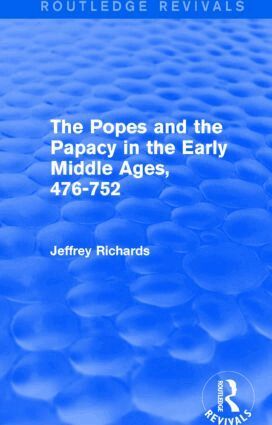
There has been a tendency to the view the history of the early medieval papacy predominantly in ideological terms, which has resulted in the over-exaggeration of the idea of the papal monarchy. In this study, first published in 1979, Jeffrey Richards questions this view, arguing that whilst the papacy’s power and responsibility grew during the period under discussion, it did so by a series of historical accidents rather than a coherent radical design.
The title redresses the imbalance implicit in the monarchical interpretation, and emphasizes other important political, administrative and social aspects of papal history. As such it will be of particular value to students interested in the history of the Church; in particular, the development of the early medieval papacy, and the shifting policies and characteristics of the popes themselves.
1 110 kr
Läs direkt efter köp
There has been a tendency to the view the history of the early medieval papacy predominantly in ideological terms, which has resulted in the over-exaggeration of the idea of the papal monarchy. In this study, first published in 1979, Jeffrey Richards questions this view, arguing that whilst the papacy’s power and responsibility grew during the period under discussion, it did so by a series of historical accidents rather than a coherent radical design.
The title redresses the imbalance implicit in the monarchical interpretation, and emphasizes other important political, administrative and social aspects of papal history. As such it will be of particular value to students interested in the history of the Church; in particular, the development of the early medieval papacy, and the shifting policies and characteristics of the popes themselves.
706 kr
Läs direkt efter köp
Gregory the Great, whose reign spanned the years between 590 and 604 A.D., was one of the most remarkable figures of the early medieval Papacy. Aristocrat, administrator, teacher and scholar, he ascended the throne of St Peter at a time of acute crisis for the Roman Church.
Consul of God, first published in 1980, revises the traditional picture of Pope Gregory. It examines how he organised the central administration of the Papacy and his unremitting war on heresy and schism. Gregory also pioneered a new pastoral tradition in learning, promoted monasticism, and trained the episcopate.
Jeffrey Richards demonstrates that Gregory was both a conservative and a pioneer, and just as his reign looked forward to the medieval world it also looked back to a vanishing world of imperial unity. He was thus the last representative of those Roman senators whose fortitude and energy he emulated, earning the epitaph ‘Consul of God’.
706 kr
Läs direkt efter köp
Gregory the Great, whose reign spanned the years between 590 and 604 A.D., was one of the most remarkable figures of the early medieval Papacy. Aristocrat, administrator, teacher and scholar, he ascended the throne of St Peter at a time of acute crisis for the Roman Church.
Consul of God, first published in 1980, revises the traditional picture of Pope Gregory. It examines how he organised the central administration of the Papacy and his unremitting war on heresy and schism. Gregory also pioneered a new pastoral tradition in learning, promoted monasticism, and trained the episcopate.
Jeffrey Richards demonstrates that Gregory was both a conservative and a pioneer, and just as his reign looked forward to the medieval world it also looked back to a vanishing world of imperial unity. He was thus the last representative of those Roman senators whose fortitude and energy he emulated, earning the epitaph ‘Consul of God’.
779 kr
Läs direkt efter köp
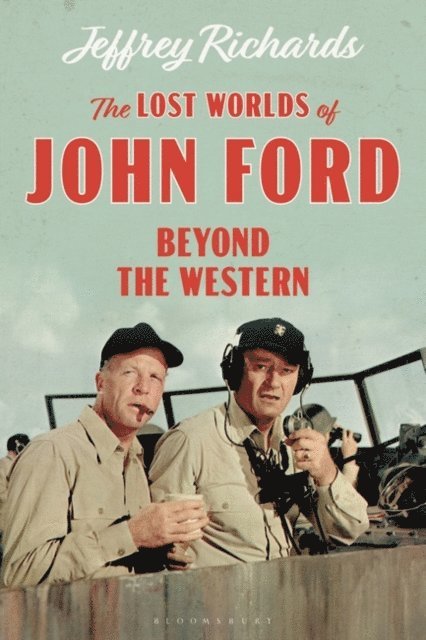
Film is an important source of social history, as well as having been a popular art form from the early twentieth century. This study shows how a society, consciously or unconsciously, is mirrored in its cinema. It considers the role of the cinema in dramatizing popular beliefs and myths, and takes three case studies – American populism, British imperialism, German Nazism – to explain how a nation’s pressures, tensions and hopes come through in its films. Examining the American cinema is accomplished by analysing the careers of three great directors, John Ford, Frank Capra and Leo McCarey, while the British and German cinemas are studied by theme. The analysis of the British Empire as seen in film broke exciting new ground with a pioneering account of ‘the cinema of Empire’ when it was first published in 1973.
With full filmographies and a carefully selected bibliography it is an outstanding work of reference and its lively approach makes it a delight to read.
Reviews of the original edition:
‘A work of considerable force and considerable wit.’ – Clive James, Observer
‘…a work that is original, mentally stimulating and most pleasurable to read.’ – Focus on Film
779 kr
Läs direkt efter köp
Film is an important source of social history, as well as having been a popular art form from the early twentieth century. This study shows how a society, consciously or unconsciously, is mirrored in its cinema. It considers the role of the cinema in dramatizing popular beliefs and myths, and takes three case studies – American populism, British imperialism, German Nazism – to explain how a nation’s pressures, tensions and hopes come through in its films. Examining the American cinema is accomplished by analysing the careers of three great directors, John Ford, Frank Capra and Leo McCarey, while the British and German cinemas are studied by theme. The analysis of the British Empire as seen in film broke exciting new ground with a pioneering account of ‘the cinema of Empire’ when it was first published in 1973.
With full filmographies and a carefully selected bibliography it is an outstanding work of reference and its lively approach makes it a delight to read.
Reviews of the original edition:
‘A work of considerable force and considerable wit.’ – Clive James, Observer
‘…a work that is original, mentally stimulating and most pleasurable to read.’ – Focus on Film
807 kr
Läs direkt efter köp
This fascinating study of the genre of swashbuckling films received wide critical acclaim when it was first published in 1977. Jeffrey Richards assesses the contributions to the genre of directors, designers and fencing masters, as well as of the stars themselves, and devotes several chapters to the principal subjects if the swashbucklers – pirates, highwaymen, cavaliers and knights. The result is to recall, however fleetingly, the golden days of the silver screen.
Reviews of the original edition:
‘An intelligent, scholarly, well-written account of adventure films, this work is sensitive both to cinema history and to the literary origins of the "swashbuckler"….Essential for any library with books on film, it may very well be the definitive book on its subject.’ – Library Journal
807 kr
Läs direkt efter köp
This fascinating study of the genre of swashbuckling films received wide critical acclaim when it was first published in 1977. Jeffrey Richards assesses the contributions to the genre of directors, designers and fencing masters, as well as of the stars themselves, and devotes several chapters to the principal subjects if the swashbucklers – pirates, highwaymen, cavaliers and knights. The result is to recall, however fleetingly, the golden days of the silver screen.
Reviews of the original edition:
‘An intelligent, scholarly, well-written account of adventure films, this work is sensitive both to cinema history and to the literary origins of the "swashbuckler"….Essential for any library with books on film, it may very well be the definitive book on its subject.’ – Library Journal