Jenna M. Loyd - Böcker
Visar alla böcker från författaren Jenna M. Loyd. Handla med fri frakt och snabb leverans.
5 produkter
5 produkter
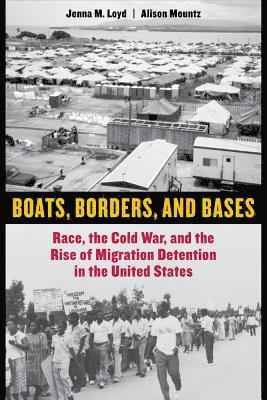
Boats, Borders, and Bases
Race, the Cold War, and the Rise of Migration Detention in the United States
Inbunden, Engelska, 2018
1 352 kr
Skickas inom 3-6 vardagar
Discussions on U.S. border enforcement have traditionally focused on the highly charged U.S.-Mexico boundary, inadvertently obscuring U.S.-Caribbean relations and the concerning asylum and detention policies unfolding there. Boats, Borders, and Bases offers the missing, racialized histories of the U.S. detention system and its relationship to the interception and detention of Haitian and Cuban migrants. It argues that the U.S. response to Cold War Caribbean migrations actually established the legal and institutional basis for contemporary migration and detention and border deterrent practices in the U.S. This book promises to make a significant contribution to a truer understanding of the history and geography of the U.S. detention system overall.
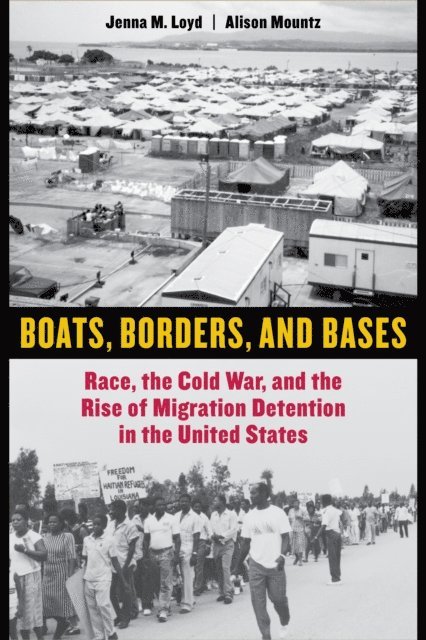
Boats, Borders, and Bases
Race, the Cold War, and the Rise of Migration Detention in the United States
Häftad, Engelska, 2018
224 kr
Skickas inom 7-10 vardagar
Discussions on U.S. border enforcement have traditionally focused on the highly charged U.S.-Mexico boundary, inadvertently obscuring U.S.-Caribbean relations and the concerning asylum and detention policies unfolding there. Boats, Borders, and Bases offers the missing, racialized histories of the U.S. detention system and its relationship to the interception and detention of Haitian and Cuban migrants. It argues that the U.S. response to Cold War Caribbean migrations actually established the legal and institutional basis for contemporary migration and detention and border deterrent practices in the U.S. This book promises to make a significant contribution to a truer understanding of the history and geography of the U.S. detention system overall.
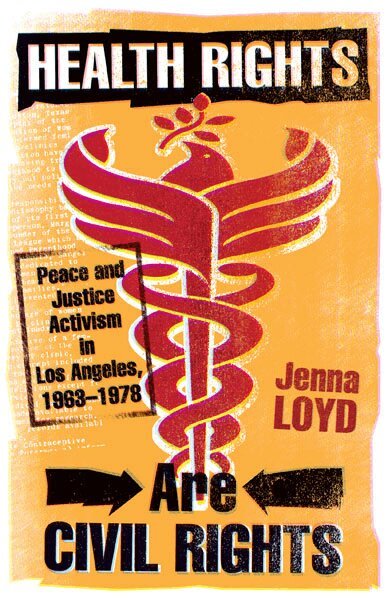
Health Rights Are Civil Rights
Peace and Justice Activism in Los Angeles, 1963–1978
Häftad, Engelska, 2014
284 kr
Skickas inom 7-10 vardagar
Health Rights Are Civil Rights tells the story of the important place of health in struggles for social change in Los Angeles in the 1960s and 1970s. Jenna M. Loyd describes how Black freedom, antiwar, welfare rights, and women’s movement activists formed alliances to battle oppressive health systems and structural violence, working to establish the principle that health is a right. For a time-with President Nixon, big business, and organized labor in agreement on national health insurance-even universal health care seemed a real possibility.Health Rights Are Civil Rights documents what many Los Angeles activists recognized: that militarization was in part responsible for the inequalities in American cities. This challenging new reading of suburban white flight explores how racial conflicts transpired across a Southland landscape shaped by defense spending. While the war in Vietnam constrained social spending, the New Right gained strength by seizing on the racialized and gendered politics of urban crisis to resist urban reinvestment and social programs. Recapturing a little-known current of the era’s activism, Loyd uses an intersectional approach to show why this diverse group of activists believed that democratic health care and ending war making were essential to create cities of freedom, peace, and social justice-a vision that goes unanswered still today.
1 200 kr
Skickas inom 5-8 vardagar
The crisis of borders and prisons can be seen starkly in statistics. In 2011 some 1,500 migrants died trying to enter Europe, and the United States deported nearly 400,000 and imprisoned some 2.3 million people—more than at any other time in history. International borders are increasingly militarized places embedded within domestic policing and imprisonment and entwined with expanding prison-industrial complexes. Beyond Walls and Cages offers scholarly and activist perspectives on these issues and explores how the international community can move toward a more humane future.Working at a range of geographic scales and locations, contributors examine concrete and ideological connections among prisons, migration policing and detention, border fortification, and militarization. They challenge the idea that prisons and borders create safety, security, and order, showing that they can be forms of coercive mobility that separate loved ones, disempower communities, and increase shared harms of poverty. Walls and cages can also fortify wealth and power inequalities, racism, and gender and sexual oppression.As governments increasingly rely on criminalization and violent measures of exclusion and containment, strategies for achieving change are essential. Beyond Walls and Cages develops abolitionist, no borders, and decolonial analyses and methods for social change, showing how seemingly disconnected forms of state violence are interconnected. Creating a more just and free world—whether in the Mexico-U.S. borderlands, the Morocco-Spain region, South Africa, Montana, or Philadelphia—requires that people who are most affected become central to building alternatives to global crosscurrents of criminalization and militarization.
487 kr
Skickas inom 5-8 vardagar
The crisis of borders and prisons can be seen starkly in statistics. In 2011 some 1,500 migrants died trying to enter Europe, and the United States deported nearly 400,000 and imprisoned some 2.3 million people—more than at any other time in history. International borders are increasingly militarized places embedded within domestic policing and imprisonment and entwined with expanding prison-industrial complexes. Beyond Walls and Cages offers scholarly and activist perspectives on these issues and explores how the international community can move toward a more humane future.Working at a range of geographic scales and locations, contributors examine concrete and ideological connections among prisons, migration policing and detention, border fortification, and militarization. They challenge the idea that prisons and borders create safety, security, and order, showing that they can be forms of coercive mobility that separate loved ones, disempower communities, and increase shared harms of poverty. Walls and cages can also fortify wealth and power inequalities, racism, and gender and sexual oppression.As governments increasingly rely on criminalization and violent measures of exclusion and containment, strategies for achieving change are essential. Beyond Walls and Cages develops abolitionist, no borders, and decolonial analyses and methods for social change, showing how seemingly disconnected forms of state violence are interconnected. Creating a more just and free world—whether in the Mexico-U.S. borderlands, the Morocco-Spain region, South Africa, Montana, or Philadelphia—requires that people who are most affected become central to building alternatives to global crosscurrents of criminalization and militarization.