Jennifer Rauch - Böcker
Visar alla böcker från författaren Jennifer Rauch. Handla med fri frakt och snabb leverans.
5 produkter
5 produkter
459 kr
Skickas inom 5-8 vardagar
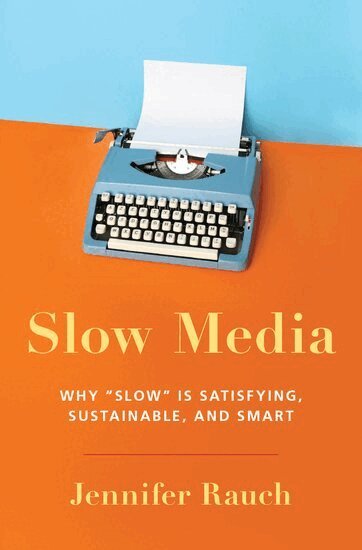
Today we recognize that we have a different relationship to media technology--and to information more broadly--than we had even five years ago. We are connected to the news media, to our jobs, and to each other, 24 hours a day. But many people have found their mediated lives to be too fast, too digital, too disposable, and too distracted. This group--which includes many technologists and young people--believes that current practices of digital media production and consumption are unsustainable, and works to promote alternate ways of living. Until recently, sustainable media practices have been mostly overlooked, or thought of as a counterculture. But, as Jennifer Rauch argues in this book, the concept of sustainable media has taken hold and continues to gain momentum. Slow media is not merely a lifestyle choice, she argues, but has potentially great implications for our communities and for the natural world. In eight chapters, Rauch offers a model of sustainable media that is slow, green, and mindful. She examines the principles of the Slow Food movement--humanism, localism, simplicity, self-reliance, and fairness--and applies them to the use and production of media. Challenging the perception that digital media is necessarily eco-friendly, she examines green media, which offers an alternative to a current commodities system that produces electronic waste and promotes consumption of nonrenewable resources. Lastly, she draws attention to mindfulness in media practice-- "mindful emailing" or "contemplative computing" for example--arguing that media has significant impacts on human health and psychological wellbeing. Slow Media will ultimately help readers understand the complex and surprising relationships between everyday media choices, human well-being, and the natural world. It has the potential to transform the way we produce and use media by nurturing a media ecosystem that is more satisfying for people, and more sustainable for the planet.
359 kr
Skickas inom 5-8 vardagar
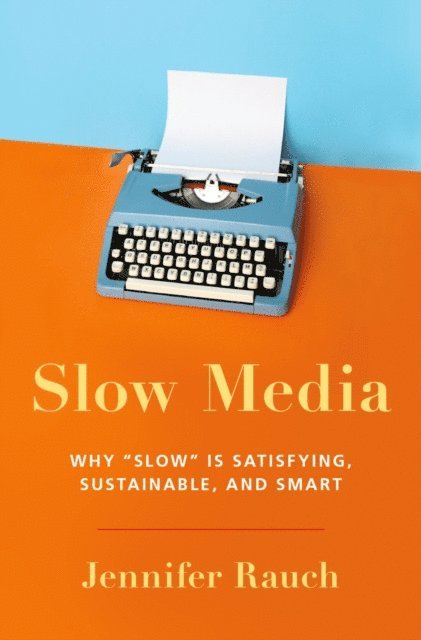
Today we recognize that we have a different relationship to media technology--and to information more broadly--than we had even five years ago. We are connected to the news media, to our jobs, and to each other, 24 hours a day. But many people have found their mediated lives to be too fast, too digital, too disposable, and too distracted. This group--which includes many technologists and young people--believes that current practices of digital media production and consumption are unsustainable, and works to promote alternate ways of living. Until recently, sustainable media practices have been mostly overlooked, or thought of as a counterculture. But, as Jennifer Rauch argues in this book, the concept of sustainable media has taken hold and continues to gain momentum. Slow media is not merely a lifestyle choice, she argues, but has potentially great implications for our communities and for the natural world. In eight chapters, Rauch offers a model of sustainable media that is slow, green, and mindful. She examines the principles of the Slow Food movement--humanism, localism, simplicity, self-reliance, and fairness--and applies them to the use and production of media. Challenging the perception that digital media is necessarily eco-friendly, she examines green media, which offers an alternative to a current commodities system that produces electronic waste and promotes consumption of nonrenewable resources. Lastly, she draws attention to mindfulness in media practice--"mindful emailing" or "contemplative computing," for example--arguing that media has significant impacts on human health and psychological wellbeing. Slow Media will ultimately help readers understand the complex and surprising relationships between everyday media choices, human well-being, and the natural world. It has the potential to transform the way we produce and use media by nurturing a media ecosystem that is more satisfying for people, and more sustainable for the planet.
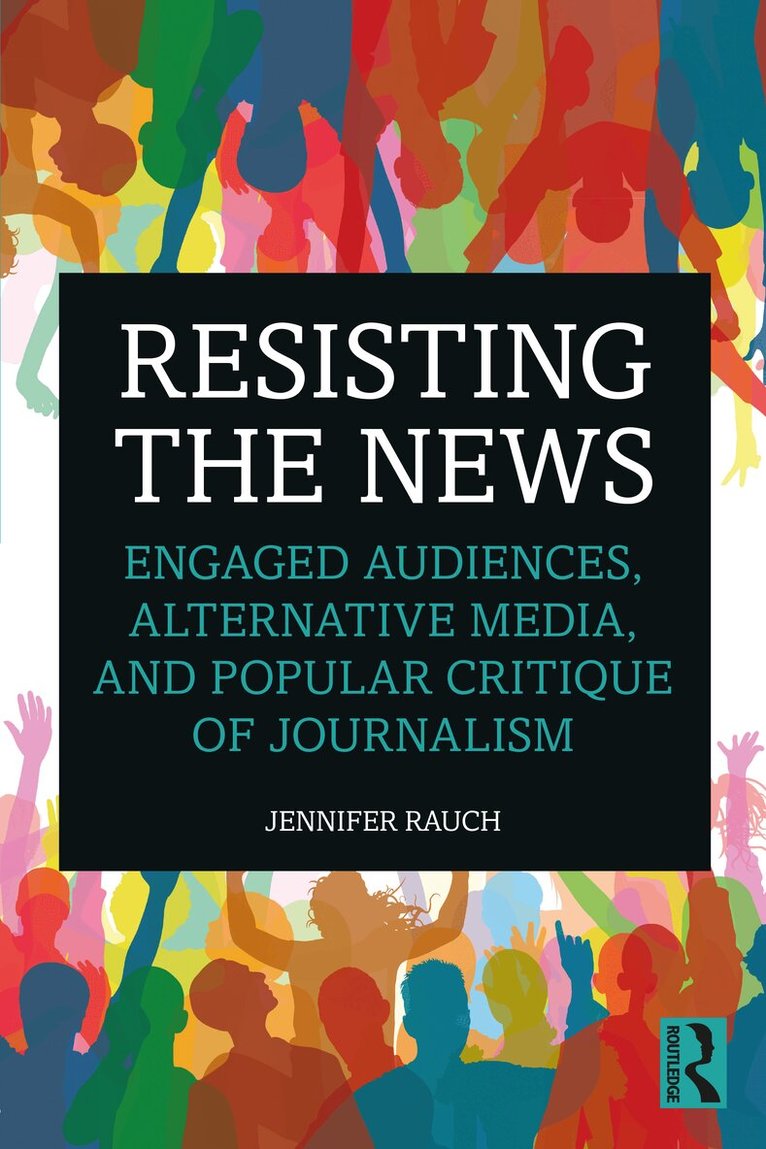
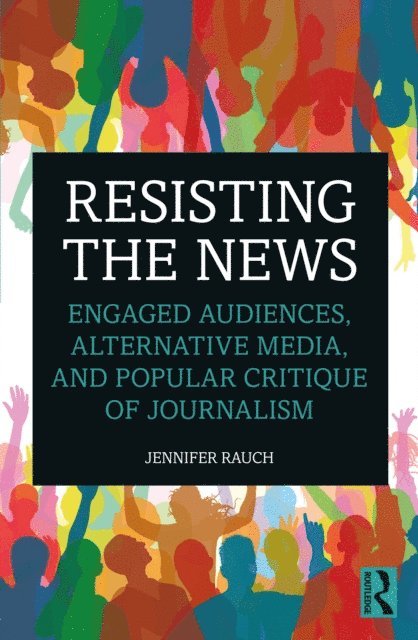
Resisting the News
Engaged Audiences, Alternative Media, and Popular Critique of Journalism
Häftad, Engelska, 2020
563 kr
Skickas inom 10-15 vardagar
Resisting the News brings together unique insights from activists and alternative-media users to offer a distinctive perspective on the problems of journalism today—and how to fix them.Using critical-cultural theory and, in particular, the conceptual frameworks of ritual communication and interpretive communities, this book examines how audiences filter their interpretations of mainstream news through the prisms of their identities and experiences with alternative media and political protest. Jennifer Rauch gives voice to alternative-media audiences and illuminates the cultural resources, values, assumptions, critical skills, and discursive strategies through which they make sense of their news environments. Drawing on a 15-year research project, Rauch employs a variety of qualitative, quantitative, and quasi-ethnographic methods, including focus groups, media-use diaries, close-ended surveys, and open-ended questions, to paint a layered portrait of liberal and conservative critiques of journalism.Shedding new light on popular theories about "how news works" and about "mass" audiences, this book will be useful to students, scholars, and teachers of political communication, journalism studies, media studies, and critical-cultural studies.
Resisting the News
Engaged Audiences, Alternative Media, and Popular Critique of Journalism
Inbunden, Engelska, 2020
1 808 kr
Skickas
Resisting the News brings together unique insights from activists and alternative-media users to offer a distinctive perspective on the problems of journalism today—and how to fix them.Using critical-cultural theory and, in particular, the conceptual frameworks of ritual communication and interpretive communities, this book examines how audiences filter their interpretations of mainstream news through the prisms of their identities and experiences with alternative media and political protest. Jennifer Rauch gives voice to alternative-media audiences and illuminates the cultural resources, values, assumptions, critical skills, and discursive strategies through which they make sense of their news environments. Drawing on a 15-year research project, Rauch employs a variety of qualitative, quantitative, and quasi-ethnographic methods, including focus groups, media-use diaries, close-ended surveys, and open-ended questions, to paint a layered portrait of liberal and conservative critiques of journalism.Shedding new light on popular theories about "how news works" and about "mass" audiences, this book will be useful to students, scholars, and teachers of political communication, journalism studies, media studies, and critical-cultural studies.
3 565 kr
Kommande
In the face of increasingly diverse and de-centred news landscapes, this Routledge Handbook critically examines the editorial judgements and practices involved in alternative and participatory news production, how these forms interact with mainstream journalism, and how audiences respond to and engage with them.Theories and empirical understandings of alternative journalism remain highly contested, including why and how to construct boundaries between alternative and mainstream journalism. Taking this ambiguity as its starting point, this volume problematizes definitions of alternative and participatory journalism, providing a comprehensive evaluation of existing research as well as developing a new agenda of international debates and issues for the 21st century. Divided across four parts, authors from around the world consider the history and practical realities of producing alternative news content alongside questions of trust, accuracy, bias, politics, and independence. They reflect on the increasingly important role of technologies such as social media and streaming platforms in making and sharing alternative journalism; alternative journalism by and for marginalized and underrepresented groups, including Black and indigenous peoples; and alternative approaches to reporting in democratic, authoritarian, and hybrid states. This volume also explores new theories and methods for studying global alternative journalisms.Bringing together some of the foremost scholars and new voices in the field, The Routledge Handbook of Alternative and Participatory Journalism is a key resource for students and researchers of journalism, communication, and media studies.