Jennifer Wright Knust – författare
Visar alla böcker från författaren . Handla med fri frakt och snabb leverans.
5 produkter
5 produkter
Häftad, Engelska, 2012
173 kr
Skickas inom 5-8 vardagar
E-bok
Engelska, 2011101 kr
Läs direkt efter köp
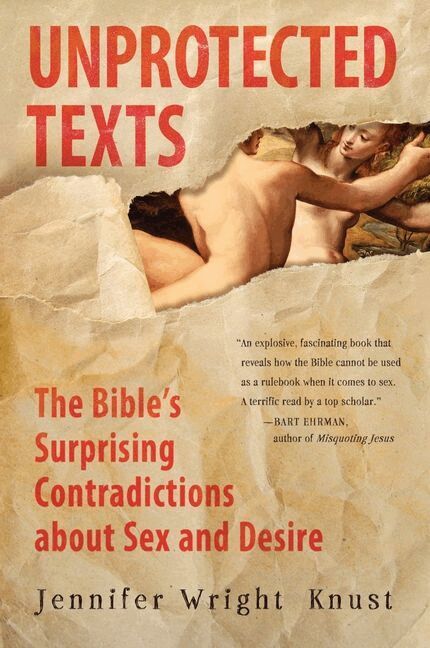
A comprehensive overview of what the Bible really says—and doesn''t say—about sex."An explosive, fascinating book that reveals how the Bible cannot be used as a rulebook when it comes to sex. A terrific read by a top scholar." —Bart Ehrman, author of Misquoting JesusIs premarital sex a sin? When, and in what contexts, is sexual desire appropriate? With whom can I legitimately have sex? Are same-sex relations permissible? With fresh scholarship and unflagging compassion, Jennifer Wright Knust addresses the questions that dominate today''s debates over sex and the Bible. At a time when the words "the Bible says" are too often wielded for social and political gain, it''s time to consider what scripture actually does—or does not—say about monogamy, homosexuality, gender roles, and sex."[Knust mines] the Bible for its earthiest and most inexplicable tales about sex . . . to show that the Bible''s teachings on sex are not as coherent as the religious right would have people believe." —Newsweek"As a scholar, Knust is at ease talking about the Bible in both church and academic circles. And as an author, she writes with authority yet keeps the general reader in mind." —USA Today"[An] impressive and highly readable analysis. . . . For those wanting to understand the Bible as a chronicle of human conduct for achieving the goals of survival, peace, and fulfillment, this is a treasure." —Booklist (starred review)
Inbunden, Engelska, 2011
2 017 kr
Skickas inom 5-8 vardagar
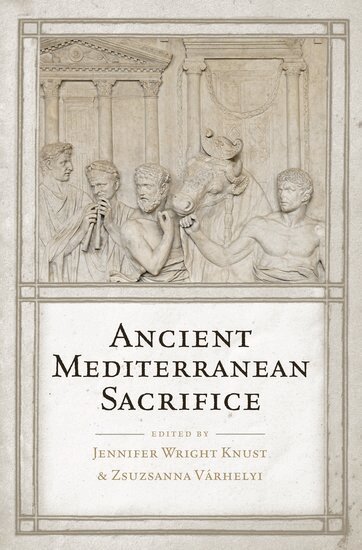
Examining the diverse religious texts and practices of the late Hellenistic and Roman periods, this collection of essays investigates the many meanings and functions of ritual sacrifice in the ancient world. The essays survey sacrificial acts, ancient theories, and literary as well as artistic depictions of sacrifice, showing that any attempt to identify a single underlying significance of sacrifice is futile. Sacrifice cannot be defined merely as a primal expression of violence, despite the frequent equation of sacrifice to religion and sacrifice to violence in many modern scholarly works; nor is it sufficient to argue that all sacrifice can be explained by guilt, by the need to prepare and distribute animal flesh, or by the communal function of both the sacrificial ritual and the meal. As the authors of these essays demonstrate, sacrifice may be invested with all of these meanings, or none of them. The killing of the animal, for example, may take place offstage rather than in sight, and the practical, day-to-day routine of plant and animal offerings may have been invested with meaning, too. Yet sacrificial acts, or discourses about these acts, did offer an important site of contestation for many ancient writers, even when the religions they were defending no longer participated in sacrifice. Negotiations over the meaning of sacrifice remained central to the competitive machinations of the literate elite, and their sophisticated theological arguments did not so much undermine sacrificial practice as continue to assume its essential validity.Ancient Mediterranean Sacrifice offers new insight into the connections and differences among the Greek and Roman, Jewish and Christian religions.
E-bok
PDF, Engelska, 20111 175 kr
Läs direkt efter köp
An investigation of the multiple meanings and functions of sacrifice in diverse religious texts and practices from the late Hellenistic and Roman imperial periods.
E-bok
Engelska, 2005964 kr
Läs direkt efter köp
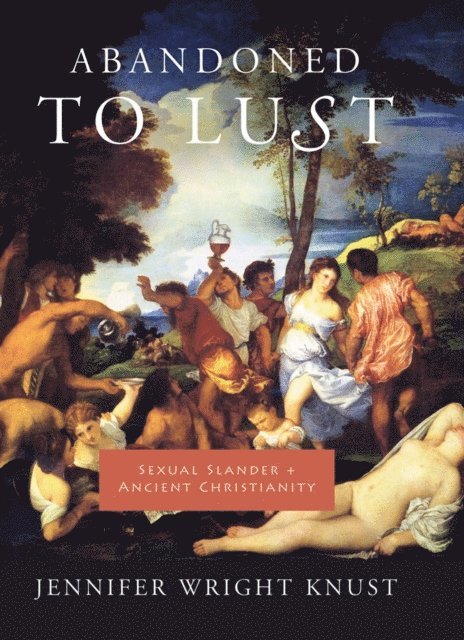
Early Christians used charges of adultery, incest, and lascivious behavior to demonize their opponents, police insiders, resist pagan rulers, and define what it meant to be a Christian. Christians frequently claimed that they, and they alone were sexually virtuous, comparing themselves to those marked as outsiders, especially non-believers and "heretics," who were said to be controlled by lust and unable to rein in their carnal desires. True or not, these charges allowed Christians to present themselves as different from and morally superior to those around them. Through careful, innovative readings, Jennifer Knust explores the writings of Paul, Justin Martyr, Irenaeus of Lyons, and other early Christian authors who argued that Christ alone made self-mastery possible. Rejection of Christ led to both immoral sexual behavior and, ultimately, alienation and punishment from God. Knust considers how Christian writers participated in a long tradition of rhetorical invective, a rhetoric that was often employed to defend status and difference. Christians borrowed, deployed, and reconfigured classical rhetorical techniques, turning them against their rulers to undercut their moral and political authority. Knust also examines the use of accusations of licentiousness in conflicts between rival groups of Christians. Portraying rival sects as depraved allowed accusers to claim their own group as representative of "true Christianity." Knust''s book also reveals the ways in which sexual slurs and their use in early Christian writings reflected cultural and gendered assumptions about what constituted purity, morality, and truth. In doing so, Abandoned to Lust highlights the complex interrelationships between sex, gender, and sexuality within the classical, biblical, and early-Christian traditions.