Jenny Bourne Wahl – författare
Visar alla böcker från författaren Jenny Bourne Wahl. Handla med fri frakt och snabb leverans.
3 produkter
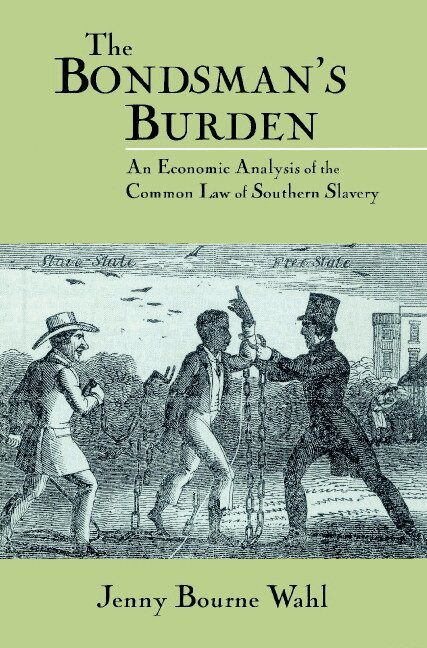
Bondsman's Burden
An Economic Analysis of the Common Law of Southern Slavery
E-bok, 1997
563 kr
Lägg i varukorg
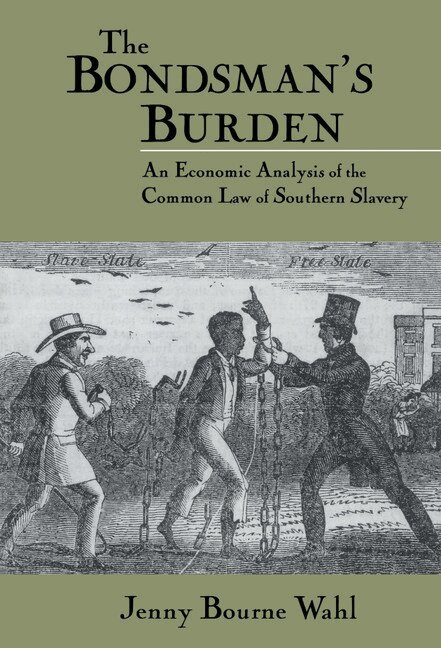
The Bondsman's Burden
An Economic Analysis of the Common Law of Southern Slavery
Av Jenny Bourne Wahl, Christopher Tomlins
Häftad, 2002
569 kr
Lägg i varukorg
Were slaves property or human beings under the law? In crafting answers to this question, Southern judges designed efficient laws that protected property rights and helped slavery remain economically viable. But, by preserving property rights, they sheltered the persons embodied by that property - …
The Bondsman's Burden
An Economic Analysis of the Common Law of Southern Slavery
Av Jenny Bourne Wahl, Christopher Tomlins
Inbunden, 1997
1995 kr
Lägg i varukorg
Were slaves property or human beings under the law? In crafting answers to this question, Southern judges designed efficient laws that protected property rights and helped slavery remain economically viable. But, by preserving property rights, they sheltered the persons embodied by that property - …