Jenny Pope - Böcker
Visar alla böcker från författaren Jenny Pope. Handla med fri frakt och snabb leverans.
3 produkter
3 produkter
3 547 kr
Skickas inom 7-10 vardagar
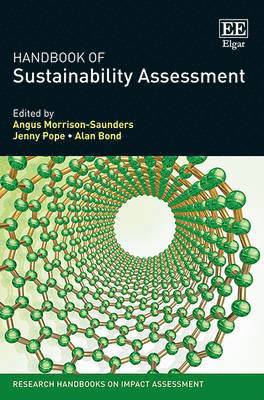
Sustainability assessment refers to any process that directs decision-making towards sustainability. This groundbreaking Handbook presents state of the art thinking and research on the theory and practice of this broad and rapidly evolving field. Emphasizing how traditional impact assessment practices can be improved to contribute to sustainable outcomes, the overall aim is to enhance the effectiveness of sustainability assessment practice.Based on original contributions from world-leading researchers and practitioners, the book examines sustainability assessment in five sections: the first explores the conceptual foundations of sustainability assessment from different perspectives; the second section introduces some of the different scales and decision-contexts to which sustainability assessment can be applied; third, sectoral approaches to sustainability assessment are investigated, focusing in particular on energy as a key area of future focus; the fourth section introduces several tools used within sustainability assessment, including ecosystem services, multi-criteria analysis, systems analysis, and objectives-driven approaches; finally, key aspects of sustainability assessment governance are considered, including managing decision complexity and community engagement.This essential and comprehensive exploration of sustainability, including strengths, weaknesses, opportunities and threats, will be invaluable to students, academics and practitioners.Contributors: C. Adelle, M. Audouin, A. Bond, M. Burns, R. du Toit, A. Diduck, C.G. Duarte, V. Ferretti, T. Fischer, A.L.C.F. Gallardo, K. Gaudreau, D. Geneletti, R. Gibson, W. Grace, J. Gunn, N. Hanley, J. Hartz-Karp, S. Hayes, A. Jordan, L. Lamorgese, D. le Maitre, T.F. Malheiros, A. Morrison-Saunders, J. Nel, B. Noble, P. O'Farrell, M. Partidario, P. Pereira, S. Petrova, J. Pope, F. Retief, D. Russel, L.E. Sánchez, W. Sheate, J. Sinclair, J. Turnpenny, M. Vespa, A. Weaver, S. Weiland
1 834 kr
Skickas inom 7-10 vardagar
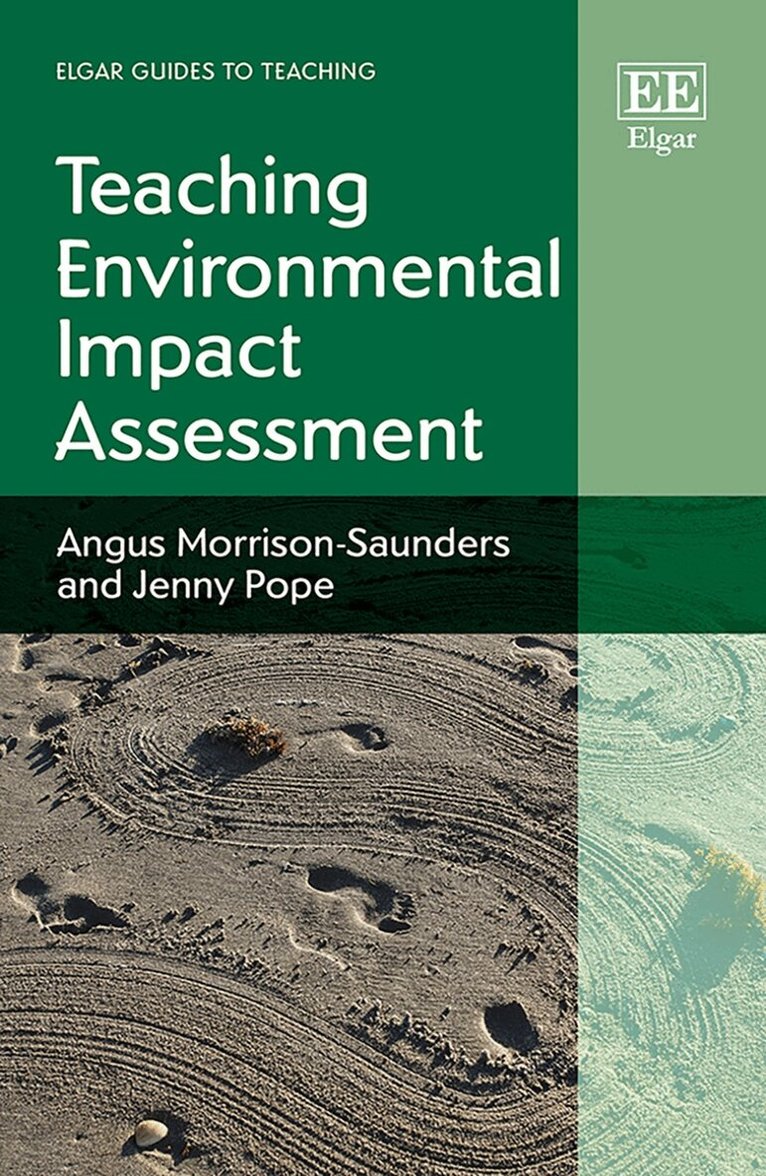
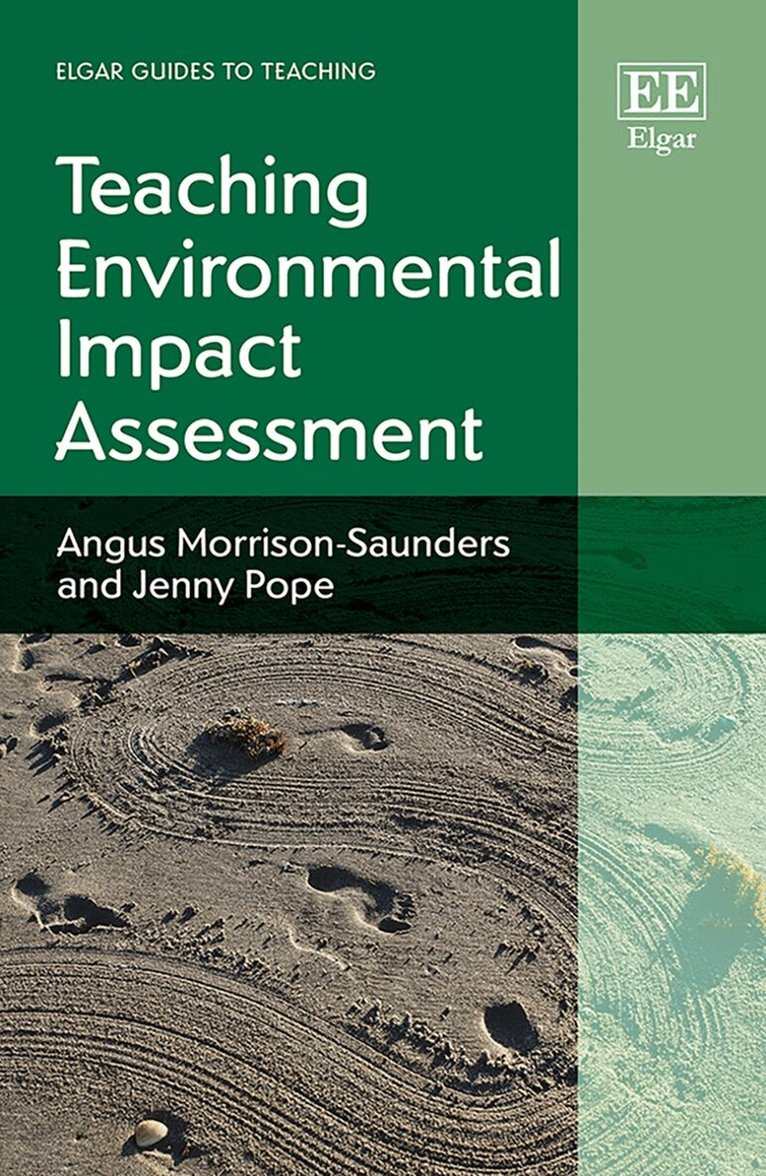
This comprehensive guide provides readers with strategies for teaching Environmental Impact Assessment (EIA) in all its forms, whether through formal university programmes or in the form of short courses offered to professionals and practitioners. Featuring contributions from 39 university teachers and short course trainers, the centerpiece of the book is the suite of 37 recipes for teaching different aspects of EIA. This internationally relevant resource collectively embodies and applies the best practice principles for teaching EIA, developed through a two-year research project with input from a diverse group of international experts. It provides practical and innovative learning activities with complete instructions for successful delivery, and thus represents a truly comprehensive and up-to-date contribution to the field. This latest contribution to our Elgar Guides to Teaching series serves as both a basis for reflection upon curricula and teaching practices, and as a source of inspiration for learning activities that can be adopted and adapted for different contexts by EIA teachers and trainers. It will be a valuable resource to help both new and seasoned EIA educators expand their toolbox in order to teach EIA more effectively.
502 kr
Skickas inom 7-10 vardagar
This comprehensive guide provides readers with strategies for teaching Environmental Impact Assessment (EIA) in all its forms, whether through formal university programmes or in the form of short courses offered to professionals and practitioners. Featuring contributions from 39 university teachers and short course trainers, the centerpiece of the book is the suite of 37 recipes for teaching different aspects of EIA. This internationally relevant resource collectively embodies and applies the best practice principles for teaching EIA, developed through a two-year research project with input from a diverse group of international experts. It provides practical and innovative learning activities with complete instructions for successful delivery, and thus represents a truly comprehensive and up-to-date contribution to the field. This latest contribution to our Elgar Guides to Teaching series serves as both a basis for reflection upon curricula and teaching practices, and as a source of inspiration for learning activities that can be adopted and adapted for different contexts by EIA teachers and trainers. It will be a valuable resource to help both new and seasoned EIA educators expand their toolbox in order to teach EIA more effectively.