Jeongkoo Yoon – författare
Visar alla böcker från författaren Jeongkoo Yoon. Handla med fri frakt och snabb leverans.
3 produkter
3 produkter
Inbunden, Engelska, 2015
1 006 kr
Skickas inom 7-10 vardagar
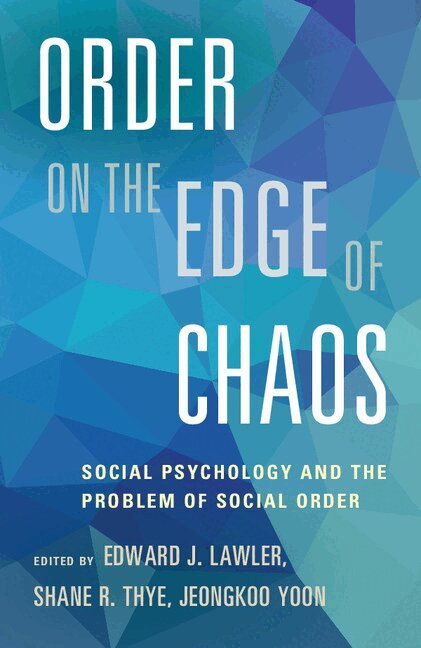
Order and stability are tenuous and fragile. People have to work to create and sustain a semblance of stability and order in their lives and in their organizations and larger communities. Order on the Edge of Chaos compares different ideas about how we coordinate and cooperate. The ideas come from 'micro-sociology', and they offer new answers to the classic question of Thomas Hobbes: 'how is social order possible?' The most common answers in sociology, political science, and economics assume a fundamental tension between individual and group interests. This volume reveals that social orders are problematic even without such tension, because when people interact with each other, they verify their identities, feel and respond to emotions, combine different goal frames, and develop shared responsibility. The ties of people to groups result from many aspects of their social interactions, and these cannot be explained by individual self-interest.
Häftad, Engelska, 2015
380 kr
Skickas inom 7-10 vardagar
Order and stability are tenuous and fragile. People have to work to create and sustain a semblance of stability and order in their lives and in their organizations and larger communities. Order on the Edge of Chaos compares different ideas about how we coordinate and cooperate. The ideas come from 'micro-sociology', and they offer new answers to the classic question of Thomas Hobbes: 'how is social order possible?' The most common answers in sociology, political science, and economics assume a fundamental tension between individual and group interests. This volume reveals that social orders are problematic even without such tension, because when people interact with each other, they verify their identities, feel and respond to emotions, combine different goal frames, and develop shared responsibility. The ties of people to groups result from many aspects of their social interactions, and these cannot be explained by individual self-interest.
E-bok
PDF, Engelska, 2015459 kr
Läs direkt efter köp
Order and stability are tenuous and fragile. People have to work to create and sustain a semblance of stability and order in their lives and in their organizations and larger communities. Order on the Edge of Chaos compares different ideas about how we coordinate and cooperate. The ideas come from ''micro-sociology'', and they offer new answers to the classic question of Thomas Hobbes: ''how is social order possible?'' The most common answers in sociology, political science, and economics assume a fundamental tension between individual and group interests. This volume reveals that social orders are problematic even without such tension, because when people interact with each other, they verify their identities, feel and respond to emotions, combine different goal frames, and develop shared responsibility. The ties of people to groups result from many aspects of their social interactions, and these cannot be explained by individual self-interest.