Jérémie Forney - Böcker
Visar alla böcker från författaren Jérémie Forney. Handla med fri frakt och snabb leverans.
6 produkter
6 produkter
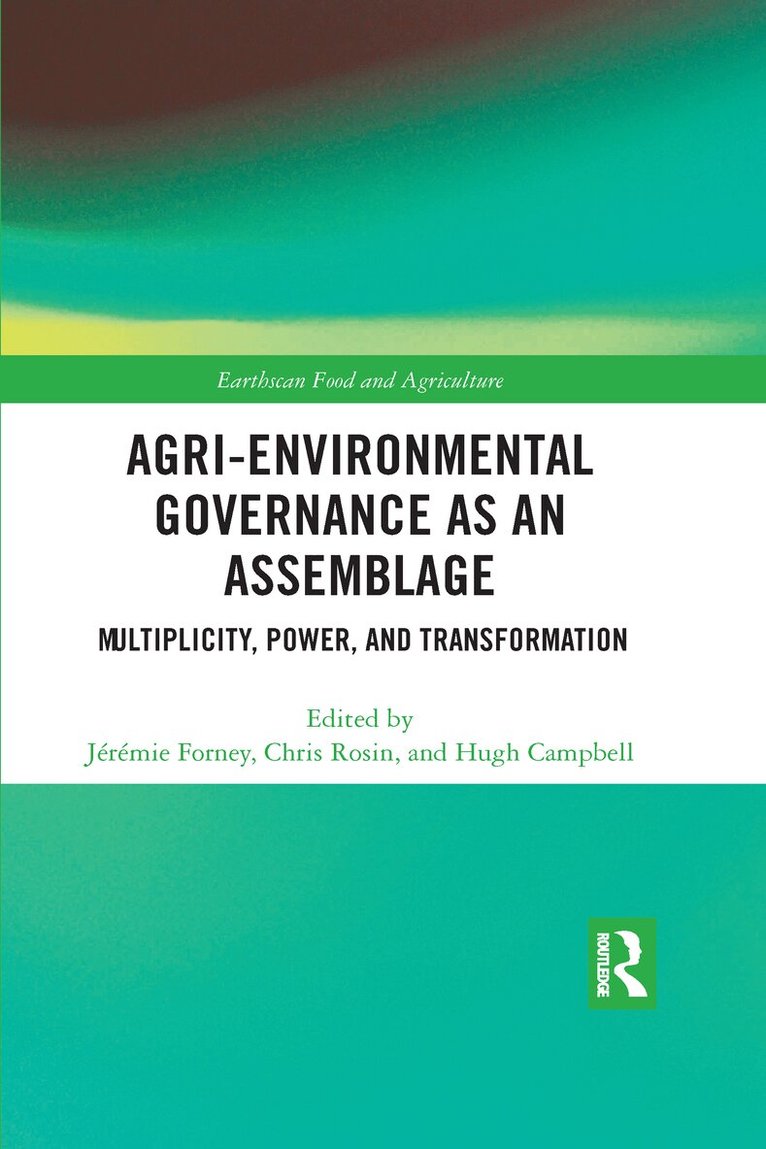
Agri-environmental Governance as an Assemblage
Multiplicity, Power, and Transformation
Häftad, Engelska, 2021
617 kr
Skickas inom 10-15 vardagar
In recent decades, the governance of the environment in agri-food systems has emerged as a crucial challenge. A multiplicity of actors have been enrolled in this process, with the private sector and civil society progressively becoming key components in a global context often described as neoliberalization. Agri-environmental governance (AEG) thus gathers a highly complex assemblage of actors and instruments, with multiple interrelations.This book addresses this complexity, challenging traditional modes of research and explanation in social science and agri-food studies. To do so, it draws on multiple theoretical and methodological insights, applied to case studies from Asia, Europe, Africa, and the Americas. It elaborates an emergent approach to AEG practices as assemblages, looking at the coming-together of multiple actors with diverse trajectories and objectives. The book lays the foundations for an encompassing theoretical framework that transcends pre-existing categories, as well as promoting innovative methodologies, which integrate the role of social actors – including scientists – in the construction of new assemblages. The chapters define, first, the multiplicities and agencies inherent to AEG assemblages. A second set tackles the question of the politics in AEG assemblages, where political hierarchies interweave with economic power and the search for more democratic and participative approaches. Finally, these insights are developed in the form of assemblage practice and methodology. The book challenges social scientists to confront the shortcomings of existing approaches and consider alternative answers to questions about environmental governance of agri-food systems.
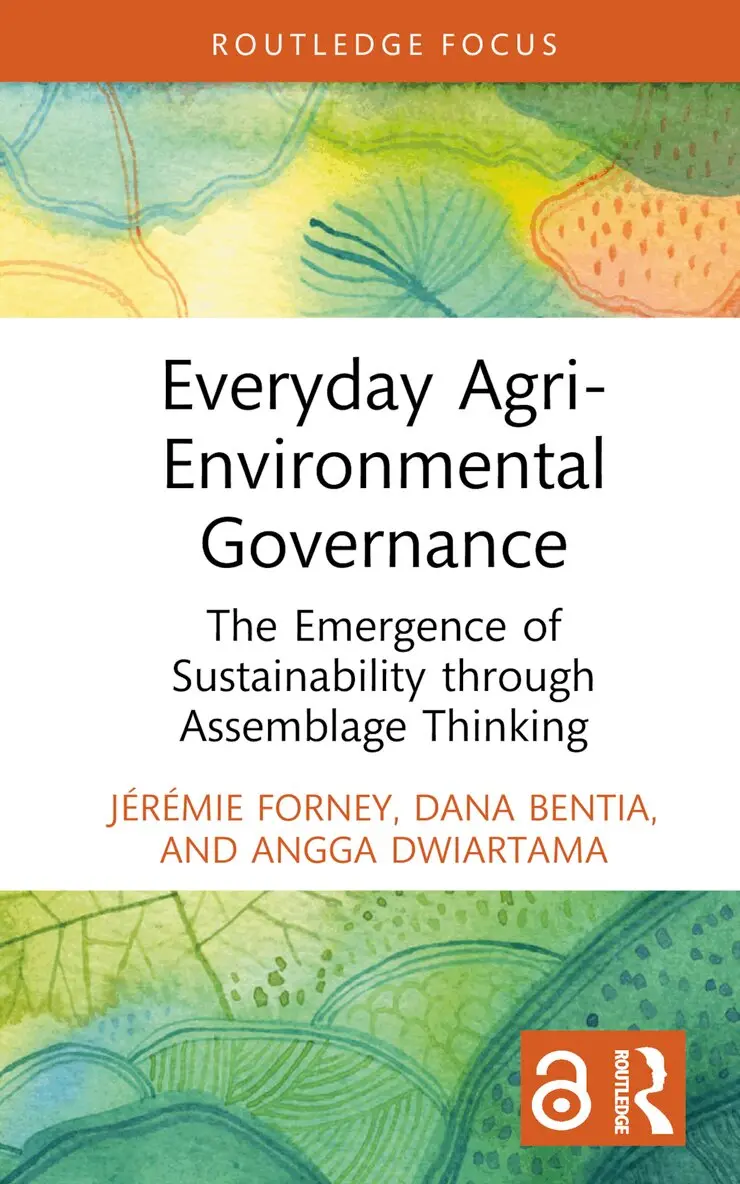
Everyday Agri-Environmental Governance
The Emergence of Sustainability through Assemblage Thinking
Inbunden, Engelska, 2024
780 kr
Skickas inom 10-15 vardagar
Revitalising the way the social sciences question agri-environmental governance, this book introduces "the everyday governance approach" as a means to improving the sustainability of agriculture and food systems.The "everyday" refers to localised practices, specific networks, and practical norms that emerge in a process of interaction, translation, and reinterpretation. The authors build this approach on assemblage thinking and theory, which focuses on the collective production of the social through complex sets of connections. For this reason, assemblage thinking becomes a particularly productive guide in exploring how everyday governance is co-produced in the interaction between numerous social processes involving a diversity of actors and instruments. The authors navigate between original and contrasting case studies from Switzerland, Indonesia, and the European Union in order to reorient attention to the transformative nature of governance, which they locate along four different dimensions of the everyday: (1) the interdependence of instruments within a wider governance assemblage; (2) the uncertainty and unpredictability of effects in agri-environmental governance; (3) the distributed nature of agency and its implication for power relations; (4) the importance of capacities in the transformation of agri-food systems. This book calls for a redesigning of agri-environmental governance that should move away from the setting of fix and precise objectives and solutions, and rather aim for a consolidation of sound foundations on which desirable futures can emerge.The book will be an essential read for students and scholars interested in sustainable agriculture and food systems, governance modes and approaches, and sustainability more broadly.The Open Access version of this book, available at www.taylorfrancis.com, has been made available under a Creative Commons Attribution- Non Commercial- No Derivatives (CC- BY- NC- ND) 4.0 license.
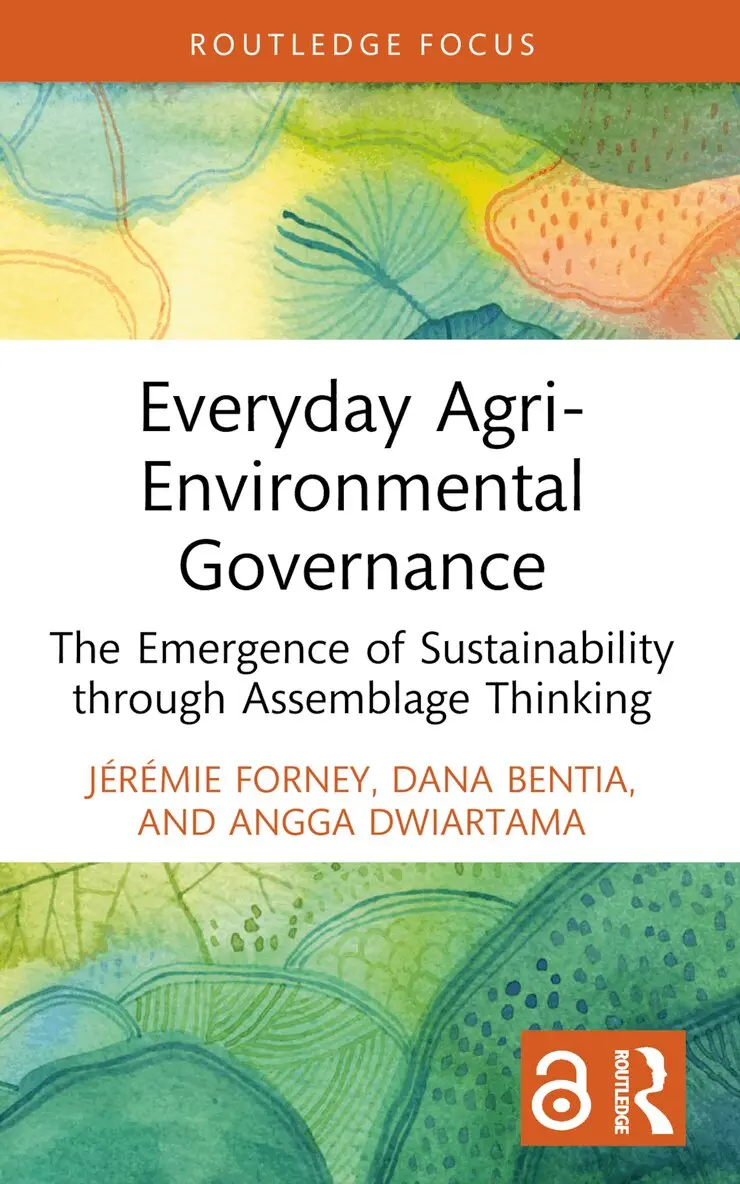
Everyday Agri-Environmental Governance
The Emergence of Sustainability through Assemblage Thinking
Häftad, Engelska, 2025
332 kr
Skickas inom 10-15 vardagar
Revitalising the way the social sciences question agri-environmental governance, this book introduces "the everyday governance approach" as a means to improving the sustainability of agriculture and food systems.The "everyday" refers to localised practices, specific networks, and practical norms that emerge in a process of interaction, translation, and reinterpretation. The authors build this approach on assemblage thinking and theory, which focuses on the collective production of the social through complex sets of connections. For this reason, assemblage thinking becomes a particularly productive guide in exploring how everyday governance is co-produced in the interaction between numerous social processes involving a diversity of actors and instruments. The authors navigate between original and contrasting case studies from Switzerland, Indonesia, and the European Union in order to reorient attention to the transformative nature of governance, which they locate along four different dimensions of the everyday: (1) the interdependence of instruments within a wider governance assemblage; (2) the uncertainty and unpredictability of effects in agri-environmental governance; (3) the distributed nature of agency and its implication for power relations; (4) the importance of capacities in the transformation of agri-food systems. This book calls for a redesigning of agri-environmental governance that should move away from the setting of fix and precise objectives and solutions, and rather aim for a consolidation of sound foundations on which desirable futures can emerge.The book will be an essential read for students and scholars interested in sustainable agriculture and food systems, governance modes and approaches, and sustainability more broadly.The Open Access version of this book, available at www.taylorfrancis.com, has been made available under a Creative Commons Attribution- Non Commercial- No Derivatives (CC- BY- NC- ND) 4.0 license.
Agri-environmental Governance as an Assemblage
Multiplicity, Power, and Transformation
Inbunden, Engelska, 2018
2 290 kr
Skickas inom 10-15 vardagar
In recent decades, the governance of the environment in agri-food systems has emerged as a crucial challenge. A multiplicity of actors have been enrolled in this process, with the private sector and civil society progressively becoming key components in a global context often described as neoliberalization. Agri-environmental governance (AEG) thus gathers a highly complex assemblage of actors and instruments, with multiple interrelations.This book addresses this complexity, challenging traditional modes of research and explanation in social science and agri-food studies. To do so, it draws on multiple theoretical and methodological insights, applied to case studies from Asia, Europe, Africa, and the Americas. It elaborates an emergent approach to AEG practices as assemblages, looking at the coming-together of multiple actors with diverse trajectories and objectives. The book lays the foundations for an encompassing theoretical framework that transcends pre-existing categories, as well as promoting innovative methodologies, which integrate the role of social actors – including scientists – in the construction of new assemblages. The chapters define, first, the multiplicities and agencies inherent to AEG assemblages. A second set tackles the question of the politics in AEG assemblages, where political hierarchies interweave with economic power and the search for more democratic and participative approaches. Finally, these insights are developed in the form of assemblage practice and methodology. The book challenges social scientists to confront the shortcomings of existing approaches and consider alternative answers to questions about environmental governance of agri-food systems.
2 088 kr
Skickas inom 10-15 vardagar
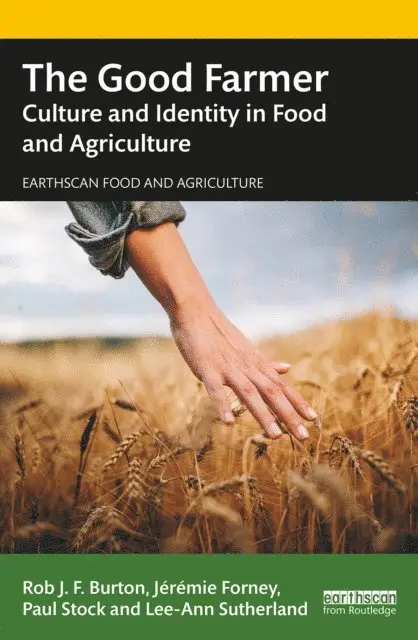
Developed by leading authors in the field, this book offers a cohesive and definitive theorisation of the concept of the 'good farmer', integrating historical analysis, critique of contemporary applications of good farming concepts, and new case studies, providing a springboard for future research. The concept of the good farmer has emerged in recent years as part of a move away from attitude and economic-based understandings of farm decision-making towards a deeper understanding of culture and symbolism in agriculture. The Good Farmer shows why agricultural production is socially and culturally, as well as economically, important. It explores the history of the concept and its position in contemporary theory, as well as its use and meaning in a variety of different contexts, including landscape, environment, gender, society, and as a tool for resistance. By exploring the idea of the good farmer, it reveals the often-unforeseen assumptions implicit in food and agricultural policy that draw on culture, identity, and presumed notions of what is 'good'. The book concludes by considering the potential of the good farmer concept for addressing future, emerging issues in agriculture.This book will be of interest to students and scholars of food and agriculture and rural development, as well as professionals and policymakers involved in the food and agricultural industry.
576 kr
Skickas inom 10-15 vardagar
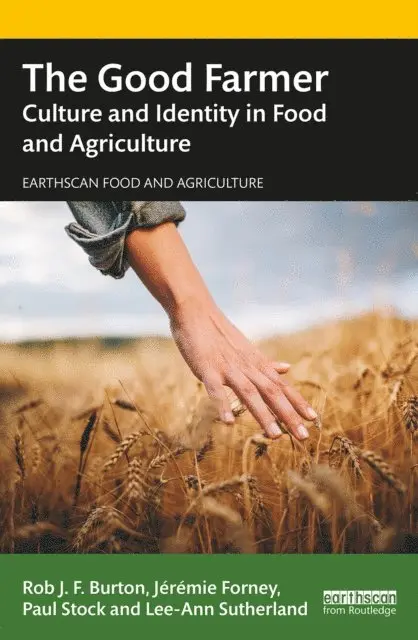
Developed by leading authors in the field, this book offers a cohesive and definitive theorisation of the concept of the 'good farmer', integrating historical analysis, critique of contemporary applications of good farming concepts, and new case studies, providing a springboard for future research. The concept of the good farmer has emerged in recent years as part of a move away from attitude and economic-based understandings of farm decision-making towards a deeper understanding of culture and symbolism in agriculture. The Good Farmer shows why agricultural production is socially and culturally, as well as economically, important. It explores the history of the concept and its position in contemporary theory, as well as its use and meaning in a variety of different contexts, including landscape, environment, gender, society, and as a tool for resistance. By exploring the idea of the good farmer, it reveals the often-unforeseen assumptions implicit in food and agricultural policy that draw on culture, identity, and presumed notions of what is 'good'. The book concludes by considering the potential of the good farmer concept for addressing future, emerging issues in agriculture.This book will be of interest to students and scholars of food and agriculture and rural development, as well as professionals and policymakers involved in the food and agricultural industry.