Jeremy Biggs - Böcker
Visar alla böcker från författaren Jeremy Biggs. Handla med fri frakt och snabb leverans.
3 produkter
3 produkter
701 kr
Skickas
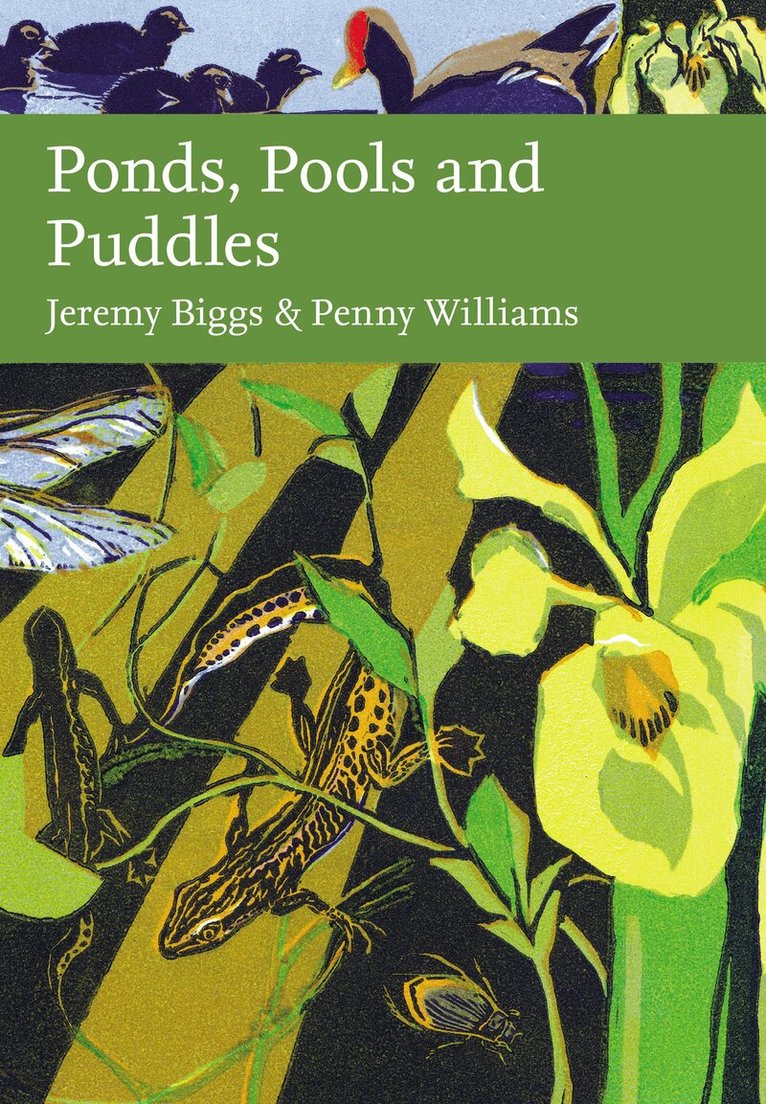
Ponds and pools are a common feature of our landscape – there are at least ten times as many ponds as lakes in the UK – and they are also important wildlife habitats. This book provides a comprehensive and detailed account of these freshwater habitats.The first chapter discusses what ponds, pools and puddles are, how they differ from rivers and lakes, their origin – natural or man-made, the different types of ponds and their abundance and distribution in Britain.A second chapter looks at ponds as ancient natural habitats that have existed for millennia on the earth’s surface. Ancient pond communities, as preserved in inter- and post-glacial sediments, are compared with modern pond communities. This chapter also examines the physical and chemical environment of ponds, covering aspects such as size, shape and depth, hydrology, oxygen and temperature.Ponds, pools and puddles are important wildlife habitats; they are as rich in species as rivers, and support rare and uncommon taxa including about half of Britain’s Red Data Book wetland plant and animal species. The authors give a comprehensive survey of the variety of plant and animal life for which ponds, pools and puddles are a habitat, with a chapter each on plants, invertebrates, amphibians, and fish, birds and mammals. The book discusses the importance of ponds to each of these groups and the ways in which the organisms exploit ponds, describing their habitats and major variations in life cycles.The pond ecosystem and colonisation and succession are discussed in two further chapters, before the final chapter, which is devoted to the subject of conservation and how best to protect and manage ponds and pond wildlife in Britain today.In spite of their evident importance, ponds have been largely ignored by freshwater biologists during this century. Ponds, Pools and Puddles makes an invaluable contribution to raising awareness of these popular, yet frequently underrated freshwater habitats, giving them the attention they rightly deserve.
1 588 kr
Skickas inom 10-15 vardagar
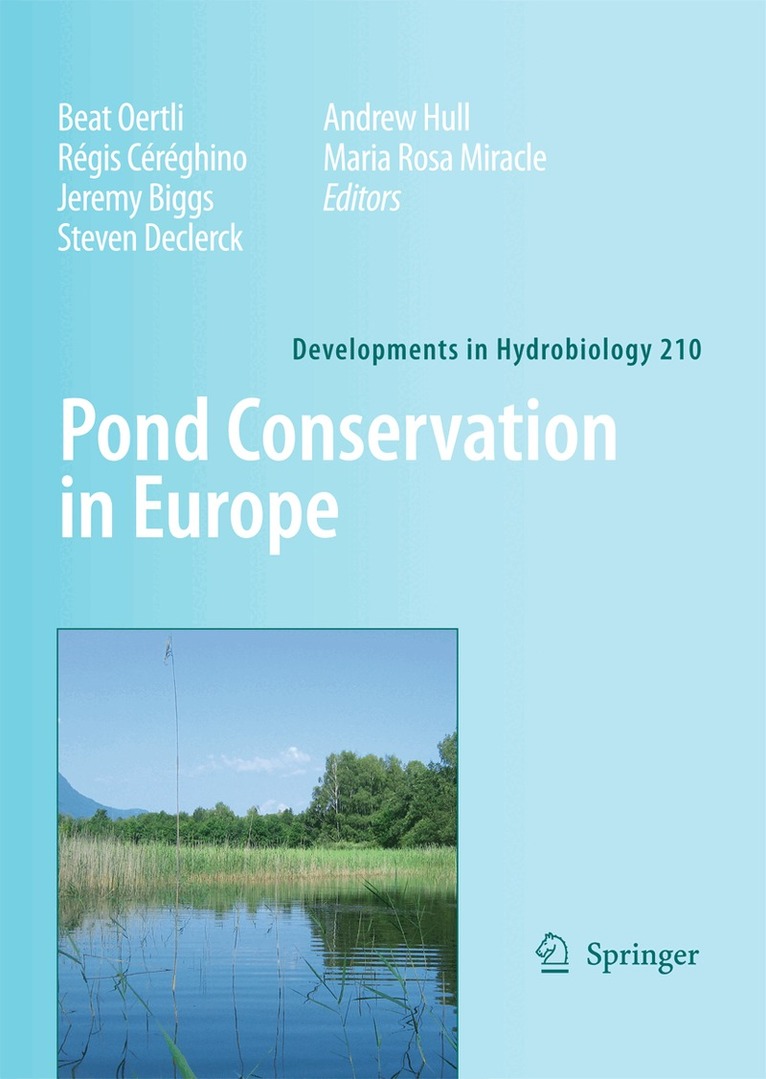
Ponds are an exceptional freshwater resource around the world and represent thirty percent of the global surface area of standing water. Furthermore, the millions of ponds which exist exhibit a particularly high biodiversity and have a high potential for ecosystem functions and services. Despite these impressive features, ponds face many threats from a variety of human activities and receive little or no protection under European and national legislation. Consequently, there is an urgent need to protect, consolidate and increase the pond resource in Europe. In order to achieve these objectives, the European Pond Conservation Network (EPCN) was launched 2004 in Geneva. Its aim is to promote the awareness, understanding and conservation of these small water bodies in the European landscape. This volume of “Developments in Hydrobiology” presents a selection of 31 papers presented during EPCN conferences held in 2006 in France (Toulouse) and in 2008 in Spain (Valencia). They represent a diverse collection of themes from across the continent and North Africa and present new and original insights into topics as wide ranging as pond biodiversity; human disturbance; landscape ecology; ecological assessment and monitoring; practical management measures; ecological restoration; hydrology and climate change; invasive species and threatened species.
1 588 kr
Skickas inom 10-15 vardagar
Ponds are an exceptional freshwater resource around the world and represent thirty percent of the global surface area of standing water. Furthermore, the millions of ponds which exist exhibit a particularly high biodiversity and have a high potential for ecosystem functions and services. Despite these impressive features, ponds face many threats from a variety of human activities and receive little or no protection under European and national legislation. Consequently, there is an urgent need to protect, consolidate and increase the pond resource in Europe. In order to achieve these objectives, the European Pond Conservation Network (EPCN) was launched 2004 in Geneva. Its aim is to promote the awareness, understanding and conservation of these small water bodies in the European landscape. This volume of “Developments in Hydrobiology” presents a selection of 31 papers presented during EPCN conferences held in 2006 in France (Toulouse) and in 2008 in Spain (Valencia). They represent a diverse collection of themes from across the continent and North Africa and present new and original insights into topics as wide ranging as pond biodiversity; human disturbance; landscape ecology; ecological assessment and monitoring; practical management measures; ecological restoration; hydrology and climate change; invasive species and threatened species.