Jeremy R. Garrett – författare
396 kr
Läs direkt efter köp
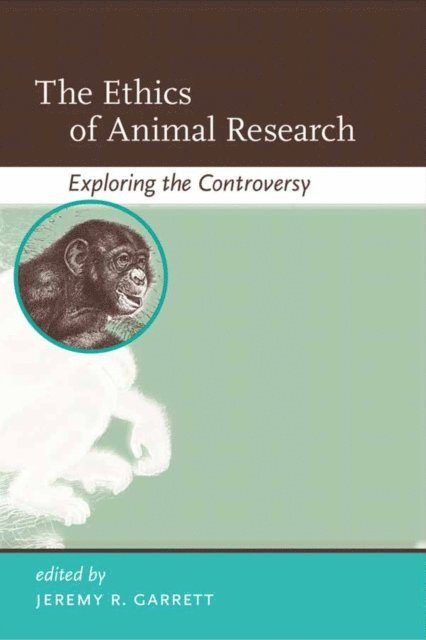
A balanced, accessible discussion of whether and on what grounds animal research can be ethically justified.
An estimated 100 million nonhuman vertebrates worldwide—including primates, dogs, cats, rabbits, hamsters, birds, rats, and mice—are bred, captured, or otherwise acquired every year for research purposes. Much of this research is seriously detrimental to the welfare of these animals, causing pain, distress, injury, or death. This book explores the ethical controversies that have arisen over animal research, examining closely the complex scientific, philosophical, moral, and legal issues involved.
Defenders of animal research face a twofold challenge: they must make a compelling case for the unique benefits offered by animal research; and they must provide a rationale for why these benefits justify treating animal subjects in ways that would be unacceptable for human subjects. This challenge is at the heart of the book. Some contributors argue that it can be met fairly easily; others argue that it can never be met; still others argue that it can sometimes be met, although not necessarily easily. Their essays consider how moral theory can be brought to bear on the practical ethical questions raised by animal research, examine the new challenges raised by the emerging possibilities of biotechnology, and consider how to achieve a more productive dialogue on this polarizing subject. The book''s careful blending of theoretical and practical considerations and its balanced arguments make it valuable for instructors as well as for scholars and practitioners.

1 499 kr
Skickas inom 10-15 vardagar
1 825 kr
Läs direkt efter köp
In only four decades, bioethics has transformed from a fledgling field into a complex, rapidly expanding, multidisciplinary field of inquiry and practice. Its influence can be found not only in our intellectual and biomedical institutions, but also in almost every facet of our social, cultural, and political life. This volume maps the remarkable development of bioethics in American culture, uncovering the important historical factors that brought it into existence, analyzing its cultural, philosophical, and professional dimensions, and surveying its potential future trajectories. Bringing together a collection of original essays by seminal figures in the fields of medical ethics and bioethics, it addresses such questions as the following:
- Are there precise moments, events, socio-political conditions, legal cases, and/or works of scholarship to which we can trace the emergence of bioethics as a field of inquiry in the United States?
- What is the relationship between the historico-causal factors that gave birth to bioethics and the factors that sustain and encourage its continued development today?
- Is it possible and/or useful to view the history of bioethics in discrete periods with well-defined boundaries?
- If so, are there discernible forces that reveal why transitions occurred when they did? What are the key concepts that ultimately frame the field and how have they evolved and developed over time?
- Is the field of bioethics in a period of transformation into biopolitics?
Contributors include George Annas, Howard Brody, Eric J. Cassell, H. Tristram Engelhardt Jr., Edmund L. Erde, John Collins Harvey, Albert R. Jonsen, Loretta M. Kopelman, Laurence B. McCullough, Edmund D. Pellegrino, Warren T. Reich, Carson Strong, Robert M. Veatch, and Richard M. Zaner.
Development of Bioethics in the United States
1 499 kr
Skickas inom 10-15 vardagar
317 kr
Tillfälligt slut