Jerome De Groot – författare
Visar alla böcker från författaren Jerome De Groot. Handla med fri frakt och snabb leverans.
16 produkter
16 produkter
587 kr
Skickas inom 10-15 vardagar
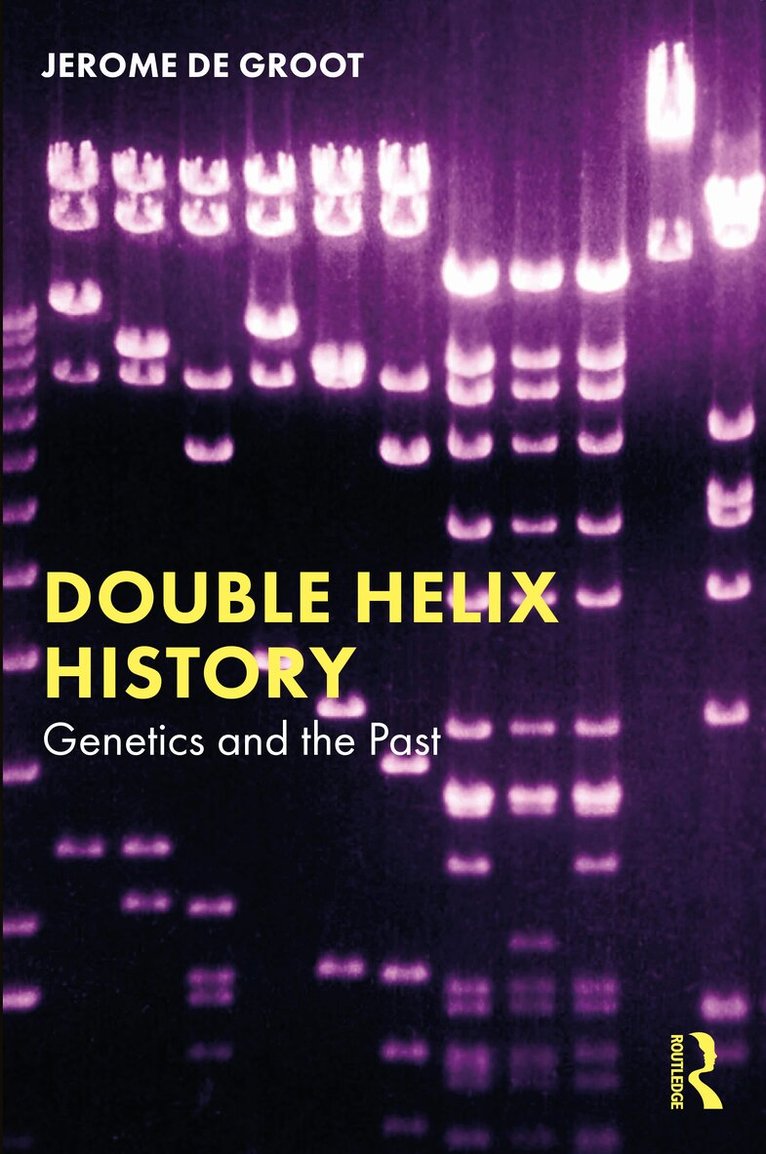
Double Helix History examines the interface between genetics and history in order to investigate the plausibility of ‘new’ knowledge derived from scientific methods and to reflect upon what it might mean for the practice of history.Since the mapping of the human genome in 2001, there has been an expansion in the use of genetic information for historical investigation. Geneticists are confident that this has changed the way we know the past. This book considers the practicalities and implications of this seemingly new way of understanding the human past using genetics. It provides the first sustained engagement with these so-called ‘genomic histories’. The book investigates the ways that genetic awareness and practice is seemingly changing historical practice and conceptualisation. Linking six concepts – ‘Public’, ‘Practice’, ‘Ethics’, ‘Politics’, ‘Self’, and ‘Imagination – Double Helix History outlines the ways that genetic information, being postgenomic, the public life of DNA, and the genetic historical imaginary work on the body, on collective memory, on the historical imagination, on the ethics of historical investigation, on the articulation of history, and on the collection and interpretation of data regarding the ‘past’.This book will appeal to researchers and students alike interested in DNA, genetics, and historiography.
2 198 kr
Skickas inom 10-15 vardagar
Double Helix History examines the interface between genetics and history in order to investigate the plausibility of ‘new’ knowledge derived from scientific methods and to reflect upon what it might mean for the practice of history.Since the mapping of the human genome in 2001, there has been an expansion in the use of genetic information for historical investigation. Geneticists are confident that this has changed the way we know the past. This book considers the practicalities and implications of this seemingly new way of understanding the human past using genetics. It provides the first sustained engagement with these so-called ‘genomic histories’. The book investigates the ways that genetic awareness and practice is seemingly changing historical practice and conceptualisation. Linking six concepts – ‘Public’, ‘Practice’, ‘Ethics’, ‘Politics’, ‘Self’, and ‘Imagination – Double Helix History outlines the ways that genetic information, being postgenomic, the public life of DNA, and the genetic historical imaginary work on the body, on collective memory, on the historical imagination, on the ethics of historical investigation, on the articulation of history, and on the collection and interpretation of data regarding the ‘past’.This book will appeal to researchers and students alike interested in DNA, genetics, and historiography.
1 823 kr
Skickas inom 10-15 vardagar
The historical novel is an enduringly popular genre that raises crucial questions about key literary concepts, fact and fiction, identity, history, reading, and writing. In this comprehensive, focused guide, Jerome de Groot offers an accessible introduction to the genre and critical debates that surround it, including: the development of the historical novel from early eighteenth-century works through to postmodern and contemporary historical fictiondifferent genres, such as sensational or ‘low’ fiction, crime novels, literary works, counterfactual writing and related issues of audience, value, and authenticitythe many functions of historical fiction, particularly the challenges it poses to accepted histories and postmodern questioning of ‘grand narratives’the relationship of the historical novel to the wider cultural sphere with reference to historical theory, the internet, television, and filmkey theoretical concepts such as the authentic fallacy, postcolonialism, Marxism, queer and feminist reading. Drawing on a wide range of examples from across the centuries and around the globe The Historical Novel is essential reading for students exploring the interface of history and fiction.
387 kr
Skickas inom 10-15 vardagar
The historical novel is an enduringly popular genre that raises crucial questions about key literary concepts, fact and fiction, identity, history, reading, and writing. In this comprehensive, focused guide, Jerome de Groot offers an accessible introduction to the genre and critical debates that surround it, including: the development of the historical novel from early eighteenth-century works through to postmodern and contemporary historical fictiondifferent genres, such as sensational or ‘low’ fiction, crime novels, literary works, counterfactual writing and related issues of audience, value, and authenticitythe many functions of historical fiction, particularly the challenges it poses to accepted histories and postmodern questioning of ‘grand narratives’the relationship of the historical novel to the wider cultural sphere with reference to historical theory, the internet, television, and filmkey theoretical concepts such as the authentic fallacy, postcolonialism, Marxism, queer and feminist reading. Drawing on a wide range of examples from across the centuries and around the globe The Historical Novel is essential reading for students exploring the interface of history and fiction.
2 198 kr
Skickas inom 10-15 vardagar
This interdisciplinary collection considers public and popular history within a global framework, seeking to understand considerations of local, domestic histories and the ways they interact with broader discourses. Grounded in particular local and national situations, the book addresses the issues associated with popular history in a globalised cultural world, such as: how the study of popular history might work in the future; new ways in which the terms ‘popular’ and ‘public’ might inform one another and nuance scholarship; transnational, intercultural models of ‘pastness’; cultural translatability; and the demand for high-quality work on new technologies and history.A wide range of international contributors consider a broad selection of locale and media, from American television and Canadian heritage to the representation of history in contemporary Chinese culture. They consider the way in which the study of public or popular texts invoke multiple historiographies, and demonstrate our need to think about public and popular aspects of the past in new, ‘emerging’ locales, such as China, Eastern Europe and South America.This book was originally published as a special issue of the journal Rethinking History.
2 410 kr
Skickas inom 10-15 vardagar
Remaking History considers the ways that historical fictions of all kinds enable a complex engagement with the past. Popular historical texts including films, television and novels, along with cultural phenomena such as superheroes and vampires, broker relationships to ‘history’, while also enabling audiences to understand the ways in which the past is written, structured and ordered.Jerome de Groot uses examples from contemporary popular culture to show the relationship between fiction and history in two key ways. Firstly, the texts pedagogically contribute to the historical imaginary and secondly they allow reflection upon how the past is constructed as ‘history’. In doing so, they provide an accessible and engaging means to critique, conceptualize and reject the processes of historical representation. The book looks at the use of the past in fiction from sources including Mad Men, Downton Abbey and Howard Brenton’s Anne Boleyn, along with the work of directors such as Terence Malick, Quentin Tarantino and Martin Scorsese, to show that fictional representations enable a comprehension of the fundamental strangeness of the past and the ways in which this foreign, exotic other is constructed.Drawing from popular films, novels and TV series of recent years, and engaging with key thinkers from Marx to Derrida, Remaking History is a must for all students interested in the meaning that history has for fiction, and vice versa.
686 kr
Skickas inom 10-15 vardagar
Remaking History considers the ways that historical fictions of all kinds enable a complex engagement with the past. Popular historical texts including films, television and novels, along with cultural phenomena such as superheroes and vampires, broker relationships to ‘history’, while also enabling audiences to understand the ways in which the past is written, structured and ordered.Jerome de Groot uses examples from contemporary popular culture to show the relationship between fiction and history in two key ways. Firstly, the texts pedagogically contribute to the historical imaginary and secondly they allow reflection upon how the past is constructed as ‘history’. In doing so, they provide an accessible and engaging means to critique, conceptualize and reject the processes of historical representation. The book looks at the use of the past in fiction from sources including Mad Men, Downton Abbey and Howard Brenton’s Anne Boleyn, along with the work of directors such as Terence Malick, Quentin Tarantino and Martin Scorsese, to show that fictional representations enable a comprehension of the fundamental strangeness of the past and the ways in which this foreign, exotic other is constructed.Drawing from popular films, novels and TV series of recent years, and engaging with key thinkers from Marx to Derrida, Remaking History is a must for all students interested in the meaning that history has for fiction, and vice versa.
771 kr
Skickas inom 7-10 vardagar
This Element, about historical practice and genetics, seeks to understand what is at stake in presenting, preserving, and articulating the past in the present. Historical practice is both conceptual and material, a consonance of approach which is reflected in the innovative and non-traditional format of the Element itself - not simply in its length, but its constitution. The Element was created collaboratively with contributions from a range of disciplines, backgrounds, and areas of professional expertise. It consists of a series of interventions which are then discussed by the contributors and is foundationally multi-voiced and discursive. The Element attempts to be non-extractive, ethical, inclusive, collaborative, and constantly ongoing and provisional in its representation. The Element strives to contribute to ongoing attempts to rethink, reconfigure, reassess, and entirely change the object of study and the practice of history.
239 kr
Skickas inom 7-10 vardagar
This Element, about historical practice and genetics, seeks to understand what is at stake in presenting, preserving, and articulating the past in the present. Historical practice is both conceptual and material, a consonance of approach which is reflected in the innovative and non-traditional format of the Element itself - not simply in its length, but its constitution. The Element was created collaboratively with contributions from a range of disciplines, backgrounds, and areas of professional expertise. It consists of a series of interventions which are then discussed by the contributors and is foundationally multi-voiced and discursive. The Element attempts to be non-extractive, ethical, inclusive, collaborative, and constantly ongoing and provisional in its representation. The Element strives to contribute to ongoing attempts to rethink, reconfigure, reassess, and entirely change the object of study and the practice of history.
2 454 kr
Skickas inom 10-15 vardagar
In the second edition of The Historical Novel, Jerome de Groot expertly charts the evolution of one of literature’s most beloved and complex forms. From its eighteenth-century origins to postmodern and contemporary historical fiction, de Groot reveals how historical fiction continues to challenge, provoke, and transform our understanding of the past. The second edition has been thoroughly revised and expanded with global perspectives and new emphasis on the role and importance of female writers throughout. Readers will discover fresh insights on:different genres, such as sensational or ‘low’ fiction, crime novels, literary works, counterfactual writing and related issues of audience, value, and authenticity; the many functions of historical fiction, particularly the challenges it poses to accepted histories and postmodern questioning of ‘grand narratives’;the relationship of the historical novel to the wider cultural sphere with reference to historical theory, the internet, television, and film;key theoretical concepts such as the authentic fallacy, postcolonialism, Marxism, Neo-Victorian approaches, critical race theory, queer and feminist reading;works which diversify our understanding of the form and reflect an increasing sense that the writer should be understood as intervening in historical debates—including the work of Hilary Mantel, Toni Morrison, Sylvia Townsend Warner, W. G. Sebald, Chinua Achebe, Sarah Waters, Amitav Ghosh, George Eliot, and Leo Tolstoy.Drawing on a wide range of examples from across the centuries and around the globe, the second edition of The Historical Novel is essential reading for exploring the rich intersection where history meets fiction—a creative borderland where the past continues to be reimagined.
671 kr
Skickas inom 10-15 vardagar
In the second edition of The Historical Novel, Jerome de Groot expertly charts the evolution of one of literature’s most beloved and complex forms. From its eighteenth-century origins to postmodern and contemporary historical fiction, de Groot reveals how historical fiction continues to challenge, provoke, and transform our understanding of the past. The second edition has been thoroughly revised and expanded with global perspectives and new emphasis on the role and importance of female writers throughout. Readers will discover fresh insights on:different genres, such as sensational or ‘low’ fiction, crime novels, literary works, counterfactual writing and related issues of audience, value, and authenticity; the many functions of historical fiction, particularly the challenges it poses to accepted histories and postmodern questioning of ‘grand narratives’;the relationship of the historical novel to the wider cultural sphere with reference to historical theory, the internet, television, and film;key theoretical concepts such as the authentic fallacy, postcolonialism, Marxism, Neo-Victorian approaches, critical race theory, queer and feminist reading;works which diversify our understanding of the form and reflect an increasing sense that the writer should be understood as intervening in historical debates—including the work of Hilary Mantel, Toni Morrison, Sylvia Townsend Warner, W. G. Sebald, Chinua Achebe, Sarah Waters, Amitav Ghosh, George Eliot, and Leo Tolstoy.Drawing on a wide range of examples from across the centuries and around the globe, the second edition of The Historical Novel is essential reading for exploring the rich intersection where history meets fiction—a creative borderland where the past continues to be reimagined.
700 kr
Skickas inom 10-15 vardagar
This interdisciplinary collection considers public and popular history within a global framework, seeking to understand considerations of local, domestic histories and the ways they interact with broader discourses. Grounded in particular local and national situations, the book addresses the issues associated with popular history in a globalised cultural world, such as: how the study of popular history might work in the future; new ways in which the terms ‘popular’ and ‘public’ might inform one another and nuance scholarship; transnational, intercultural models of ‘pastness’; cultural translatability; and the demand for high-quality work on new technologies and history.A wide range of international contributors consider a broad selection of locale and media, from American television and Canadian heritage to the representation of history in contemporary Chinese culture. They consider the way in which the study of public or popular texts invoke multiple historiographies, and demonstrate our need to think about public and popular aspects of the past in new, ‘emerging’ locales, such as China, Eastern Europe and South America.This book was originally published as a special issue of the journal Rethinking History.
2 198 kr
Skickas inom 10-15 vardagar
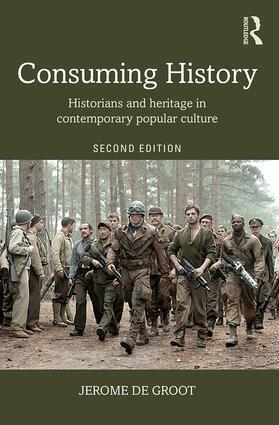
Consuming History examines how history works in contemporary popular culture. Analysing a wide range of cultural entities from computer games to daytime television, it investigates the ways in which society consumes history and how a reading of this consumption can help us understand popular culture and issues of representation.In this second edition, Jerome de Groot probes how museums have responded to the heritage debate and how new technologies from online game-playing to internet genealogy have brought about a shift in access to history, discussing the often conflicted relationship between ‘public’ and academic history and raising important questions about the theory and practice of history as a discipline. Fully revised throughout with up-to-date examples from sources such as Wolf Hall, Game of Thrones and 12 Years a Slave, this edition also includes new sections on the historical novel, gaming, social media and genealogy. It considers new, ground-breaking texts and media such as YouTube in addition to entities and practices, such as re-enactment, that have been underrepresented in historical discussion thus far.Engaging with a broad spectrum of source material and comparing the experiences of the UK, the USA, France and Germany as well as exploring more global trends, Consuming History offers an essential path through the debates for readers interested in history, cultural studies and the media.
629 kr
Skickas inom 10-15 vardagar
Consuming History examines how history works in contemporary popular culture. Analysing a wide range of cultural entities from computer games to daytime television, it investigates the ways in which society consumes history and how a reading of this consumption can help us understand popular culture and issues of representation.In this second edition, Jerome de Groot probes how museums have responded to the heritage debate and how new technologies from online game-playing to internet genealogy have brought about a shift in access to history, discussing the often conflicted relationship between ‘public’ and academic history and raising important questions about the theory and practice of history as a discipline. Fully revised throughout with up-to-date examples from sources such as Wolf Hall, Game of Thrones and 12 Years a Slave, this edition also includes new sections on the historical novel, gaming, social media and genealogy. It considers new, ground-breaking texts and media such as YouTube in addition to entities and practices, such as re-enactment, that have been underrepresented in historical discussion thus far.Engaging with a broad spectrum of source material and comparing the experiences of the UK, the USA, France and Germany as well as exploring more global trends, Consuming History offers an essential path through the debates for readers interested in history, cultural studies and the media.
620 kr
Skickas inom 10-15 vardagar
Royalist Identities shifts the emphasis from the question 'What is Royalism?' to 'What did Royalism want to be?' The texts analyzed show how Royalism was concerned with the construction of a set of binary roles and behavioural models designed to perpetuate a certain paradigm of social stability.
620 kr
Skickas inom 10-15 vardagar
Royalist identities shifts the emphasis from the question 'What is Royalism?' to 'What did Royalism want to be?' The texts analyzed show how Royalism was concerned with the construction of a set of binary roles and behavioural models designed to perpetuate a certain paradigm of social stability. de Groot deploys theories of identity to analyze the literature and culture of this important period- including the works of Milton, Marvell, Herrick and Cowley, amongst others - and in particular to discuss the formation and construction of an ideologically inflected cultural and social identity.