Jerry Courvisanos – författare
Visar alla böcker från författaren Jerry Courvisanos. Handla med fri frakt och snabb leverans.
4 produkter
4 produkter
749 kr
Skickas inom 10-15 vardagar
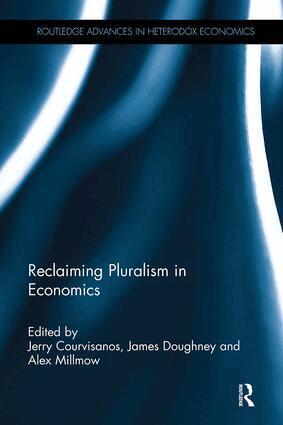
Until the end of the early 1970s, from a history of economic thought perspective, the mainstream in economics was pluralist, but once neoclassical economics became totally dominant it claimed the mainstream as its own. Since then, alternative views and schools of economics increasingly became minorities in the discipline and were considered ‘heterodox’. This book is in honour of John Edward King who has an impressive publication record in the area of economic theory with specific interest in how economic thought in the past shapes current economic theory and enforces certain paths of economic policy and economic development. This book is divided into five themes based on King’s interests. The first theme looks at the challenge in trying to reclaim pluralism in economics. The second faces head-on the direct collision of mainstream economics with history of economic thought and heterodox economics. The third addresses classical economic ideas, their central influence in the past and how they can still primarily guide modern pluralist economics. The fourth examines Post Keynesian and Kaleckian economics with a view to providing a more coherent and extensive branch of heterodox economics. The final theme critiques the policy of neoliberalism that has entrenched itself in capitalist economies which have led to financial, industrial, labour, and behavioural/consumerist crises.This text aims to provide a clear path for pluralism to serve the economics discipline as its standard bearer, and to no longer be merely a heterodox challenge to the mainstream. This book is of interest to those who study history of economic thought, political economy and heterodox economics.
2 316 kr
Skickas inom 10-15 vardagar
Until the end of the early 1970s, from a history of economic thought perspective, the mainstream in economics was pluralist, but once neoclassical economics became totally dominant it claimed the mainstream as its own. Since then, alternative views and schools of economics increasingly became minorities in the discipline and were considered ‘heterodox’. This book is in honour of John Edward King who has an impressive publication record in the area of economic theory with specific interest in how economic thought in the past shapes current economic theory and enforces certain paths of economic policy and economic development. This book is divided into five themes based on King’s interests. The first theme looks at the challenge in trying to reclaim pluralism in economics. The second faces head-on the direct collision of mainstream economics with history of economic thought and heterodox economics. The third addresses classical economic ideas, their central influence in the past and how they can still primarily guide modern pluralist economics. The fourth examines Post Keynesian and Kaleckian economics with a view to providing a more coherent and extensive branch of heterodox economics. The final theme critiques the policy of neoliberalism that has entrenched itself in capitalist economies which have led to financial, industrial, labour, and behavioural/consumerist crises.This text aims to provide a clear path for pluralism to serve the economics discipline as its standard bearer, and to no longer be merely a heterodox challenge to the mainstream. This book is of interest to those who study history of economic thought, political economy and heterodox economics.
Cycles, Crises and Innovation
Path to Sustainable Development – a Kaleckian-Schumpeterian Synthesis
Inbunden, Engelska, 2012
2 002 kr
Skickas inom 7-10 vardagar
'Reflection on the ''history of opinion'', and its application to our contemporary world and controversies over technology and our environmental difficulties, is the distinguishing feature of the thoughtful economist. If the reader of this book is moved to reflect on the work of Schumpeter and Kalecki, the author of this book will have succeeded. Even more important than this, if the reader of this book comes to a changed and deeper understanding of how technology changes in our faltering capitalist economies, and of how the environment is affected by production and may be improved with better ways of satisfying our personal and productive needs, then the author will have done an even greater service to his profession and humanity.'- From the foreword by Jan Toporowski, School of Oriental and African Studies, University of London, UK'Jerry Courvisanos provides us with a timely analysis of the forces behind the crises of capitalism and the tendency towards ecologically unsustainable growth. He draws on the work of two of most creative, if not most recognized, economists of the 20th Century, Micha Kalecki and Joseph Schumpeter. In place of mainstream analysis with its emphasis on marginal conditions for optimisation around well-defined equilibrium, we have a world of innovation, structural change, creative destruction, business cycles, financial crises, changing income distribution and many other inconvenient developments that plague modern economies.'- From the foreword by Harry Bloch, Curtin University, AustraliaCycles, crises and innovation are the major economic forces that shape capitalist economies. Using a critical realist political economy approach, the analysis in this fine work is based on the works of Michal Kalecki and Joseph Schumpeter - both of whom identify these three dynamic forces as plotting the path of economic development. Jerry Courvisanos' thought-provoking book examines how the rise of capital through investment enshrines innovation in profit and power which in turn determines the course of cycles and crises. The author concludes by arguing for strategic intervention by transformative eco-innovation as a public policy path to ecologically sustainable development. This interdisciplinary book will appeal to economists, innovation and entrepreneurship-based scholars, postgraduate students studying the political economy of both innovation and entrepreneurship, regional development planners and economic development policy makers. Anyone with a general interest in economics, politics and innovation or looking for a path out of the economic and ecological morass of current capitalism, will also find much to interest them in this book.
Investment Cycles in Capitalist Economies
A Kaleckian Behavioural Contribution
Inbunden, Engelska, 1996
1 945 kr
Skickas inom 7-10 vardagar
This major book extends Michal Kalecki’s investment cycle analysis into an integrated dynamic model of how levels of confidence experienced by entrepreneurs affect their decisions to invest.The long-term, expensive and uncertain nature of investment projects inhibits decision makers’ confidence, making it susceptible to a wide range of factors. Incorporating behavioural and evolutionary analysis into a Kaleckian investment model, Jerry Courvisanos develops the concept of susceptibility which provides the foundation for an improved understanding of the empirically observed cyclical instability of capital accumulation. Historically based empirical patterns of cyclical manufacturing investment in capitalist economies are identified and related to how the nature of susceptibility alters over time. These alterations are shown to create different investment cycle patterns over evolving periods of economic development. Drawing on this susceptibility cycle model, Jerry Courvisanos shows how corporate and governmental strategic planners can better design policies to mitigate the instability that investment exhibits. The result could be to diminish the aggravating effect that investment instability has on business cycles and employment in capitalist economies.