Jesper Rydén - Böcker
Visar alla böcker från författaren Jesper Rydén. Handla med fri frakt och snabb leverans.
3 produkter
3 produkter
441 kr
Skickas
Många fenomen i vår omvärld är slumpmässiga – stokastiska – till sin natur. För att som ingenjör kunna ge matematiska beskrivningar av dessa är det nödvändigt med kunskaper i sannolikhetslära. Detta utgör även grunden för statistisk inferens, där slutsatser kring insamlade data kan dras med metoder baserade på resultat från sannolikhetsläran. En samlande benämning för detta område är stokastik: matematiska teorier och modeller för stokastiska fenomen.I denna bok presenteras grundläggande sannolikhetslära och statistik. Den matematiska nivån hålls på så elementär nivå som möjligt och framställningen har gjorts med tanke på ingenjörstillämpningar. I varje kapitel finns rikligt med exempel där frågeställningarna ofta har en bakgrund i någon teknisk tillämpning. Kapitlen avslutas med övningsuppgifter, till vilka korta lösningar återfinns i bokens slut.I den andra upplagan har tillkommit en del nya avsnitt, exempelvis illustreras hur statistikprogrammet R kan användas för beräkningar. Nya övningsuppgifter har lagts till i samtliga kapitel.Boken är lämplig för en inledande kurs i matematisk statistik för studerande vid ingenjörsutbildningar, naturvetenskapliga utbildningar eller fristående kurser vid universitet och högskola.Till den nya upplagan av Stokastik för ingenjörer finns en interaktiv webbplats från vilken man kan läsa boken digitalt med möjlighet att markera och anteckna. Här finns även övningsuppgifter som framför allt ger träning på grundläggande begrepp. Vidare finns kapitelsammanfattningar och en övningstentamen med lösningar.
1 286 kr
Skickas inom 10-15 vardagar
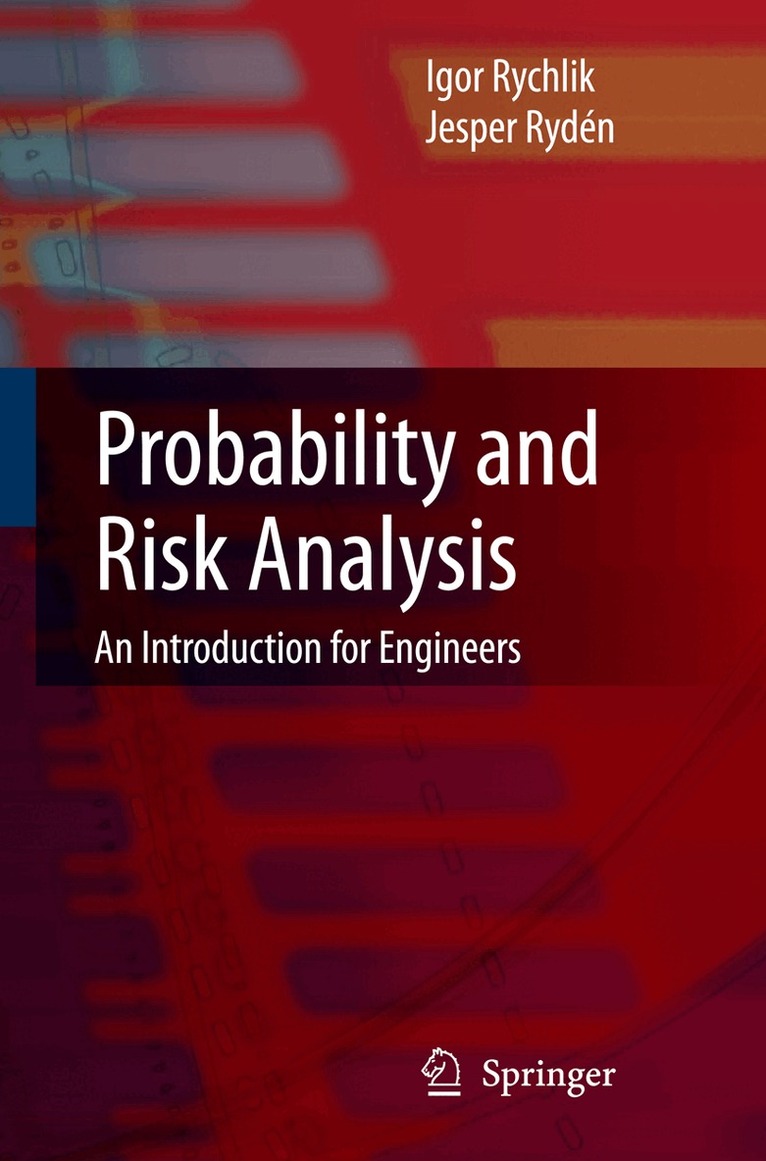
The purpose of this book is to present concepts in a statistical treatment of risks. Such knowledge facilitates the understanding of the in?uence of random phenomena and gives a deeper knowledge of the possibilities o?ered by and algorithms found in certain software packages. Since Bayesian methods are frequently used in this ?eld, a reasonable proportion of the presentation is devoted to such techniques. The text is written with student in mind – a student who has studied - ementary undergraduate courses in engineering mathematics, may be incl- ing a minor course in statistics. Even though we use a style of presentation traditionally found in the math literature (including descriptions like de- itions, examples, etc.), emphasis is put on the understanding of the theory and methods presented; hence reasoning of an informal character is frequent. With respect to the contents (and its presentation), the idea has not been to write another textbook on elementary probability and statistics — there are plenty of such books — but to focus on applications within the ?eld of risk and safety analysis. Each chapter ends with a section on exercises; short solutions are given in appendix. Especially in the ?rst chapters, some exercises merely check basic concepts introduced, with no clearly attached application indicated. However, among the collection of exercises as a whole, the ambition has been to present problems of an applied character and to a great extent real data sets have been used when constructing the problems.
913 kr
Skickas inom 10-15 vardagar
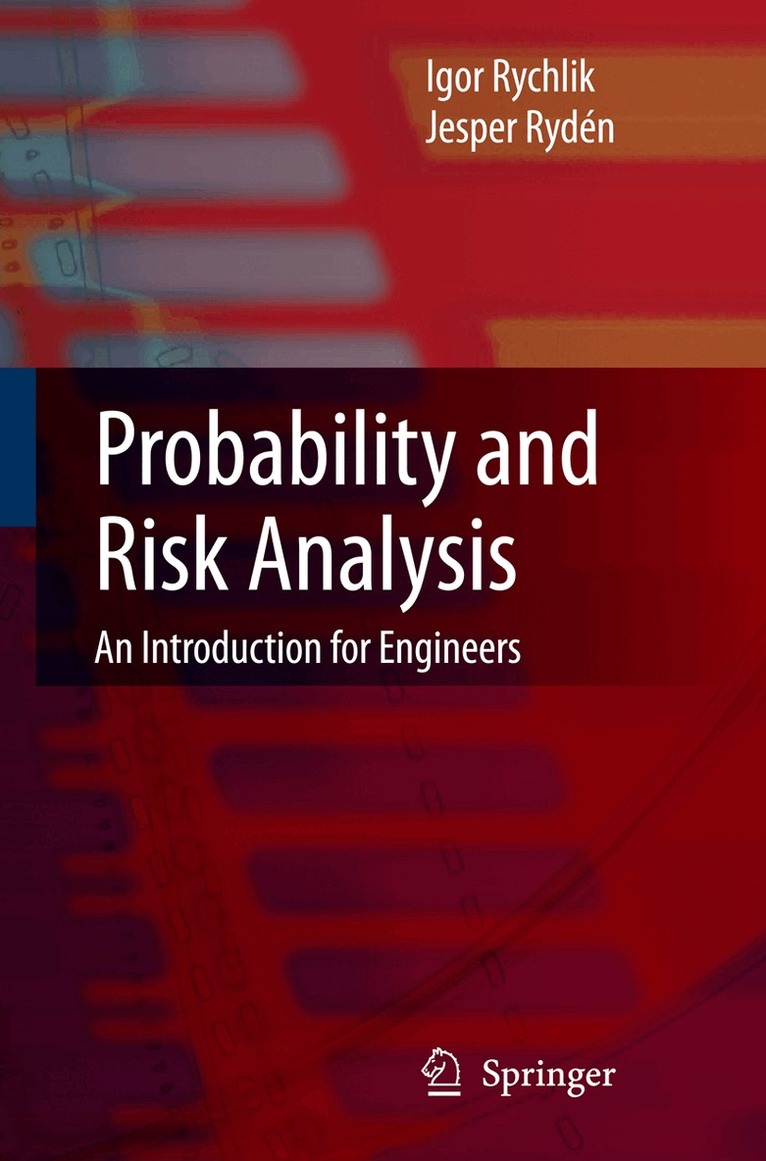
The purpose of this book is to present concepts in a statistical treatment of risks. Such knowledge facilitates the understanding of the in?uence of random phenomena and gives a deeper knowledge of the possibilities o?ered by and algorithms found in certain software packages. Since Bayesian methods are frequently used in this ?eld, a reasonable proportion of the presentation is devoted to such techniques. The text is written with student in mind – a student who has studied - ementary undergraduate courses in engineering mathematics, may be incl- ing a minor course in statistics. Even though we use a style of presentation traditionally found in the math literature (including descriptions like de- itions, examples, etc.), emphasis is put on the understanding of the theory and methods presented; hence reasoning of an informal character is frequent. With respect to the contents (and its presentation), the idea has not been to write another textbook on elementary probability and statistics — there are plenty of such books — but to focus on applications within the ?eld of risk and safety analysis. Each chapter ends with a section on exercises; short solutions are given in appendix. Especially in the ?rst chapters, some exercises merely check basic concepts introduced, with no clearly attached application indicated. However, among the collection of exercises as a whole, the ambition has been to present problems of an applied character and to a great extent real data sets have been used when constructing the problems.