Jessica Christine Lai – författare
Visar alla böcker från författaren Jessica Christine Lai. Handla med fri frakt och snabb leverans.
4 produkter
4 produkter
Inbunden, Engelska, 2012
2 734 kr
Skickas inom 5-8 vardagar
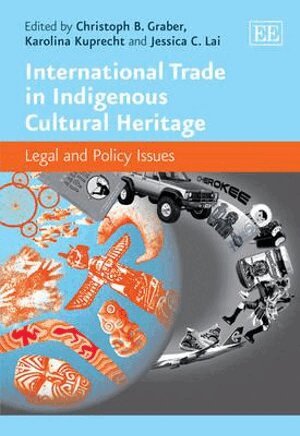
This topical book brings to the fore new and standard-setting research into the connection between indigenous cultural heritage, international trade and economic development of indigenous peoples.The book is unique in taking a multi-faceted approach to cultural heritage, incorporating discussion on tangible and intangible, moveable and immoveable elements of indigenous peoples' culture. From the perspectives of several international legal fields, including trade law, intellectual property, cultural property, cultural heritage law and human rights, the book explores how indigenous peoples could be empowered to participate more actively in the trade of their cultural heritage without being compelled to renounce important traditional values. The national and local legal realities in four jurisdictions (New Zealand, Australia, United States and Canada) lay the scene for a wide-ranging analysis of various possibilities and proposals on how this might be achieved.International Trade in Indigenous Cultural Heritage will appeal to legal scholars and practitioners interested in cultural property and heritage, intellectual property, trade law and human rights. Policy-makers within governmental departments and international organisations will also find much to interest them in this detailed study as will anyone working in the field of indigenous rights.Contributors: C. Antons, F. Bandarin, C. Bell, K. Bowrey, D. Champagne, P.L.A.H. Chartrand, R.J. Coombe, S. Frankel, M. Girsberger, C.E. Goldberg, C.B. Graber, K. Kuprecht, J.C. Lai, F. Lenzerini, F. Macmillan, B. Müller, J. Scott, K. Siehr, R. Tsosie, J.F. Turcotte, B. Vézina
Inbunden, Engelska, 2014
993 kr
Skickas inom 10-15 vardagar
Now more than ever, indigenous peoples’ interests in their cultural heritage are in the spotlight. Yet, there is very little literature that comprehensively discusses how existing laws can and cannot be used to address indigenous peoples’ interests. This book assesses how intangible aspects of indigenous cultural heritage (and the tangible objects that hold them) can be protected, within the realm of a broad range of existing legal orders, including intellectual property and related rights, consumer protection law, common law and equitable doctrines, and human rights. It does so by focusing on the New Zealand Māori. The book also looks to the future, analysing the long-awaited Wai 262 report, released in New Zealand by the Waitangi Tribunal in response to allegations that the government had failed in its duty to ensure that the Māori retain chieftainship over their tangible and intangible treasures, as required by the Treaty of Waitangi, signed between the Māori and the British Crown in 1840.
E-bok
PDF, Engelska, 20141 303 kr
Läs direkt efter köp
Now more than ever, indigenous peoples’ interests in their cultural heritage are in the spotlight. Yet, there is very little literature that comprehensively discusses how existing laws can and cannot be used to address indigenous peoples’ interests. This book assesses how intangible aspects of indigenous cultural heritage (and the tangible objects that hold them) can be protected, within the realm of a broad range of existing legal orders, including intellectual property and related rights, consumer protection law, common law and equitable doctrines, and human rights. It does so by focusing on the New Zealand Māori. The book also looks to the future, analysing the long-awaited Wai 262 report, released in New Zealand by the Waitangi Tribunal in response to allegations that the government had failed in its duty to ensure that the Māori retain chieftainship over their tangible and intangible treasures, as required by the Treaty of Waitangi, signed between the Māori and the British Crown in 1840.
Häftad, Engelska, 2016
993 kr
Skickas inom 10-15 vardagar
Now more than ever, indigenous peoples’ interests in their cultural heritage are in the spotlight. Yet, there is very little literature that comprehensively discusses how existing laws can and cannot be used to address indigenous peoples’ interests. This book assesses how intangible aspects of indigenous cultural heritage (and the tangible objects that hold them) can be protected, within the realm of a broad range of existing legal orders, including intellectual property and related rights, consumer protection law, common law and equitable doctrines, and human rights. It does so by focusing on the New Zealand Māori. The book also looks to the future, analysing the long-awaited Wai 262 report, released in New Zealand by the Waitangi Tribunal in response to allegations that the government had failed in its duty to ensure that the Māori retain chieftainship over their tangible and intangible treasures, as required by the Treaty of Waitangi, signed between the Māori and the British Crown in 1840.