Jessica Gurevitch – författare
Visar alla böcker från författaren Jessica Gurevitch. Handla med fri frakt och snabb leverans.
7 produkter
7 produkter
2 463 kr
Skickas inom 5-8 vardagar
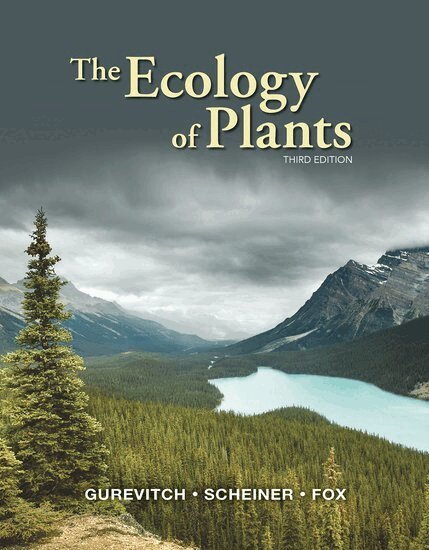
The Ecology of Plants provides comprehensive, contemporary coverage of plant ecology. Now in its third edition, the text incorporates current scientific developments and includes hundreds of stunning photographs, insightful illustrations, and references. It also features a clean, modern design that makes the material accessible and appealing. The book covers a range of current and historical ecological topics, presented in an evolutionary context, with the focus on the interactions between plants and their environments over a range of scales. Some of the subjects covered are unique to plants, such as photosynthesis and the ecology of plant-soil interactions; other topics, such as resource and mate acquisition, emphasize the distinctive ways plants (in contrast to animals) deal with their environments. The book uniquely emphasizes the importance of evolutionary and other historical ecological processes as well as human environmental influences. While the book is written for an undergraduate course in plant ecology, the engaging style, thorough coverage of the field, and contemporary perspective make it accessible and useful to others as well, including graduate students in conservation biology, evolutionary biologists and resource managers.
2 657 kr
Skickas inom 5-8 vardagar
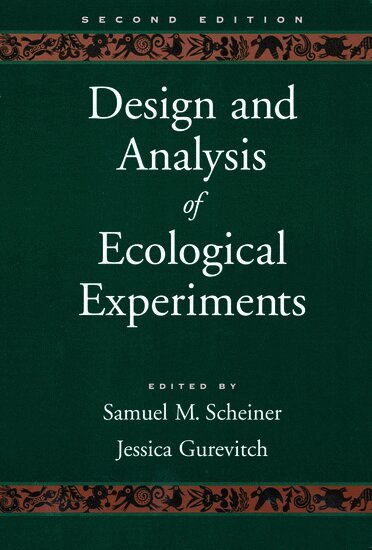
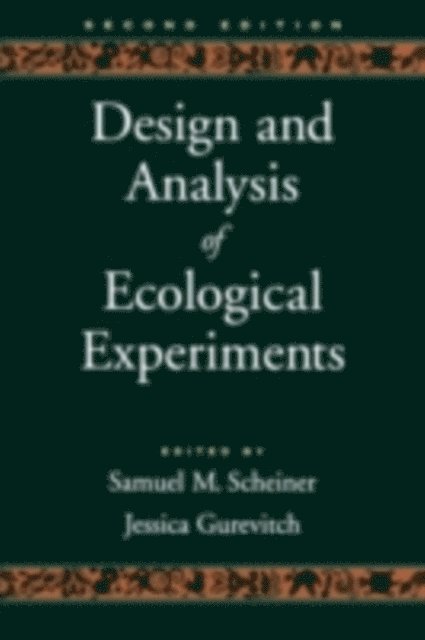
This book focuses on the design and analysis of ecological experiments, concentrating on statistical approaches. Each chapter presents a particular statistical technique or set of techniques in the context of resolving an ecological issue. This new edition eliminates some topics that have become less important to ecology, adds new chapters on the major developing issues, (power analysis, logistic regression, randomization tests, and empiral Baynesian analysis), and updates all the presentations.
1 193 kr
Skickas inom 5-8 vardagar
This book focuses on the design and analysis of ecological experiments, concentrating on statistical approaches. Each chapter presents a particular statistical technique or set of techniques in the context of resolving an ecological issue. This new edition eliminates some topics that havein become less important to ecology, adds new chapters on thehe major developing issues, (power analysis, logisticecome less regression, randomization tests, and empiral Baynesian analysis), and updates all the presentations.
377 kr
Kommande
Life on Our Dynamic Planet explores the forces that shape our world-from weather systems and seasons to the intricate dance between climate and life. The engaging text offers readers keys to understanding how the interaction between atmospheric dynamics, the energy we receive from the sun, ocean circulation, and Earth's yearly journey in the solar system create and maintain the environments we inhabit with millions of other living things. Through clear and approachable writing, it bridges the gap between everyday experience and the science behind weather, climate, and the living world. Answering and explaining everyday questions that pique readers' curiosity, the book explores a wide range of phenomena, from the formation of clouds, snow, and glaciers to the mechanisms behind hurricanes, droughts, and monsoons. It reveals the wonder of color, from rainbows to the patterns in flowers that are invisible to humans but act as bright UV road signs for pollinators. What makes the tropics warm and humid, and why do they have dry and wet seasons? Why do we have deserts, and four seasons in temperate regions? The subtle and dramatic ways living systems both respond to and shape their physical environments are revealed. The text clarifies how the land, ocean, and atmosphere interact with life on Earth and how those relationships shape everything from meerkats and penguins to our own human family. Richly complemented with photographs and illustrations, Life on Our Dynamic Planet is written for those who are curious about their world and are seeking a deeper understanding of it. It opens a window to greater knowledge and appreciation of the complexity and beauty of the planet we share with all life.
1 230 kr
Skickas inom 5-8 vardagar
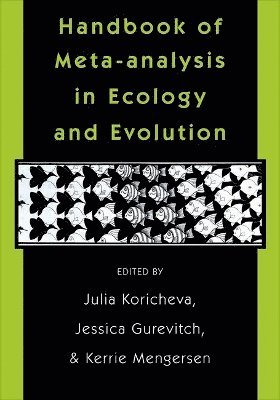
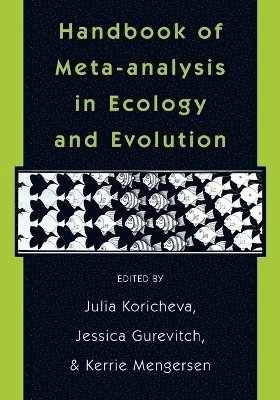
Meta-analysis is a powerful statistical methodology for synthesizing research evidence across independent studies. This is the first comprehensive handbook of meta-analysis written specifically for ecologists and evolutionary biologists, and it provides an invaluable introduction for beginners as well as an up-to-date guide for experienced meta-analysts. The chapters, written by renowned experts, walk readers through every step of meta-analysis, from problem formulation to the presentation of the results. The handbook identifies both the advantages of using meta-analysis for research synthesis and the potential pitfalls and limitations of meta-analysis (including when it should not be used). Different approaches to carrying out a meta-analysis are described, and include moment and least-square, maximum likelihood, and Bayesian approaches, all illustrated using worked examples based on real biological datasets. This one-of-a-kind resource is uniquely tailored to the biological sciences, and will provide an invaluable text for practitioners from graduate students and senior scientists to policymakers in conservation and environmental management.* Walks you through every step of carrying out a meta-analysis in ecology and evolutionary biology, from problem formulation to result presentation * Brings together experts from a broad range of fields * Shows how to avoid, minimize, or resolve pitfalls such as missing data, publication bias, varying data quality, nonindependence of observations, and phylogenetic dependencies among species * Helps you choose the right software * Draws on numerous examples based on real biological datasets
750 kr
Skickas inom 5-8 vardagar
Meta-analysis is a powerful statistical methodology for synthesizing research evidence across independent studies. This is the first comprehensive handbook of meta-analysis written specifically for ecologists and evolutionary biologists, and it provides an invaluable introduction for beginners as well as an up-to-date guide for experienced meta-analysts. The chapters, written by renowned experts, walk readers through every step of meta-analysis, from problem formulation to the presentation of the results. The handbook identifies both the advantages of using meta-analysis for research synthesis and the potential pitfalls and limitations of meta-analysis (including when it should not be used). Different approaches to carrying out a meta-analysis are described, and include moment and least-square, maximum likelihood, and Bayesian approaches, all illustrated using worked examples based on real biological datasets. This one-of-a-kind resource is uniquely tailored to the biological sciences, and will provide an invaluable text for practitioners from graduate students and senior scientists to policymakers in conservation and environmental management.* Walks you through every step of carrying out a meta-analysis in ecology and evolutionary biology, from problem formulation to result presentation * Brings together experts from a broad range of fields * Shows how to avoid, minimize, or resolve pitfalls such as missing data, publication bias, varying data quality, nonindependence of observations, and phylogenetic dependencies among species * Helps you choose the right software * Draws on numerous examples based on real biological datasets
151 kr
Skickas inom 5-8 vardagar