Jessica Pykett - Böcker
Visar alla böcker från författaren Jessica Pykett. Handla med fri frakt och snabb leverans.
16 produkter
16 produkter
2 088 kr
Skickas inom 10-15 vardagar
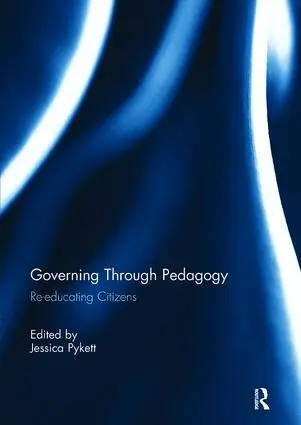
This edited collection brings together researchers from education, human geography, sociology, social policy and political theory in order to consider the idea of the ‘pedagogical state’ as a means of understanding the strategies employed to re-educate citizens. The book aims to critically interrogate the cultural practices of governing citizens in contemporary liberal societies. Governing through pedagogy can be identified as an emerging tactic by which both state agencies and other non-state actors manage, administer, discipline, shape, care for and enable liberal citizens. Hence, discourses of ‘active citizenship’, ‘participatory democracy’, ‘community empowerment’, ‘personalised responsibility’, ‘behaviour change’ and ‘community cohesion’ are productively viewed through the conceptual lens of the pedagogical state. Chapters consider the spaces of schools, universities, the voluntary sector, civil society organisations, parenting initiatives, the media, government departments and state agencies as fruitful empirical sites through which pedagogy is worked and re-worked. This book was originally published as a special issue of Citizenship Studies.
1 032 kr
Kommande
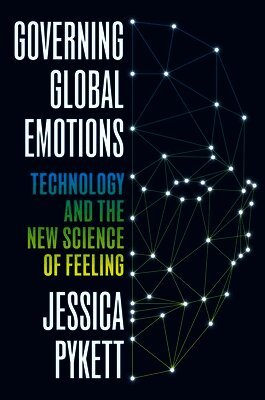
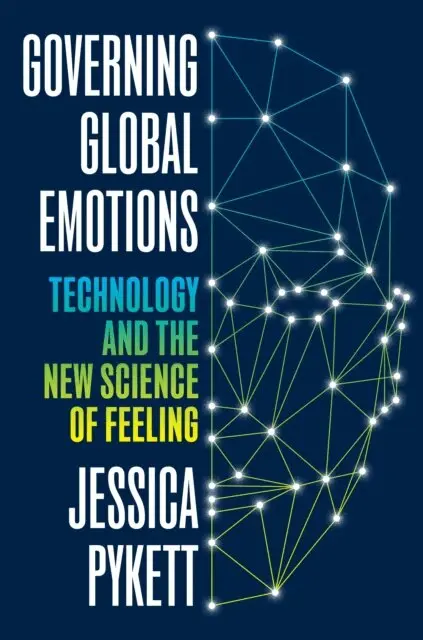
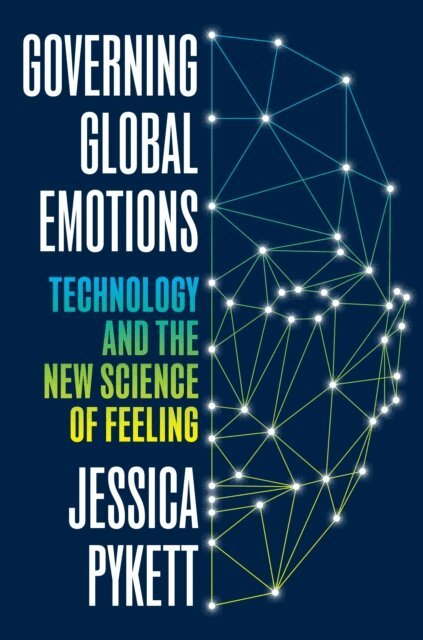
What goes wrong when emotions get turned into digital data to be measured, monitored and managedData from facial emotion recognition, brain-computer interfaces, virtual reality, global emotion surveys and sentiment analysis offer an extraordinary new terrain for scientific exploration. Emotion sensing promises to decode and even to augment and control the very essence of human experience. But what if the science and technology of emotion measurement get emotions wrong? In Governing Global Emotions, Jessica Pykett argues that we must shift our thinking on digital emotional governance and calls for a radical reassessment of the fundamental claims of emotion science.Pykett offers a groundbreaking account of how emotions are defined, used and governed through emerging digital technologies, arguing that emotions, senses and feelings have become a crucial new arena for political, economic and cultural struggles. She describes how technologies create emotional data, how smart cities use sensors to monitor residents’ feelings and how global economies measure happiness. Drawing on twenty years of interdisciplinary social science, Pykett documents how emotion science continues to delve deeper, as researchers look for evolutionary continuity, biological certainty and neuroscientific consensus. What she finds instead is a divided field vulnerable to significant criticism. Pykett concludes that standardised, universal and instrumentalised scientific accounts of emotions are machinic, and when divorced from context, they can never be global.
276 kr
Kommande
What goes wrong when emotions get turned into digital data to be measured, monitored and managedData from facial emotion recognition, brain-computer interfaces, virtual reality, global emotion surveys and sentiment analysis offer an extraordinary new terrain for scientific exploration. Emotion sensing promises to decode and even to augment and control the very essence of human experience. But what if the science and technology of emotion measurement get emotions wrong? In Governing Global Emotions, Jessica Pykett argues that we must shift our thinking on digital emotional governance and calls for a radical reassessment of the fundamental claims of emotion science.Pykett offers a groundbreaking account of how emotions are defined, used and governed through emerging digital technologies, arguing that emotions, senses and feelings have become a crucial new arena for political, economic and cultural struggles. She describes how technologies create emotional data, how smart cities use sensors to monitor residents’ feelings and how global economies measure happiness. Drawing on twenty years of interdisciplinary social science, Pykett documents how emotion science continues to delve deeper, as researchers look for evolutionary continuity, biological certainty and neuroscientific consensus. What she finds instead is a divided field vulnerable to significant criticism. Pykett concludes that standardised, universal and instrumentalised scientific accounts of emotions are machinic, and when divorced from context, they can never be global.
1 658 kr
Skickas inom 7-10 vardagar
Changing Behaviours charts the emergence of the behavior change agenda in UK based public policy making since the late 1990s.By tracing the influence of the behavioural sciences on Whitehall policy makers, the authors explore a new psychological orthodoxy in the practices of governing. Drawing on original empirical material, chapters examine the impact of behavior change policies in the fields of health, personal finance and the environment. This topical and insightful book analyses how the nature of the human subject itself is re-imagined through behavior change, and develops an analytical framework for evaluating the ethics, efficacy and potential empowerment of behavior change.This unique book will be of interest to advanced undergraduates, postgraduates and academics in a range of different disciplines. In particular, its inter-disciplinary focus on key themes in the social sciences - the state, citizenship, the meaning and scope of government - will make it essential reading for students of political science, sociology, anthropology, geography, policy studies and public administration. In addition, the book s focus on the practical use of psychological and behavioral insights by politicians and policy makers should lead to considerable interest in psychology and behavioural economics.Contents: Preface1. Changing Behaviours and 'New Models of Man'2. The Rise of the Psychological State in the UK3. In the Heat of the Moment: Gambling and Saving Behaviours4. Replanning the Street: Changing Behaviours by Spatial Design5. Governing the Body: Addressing the Temptations of Food and Alcohol6. Greening the Brain: The Pro-Environmental Behaviour Change AgendaConclusion: Nudge, Think, Steer, Punch! Searching for the Real Third WayReferences Index
502 kr
Skickas inom 7-10 vardagar
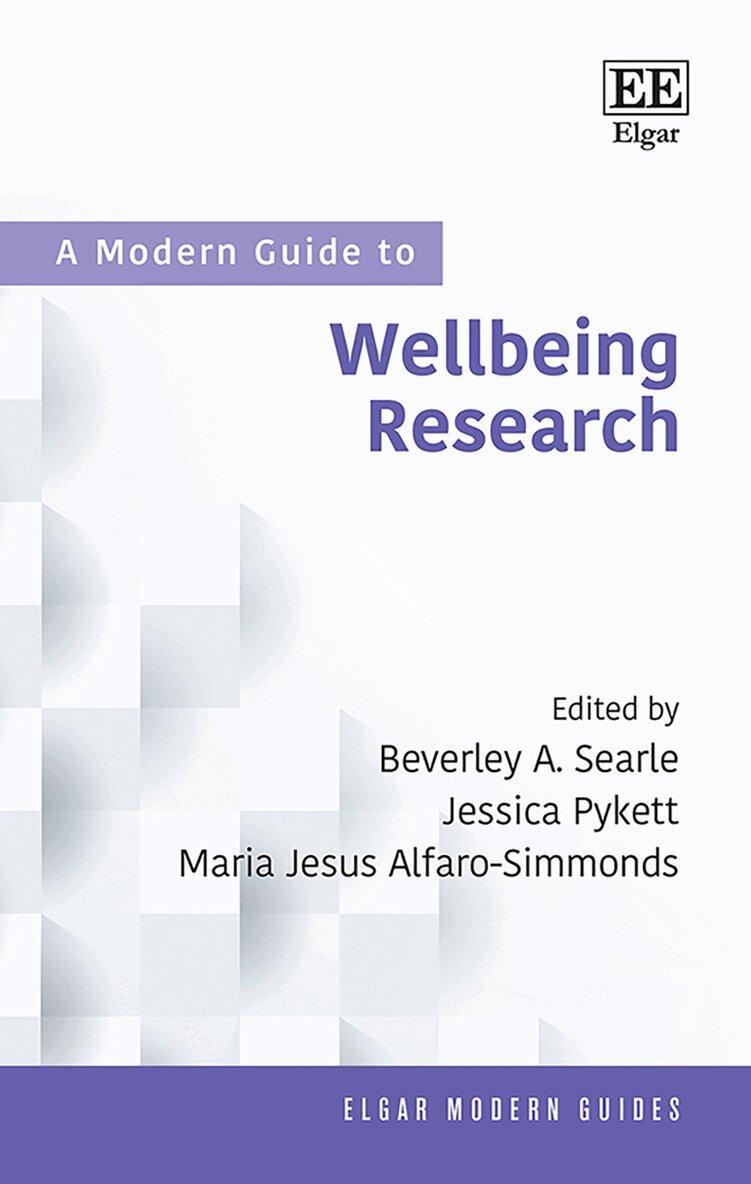
This insightful Modern Guide explores heterodox approaches to modern wellbeing research, with a specific focus on how wellbeing is understood and practised, exploring policies and actions which are taken to shape wellbeing. It evaluates contemporary trends in wellbeing research, including the sometimes competing definitions, methods and approaches offered by different disciplinary perspectives.Exploring the threats to wellbeing from the environments we inhabit and the situations societies create and endure, chapters particularly look at wellbeing inequalities and the experiences of marginalised groups, demonstrating the connection between wellbeing and political struggle. Provocative commentaries from leading scholars plus chapters on original theoretical developments and research studies across diverse world regions reveal wellbeing research based on situated practices, social differences and specific cultural contexts. This Modern Guide assesses the influence and impact of wellbeing research on policy and practice across a range of sectors and spaces, including: wellbeing budgeting, nature-based interventions, urban design, environmental resource management, prisons, housing, international migration, and post-conflict situations.This will be a useful read for scholars of human geography, social policy, urban studies, anthropology, political science and environmental economics. Policy makers will also appreciate the suggestions for improvement to wellbeing policies and practices.
671 kr
Skickas inom 10-15 vardagar
This edited collection brings together researchers from education, human geography, sociology, social policy and political theory in order to consider the idea of the ‘pedagogical state’ as a means of understanding the strategies employed to re-educate citizens. The book aims to critically interrogate the cultural practices of governing citizens in contemporary liberal societies. Governing through pedagogy can be identified as an emerging tactic by which both state agencies and other non-state actors manage, administer, discipline, shape, care for and enable liberal citizens. Hence, discourses of ‘active citizenship’, ‘participatory democracy’, ‘community empowerment’, ‘personalised responsibility’, ‘behaviour change’ and ‘community cohesion’ are productively viewed through the conceptual lens of the pedagogical state. Chapters consider the spaces of schools, universities, the voluntary sector, civil society organisations, parenting initiatives, the media, government departments and state agencies as fruitful empirical sites through which pedagogy is worked and re-worked. This book was originally published as a special issue of Citizenship Studies.
671 kr
Skickas inom 10-15 vardagar
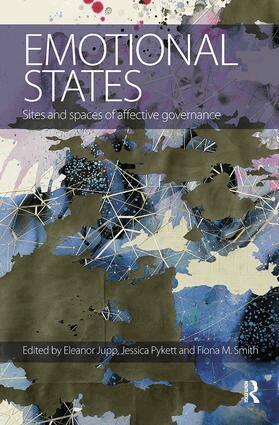
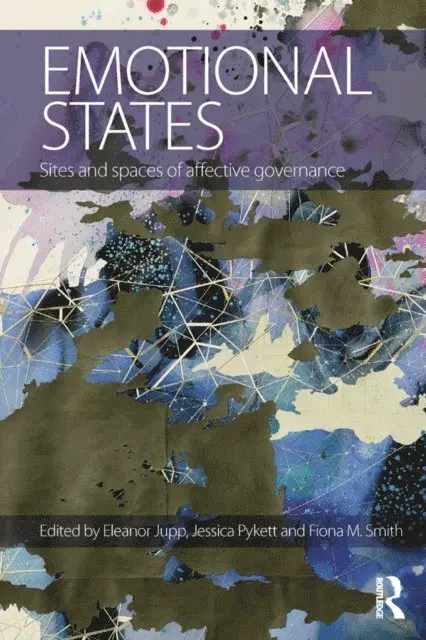
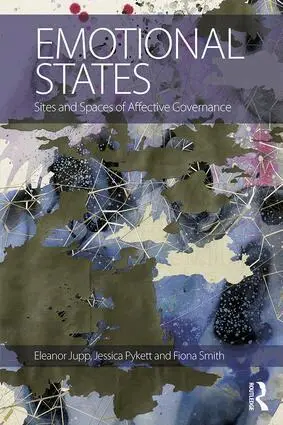
What is the political allure, value and currency of emotions within contemporary cultures of governance? What does it mean to govern more humanely? Since the emergence of an emotional turn in human geography over the last decade, the notion that our emotions matter in understanding an array of social practices, spatial formations and aspects of everyday life is no longer seen as controversial. This book brings recent developments in emotional geography into dialogue with social policy concerns and contemporary issues of governance. It sets the intellectual scene for research into the geographical dimensions of the emotionalized states of the citizen, policy maker and public service worker, and highlights new research on the emotional forms of governance which now characterise public life.An international range of empirical field studies are used to examine issues of regulation, modification, governance and potential manipulation of emotional affects, professional and personal identities and political technologies. Contributors provide analysis of the role of emotional entanglements in policy strategy, policy implementation, service delivery, citizenship and participation as well as considering the emotional nature of the research process itself. It will be of interest to researchers and students within social policy, human geography, politics and related disciplines.
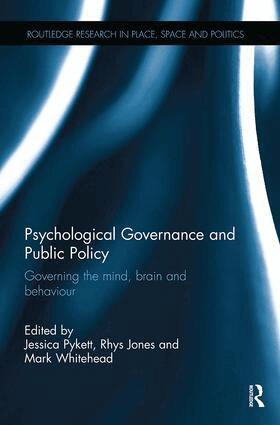
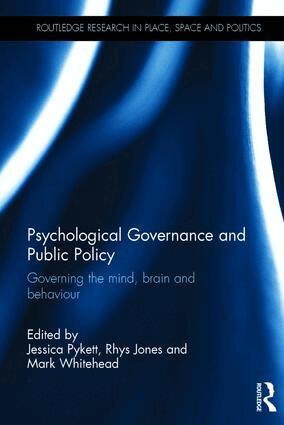
Psychological Governance and Public Policy
Governing the mind, brain and behaviour
Häftad, Engelska, 2018
671 kr
Skickas inom 10-15 vardagar
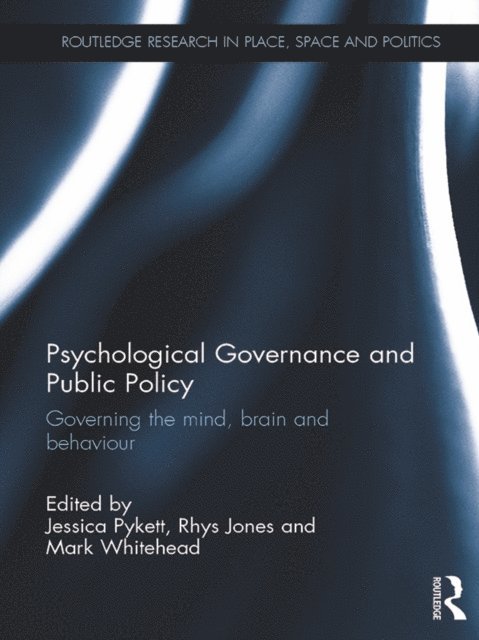
There have been significant developments in the state of psychological, neuroscientific and behavioural scientific knowledge relating to the human mind, brain, action and decision-making over the past two decades. These developments have influenced public policy making and popular culture in the UK and elsewhere – through policies and emerging social practices focussed on behavioural change, happiness, wellbeing, therapy, resilience and character. Yet little attention has been paid to examining the wider political and ethical significance of the widespread use of psychological governance techniques. There is a pressing and recognised need to address the behaviour change agenda in relation to how our cultural ideas about the brain, mind, behaviour and self are changing. This book provides a critical account of existing forms of psychological governance in relation to public policy. It asks whether we can speak of a co-ordinated and novel shift in governance or, rather, whether these trends are more simply pragmatic policy tools based on advances in scientific evidence. With contributions from leading scholars across the social sciences from the UK, the USA and Canada, chapters identify practical, political and research challenges posed by the current policy enthusiasm for particular branches of affective neuroscience, behavioural economics, positive psychology and happiness economics. The core focus of this book is to investigate the ways in which knowledge about the mind, brain and behaviour has informed the methods and techniques of governance and to explore the implications of this for shaping citizen identity and social practice. This groundbreaking book will be of interest to students, scholars and policy-makers interested and working within geography, economics, sociology, psychology, politics and cultural studies.
2 088 kr
Skickas inom 10-15 vardagar
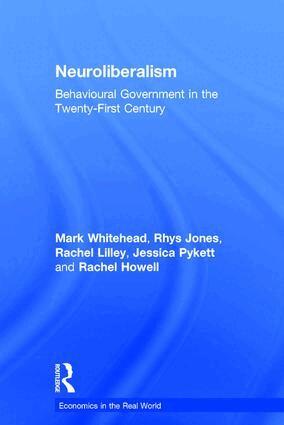
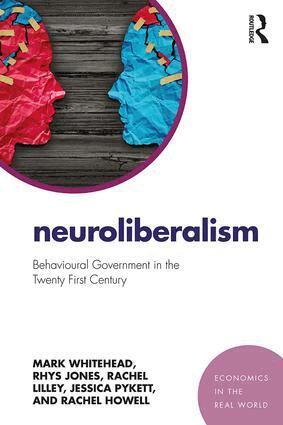
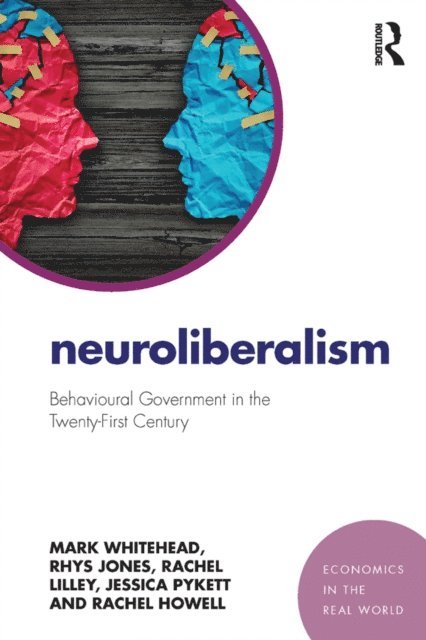
Many governments in the developed world can now best be described as ‘neuroliberal’: having a combination of neoliberal principles with policy initiatives derived from insights in the behavioural sciences. Neuroliberalism presents the results of the first critical global study of the impacts of the behavioural sciences on public policy and government actions, including behavioural economics, behavioural psychology and neuroeconomics. Drawing on interviews with leading behaviour change experts, organizations and policy-makers, and discussed in alignment with a series of international case studies, this volume provides a critical analysis of the ethical, economic, political and constitutional implications of behaviourally oriented government. It explores the impacts of the behavioural sciences on everyday life through a series of themes, including: understandings of the human subject; interpretations of freedom; the changing form and function of the state; the changing role of the corporation in society; and the design of everyday environments and technologies. The research presented in this volume reveals a diverse set of neuroliberal approaches to government that offer policy-makers and behaviour change professionals a real choice in relation to the systems of behavioural government they can implement. This book also argues that the behavioural sciences have the potential to support much more effective systems of government, but also generate new ethical concerns that policy-makers should be aware of.
549 kr
Skickas inom 10-15 vardagar
Many governments in the developed world can now best be described as ‘neuroliberal’: having a combination of neoliberal principles with policy initiatives derived from insights in the behavioural sciences. Neuroliberalism presents the results of the first critical global study of the impacts of the behavioural sciences on public policy and government actions, including behavioural economics, behavioural psychology and neuroeconomics. Drawing on interviews with leading behaviour change experts, organizations and policy-makers, and discussed in alignment with a series of international case studies, this volume provides a critical analysis of the ethical, economic, political and constitutional implications of behaviourally oriented government. It explores the impacts of the behavioural sciences on everyday life through a series of themes, including: understandings of the human subject; interpretations of freedom; the changing form and function of the state; the changing role of the corporation in society; and the design of everyday environments and technologies. The research presented in this volume reveals a diverse set of neuroliberal approaches to government that offer policy-makers and behaviour change professionals a real choice in relation to the systems of behavioural government they can implement. This book also argues that the behavioural sciences have the potential to support much more effective systems of government, but also generate new ethical concerns that policy-makers should be aware of.
Psychological Governance and Public Policy
Governing the mind, brain and behaviour
Inbunden, Engelska, 2016
2 088 kr
Skickas inom 10-15 vardagar
There have been significant developments in the state of psychological, neuroscientific and behavioural scientific knowledge relating to the human mind, brain, action and decision-making over the past two decades. These developments have influenced public policy making and popular culture in the UK and elsewhere – through policies and emerging social practices focussed on behavioural change, happiness, wellbeing, therapy, resilience and character. Yet little attention has been paid to examining the wider political and ethical significance of the widespread use of psychological governance techniques. There is a pressing and recognised need to address the behaviour change agenda in relation to how our cultural ideas about the brain, mind, behaviour and self are changing. This book provides a critical account of existing forms of psychological governance in relation to public policy. It asks whether we can speak of a co-ordinated and novel shift in governance or, rather, whether these trends are more simply pragmatic policy tools based on advances in scientific evidence. With contributions from leading scholars across the social sciences from the UK, the USA and Canada, chapters identify practical, political and research challenges posed by the current policy enthusiasm for particular branches of affective neuroscience, behavioural economics, positive psychology and happiness economics. The core focus of this book is to investigate the ways in which knowledge about the mind, brain and behaviour has informed the methods and techniques of governance and to explore the implications of this for shaping citizen identity and social practice. This groundbreaking book will be of interest to students, scholars and policy-makers interested and working within geography, economics, sociology, psychology, politics and cultural studies.
1 190 kr
Skickas inom 7-10 vardagar
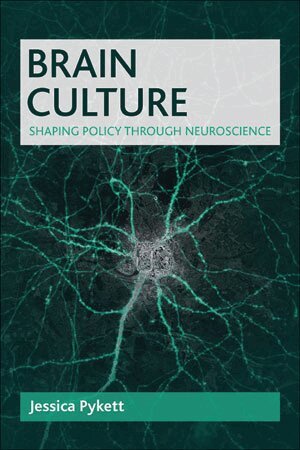
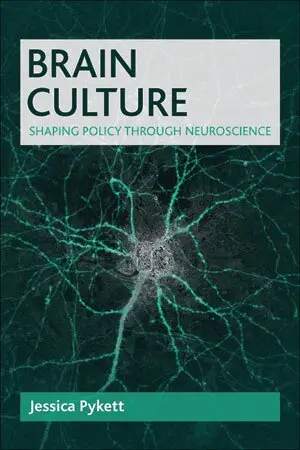
This unique book offers a timely analysis of the impact of rapidly advancing knowledge about the brain, mind and behaviour on contemporary public policy and practice. Examining developments in behaviour change policies, neuroscience, architecture and urban design, education, and workplace training programmes the book analyses the global spread of research agendas, policy experiments and everyday practice informed by ‘brain culture’. It offers an alternative, geographically informed set of explanations for what matters in explaining how people behave and how citizens’ behaviour should be governed. It will be of interest to students and academics across the social and behavioural sciences.
441 kr
Skickas inom 7-10 vardagar
This unique book offers a timely analysis of the impact of rapidly advancing knowledge about the brain, mind and behaviour on contemporary public policy and practice. Examining developments in behaviour change policies, neuroscience, architecture and urban design, education, and workplace training programmes the book analyses the global spread of research agendas, policy experiments and everyday practice informed by ‘brain culture’. It offers an alternative, geographically informed set of explanations for what matters in explaining how people behave and how citizens’ behaviour should be governed. It will be of interest to students and academics across the social and behavioural sciences.
2 155 kr
Skickas inom 10-15 vardagar
What is the political allure, value and currency of emotions within contemporary cultures of governance? What does it mean to govern more humanely? Since the emergence of an emotional turn in human geography over the last decade, the notion that our emotions matter in understanding an array of social practices, spatial formations and aspects of everyday life is no longer seen as controversial. This book brings recent developments in emotional geography into dialogue with social policy concerns and contemporary issues of governance. It sets the intellectual scene for research into the geographical dimensions of the emotionalized states of the citizen, policy maker and public service worker, and highlights new research on the emotional forms of governance which now characterise public life.An international range of empirical field studies are used to examine issues of regulation, modification, governance and potential manipulation of emotional affects, professional and personal identities and political technologies. Contributors provide analysis of the role of emotional entanglements in policy strategy, policy implementation, service delivery, citizenship and participation as well as considering the emotional nature of the research process itself. It will be of interest to researchers and students within social policy, human geography, politics and related disciplines.
460 kr
Skickas inom 7-10 vardagar
Changing Behaviours charts the emergence of the behavior change agenda in UK based public policy making since the late 1990s.By tracing the influence of the behavioural sciences on Whitehall policy makers, the authors explore a new psychological orthodoxy in the practices of governing. Drawing on original empirical material, chapters examine the impact of behavior change policies in the fields of health, personal finance and the environment. This topical and insightful book analyses how the nature of the human subject itself is re-imagined through behavior change, and develops an analytical framework for evaluating the ethics, efficacy and potential empowerment of behavior change.This unique book will be of interest to advanced undergraduates, postgraduates and academics in a range of different disciplines. In particular, its inter-disciplinary focus on key themes in the social sciences - the state, citizenship, the meaning and scope of government - will make it essential reading for students of political science, sociology, anthropology, geography, policy studies and public administration. In addition, the book s focus on the practical use of psychological and behavioral insights by politicians and policy makers should lead to considerable interest in psychology and behavioural economics.Contents: Preface1. Changing Behaviours and 'New Models of Man'2. The Rise of the Psychological State in the UK3. In the Heat of the Moment: Gambling and Saving Behaviours4. Replanning the Street: Changing Behaviours by Spatial Design5. Governing the Body: Addressing the Temptations of Food and Alcohol6. Greening the Brain: The Pro-Environmental Behaviour Change AgendaConclusion: Nudge, Think, Steer, Punch! Searching for the Real Third WayReferences Index
2 171 kr
Skickas inom 7-10 vardagar
This insightful Modern Guide explores heterodox approaches to modern wellbeing research, with a specific focus on how wellbeing is understood and practised, exploring policies and actions which are taken to shape wellbeing. It evaluates contemporary trends in wellbeing research, including the sometimes competing definitions, methods and approaches offered by different disciplinary perspectives.Exploring the threats to wellbeing from the environments we inhabit and the situations societies create and endure, chapters particularly look at wellbeing inequalities and the experiences of marginalised groups, demonstrating the connection between wellbeing and political struggle. Provocative commentaries from leading scholars plus chapters on original theoretical developments and research studies across diverse world regions reveal wellbeing research based on situated practices, social differences and specific cultural contexts. This Modern Guide assesses the influence and impact of wellbeing research on policy and practice across a range of sectors and spaces, including: wellbeing budgeting, nature-based interventions, urban design, environmental resource management, prisons, housing, international migration, and post-conflict situations.This will be a useful read for scholars of human geography, social policy, urban studies, anthropology, political science and environmental economics. Policy makers will also appreciate the suggestions for improvement to wellbeing policies and practices.