Jiachen Jiang – författare
Visar alla böcker från författaren Jiachen Jiang. Handla med fri frakt och snabb leverans.
3 produkter
3 produkter
Inbunden, Engelska, 2023
1 635 kr
Skickas inom 10-15 vardagar
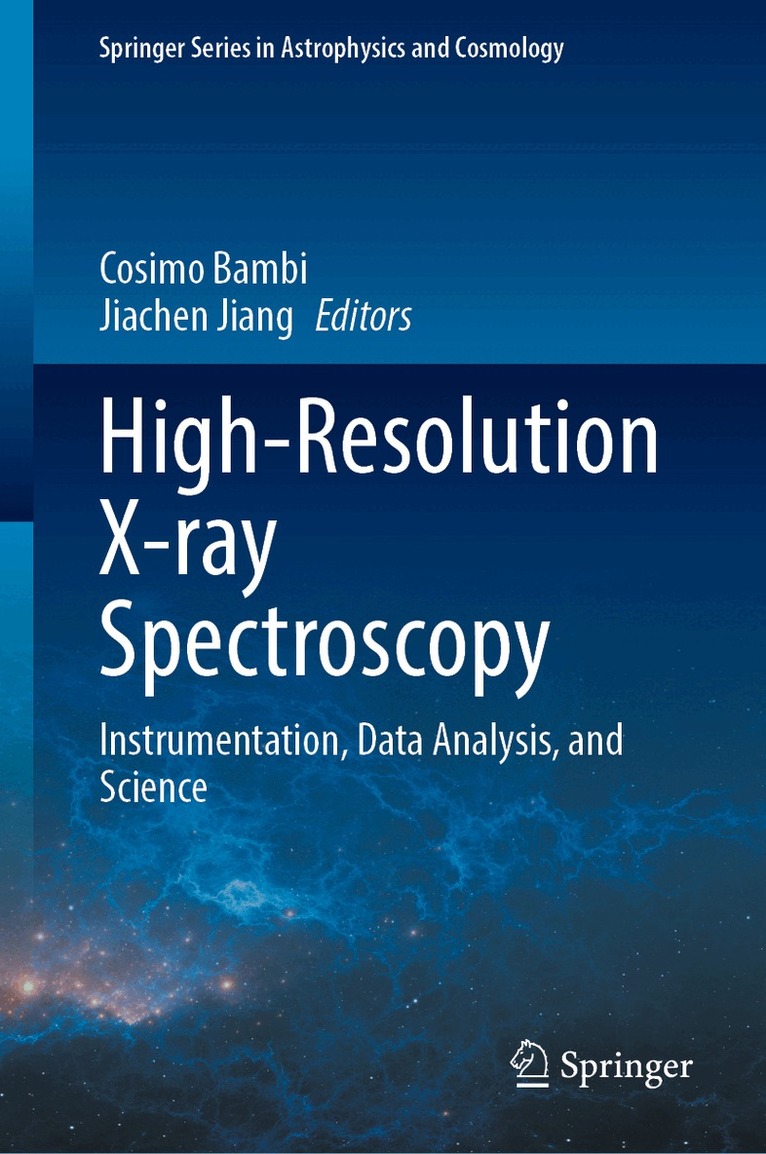
NASA's Chandra X-ray Observatory and ESA's XMM-Newton Observatory have been the pioneering satellites for studying the Universe with X-rays and the cornerstone of X-ray spectroscopy since their launches more than 20 years ago. The onboard gratings provide us a unique opportunity to distinguish individual spectral lines from different atoms thanks to their high energy resolutions. Enormous discoveries have been achieved by these two missions when observing a variety of X-ray-emitting astronomical objects, such as black holes, supernova remnants, clusters of galaxies, and stars. However, the data are limited to fairly bright X-ray sources. The recent JAXA's mission Hitomi opened a new window of high-resolution X-ray spectroscopy thanks to its onboard X-ray calorimeter. Although this mission was shortly terminated due to a mishap, Hitomi left behind a few sets of observations awaiting more data mining. The first half of this book introduces the history of high-resolution X-ray spectroscopy and different generations of X-ray spectrometers. A tutorial guide on how to reduce, analyze, and understand the astronomical data from Chandra, XMM-Newton, and Hitomi is also included. The second half of the book reviews past results obtained by the high-resolution spectrometers on these missions on multiple topics and discusses possible discoveries by upcoming missions in the next decade.
2 049 kr
Läs direkt efter köp
NASA''s Chandra X-ray Observatory and ESA''s XMM-Newton Observatory have been the pioneering satellites for studying the Universe with X-rays and the cornerstone of X-ray spectroscopy since their launches more than 20 years ago. The onboard gratings provide us a unique opportunity to distinguish individual spectral lines from different atoms thanks to their high energy resolutions. Enormous discoveries have been achieved by these two missions when observing a variety of X-ray-emitting astronomical objects, such as black holes, supernova remnants, clusters of galaxies, and stars. However, the data are limited to fairly bright X-ray sources. The recent JAXA''s mission Hitomi opened a new window of high-resolution X-ray spectroscopy thanks to its onboard X-ray calorimeter. Although this mission was shortly terminated due to a mishap, Hitomi left behind a few sets of observations awaiting more data mining. The first half of this book introduces the history of high-resolution X-ray spectroscopy and different generations of X-ray spectrometers. A tutorial guide on how to reduce, analyze, and understand the astronomical data from Chandra, XMM-Newton, and Hitomi is also included. The second half of the book reviews past results obtained by the high-resolution spectrometers on these missions on multiple topics and discusses possible discoveries by upcoming missions in the next decade.
Häftad, Engelska, 2026
1 635 kr
Skickas inom 10-15 vardagar
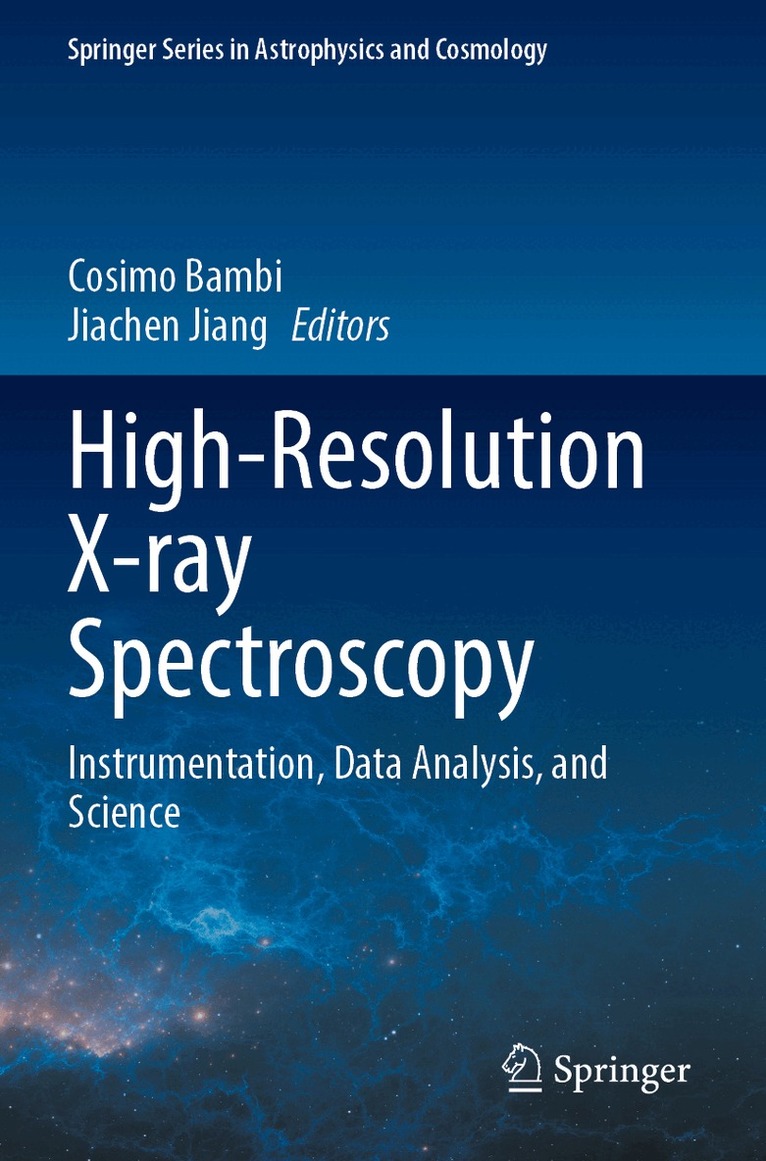
NASA's Chandra X-ray Observatory and ESA's XMM-Newton Observatory have been the pioneering satellites for studying the Universe with X-rays and the cornerstone of X-ray spectroscopy since their launches more than 20 years ago. The onboard gratings provide us a unique opportunity to distinguish individual spectral lines from different atoms thanks to their high energy resolutions. Enormous discoveries have been achieved by these two missions when observing a variety of X-ray-emitting astronomical objects, such as black holes, supernova remnants, clusters of galaxies, and stars. However, the data are limited to fairly bright X-ray sources. The recent JAXA's mission Hitomi opened a new window of high-resolution X-ray spectroscopy thanks to its onboard X-ray calorimeter. Although this mission was shortly terminated due to a mishap, Hitomi left behind a few sets of observations awaiting more data mining. The first half of this book introduces the history of high-resolution X-ray spectroscopy and different generations of X-ray spectrometers. A tutorial guide on how to reduce, analyze, and understand the astronomical data from Chandra, XMM-Newton, and Hitomi is also included. The second half of the book reviews past results obtained by the high-resolution spectrometers on these missions on multiple topics and discusses possible discoveries by upcoming missions in the next decade.