Jianbin Li – författare
Visar alla böcker från författaren Jianbin Li. Handla med fri frakt och snabb leverans.
5 produkter
5 produkter
Häftad, Engelska, 2025
3 284 kr
Skickas inom 10-15 vardagar
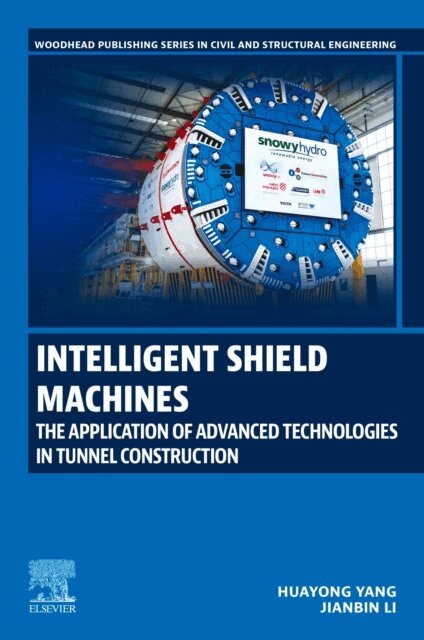
Intelligent Shield Machines: The Application of Advanced Technologies in Tunnel Construction explores both theoretical and practical engineering applications for new technologies and machines. Machines have long been used in tunnelling as a result of their high reliability, high efficiency, and high value-added, providing a fast digging speed, high construction quality, and low impact on the surrounding environment. However, with the rapid development of new-generation information technologies, big data, and artificial intelligence technology, the field of shield equipment offers even greater potential.Introduces the concept and application of artificial intelligence and other new intelligent construction technologies to shield tunnel boring machines for the first timeIntegrates many new technologies - such as artificial intelligence, big data, and robotics technology - to intelligent shield tunnellingProvides solutions to many existing engineering problems by using intelligent, efficient, and safe shield machines
E-bok
Engelska, 20254 015 kr
Läs direkt efter köp
Intelligent Shield Machines: The Application of Advanced Technologies in Tunnel Construction explores both theoretical and practical engineering applications for new technologies and machines. Machines have long been used in tunnelling as a result of their high reliability, high efficiency, and high value-added, providing a fast digging speed, high construction quality, and low impact on the surrounding environment. However, with the rapid development of new-generation information technologies, big data, and artificial intelligence technology, the field of shield equipment offers even greater potential.- Introduces the concept and application of artificial intelligence and other new intelligent construction technologies to shield tunnel boring machines for the first time- Integrates many new technologies - such as artificial intelligence, big data, and robotics technology - to intelligent shield tunnelling- Provides solutions to many existing engineering problems by using intelligent, efficient, and safe shield machines
Inbunden, Engelska, 2022
1 458 kr
Skickas inom 10-15 vardagar
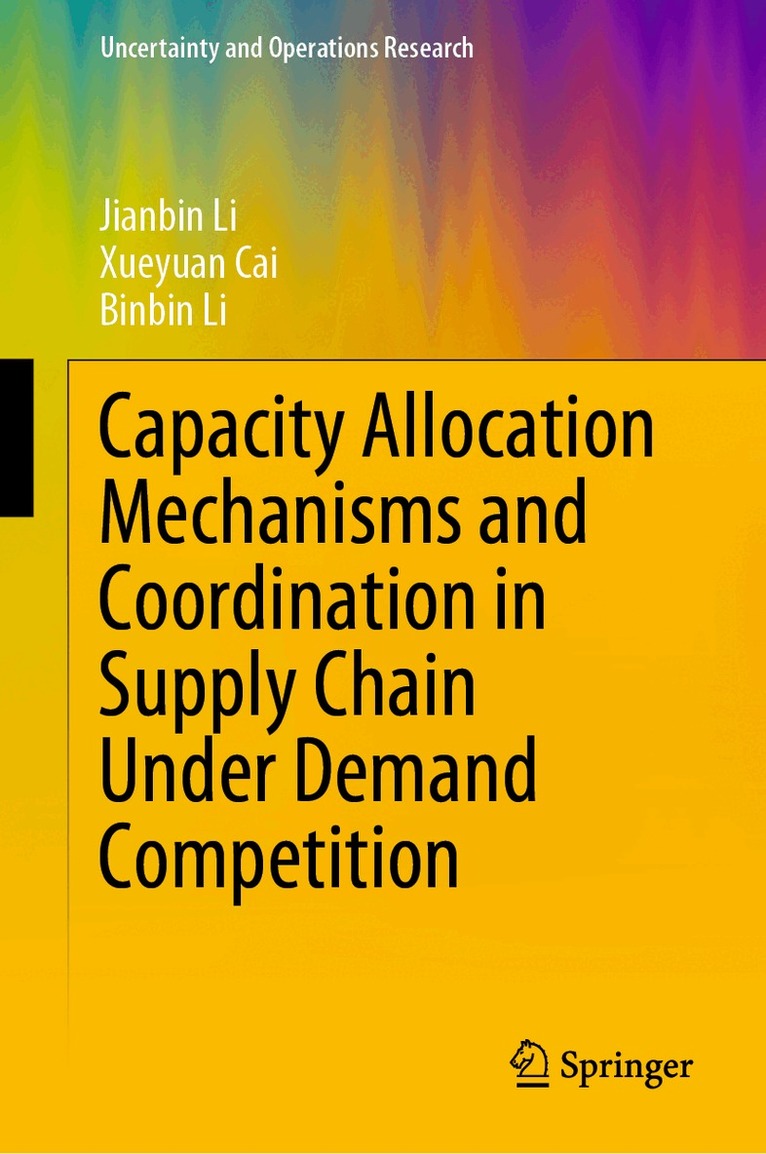
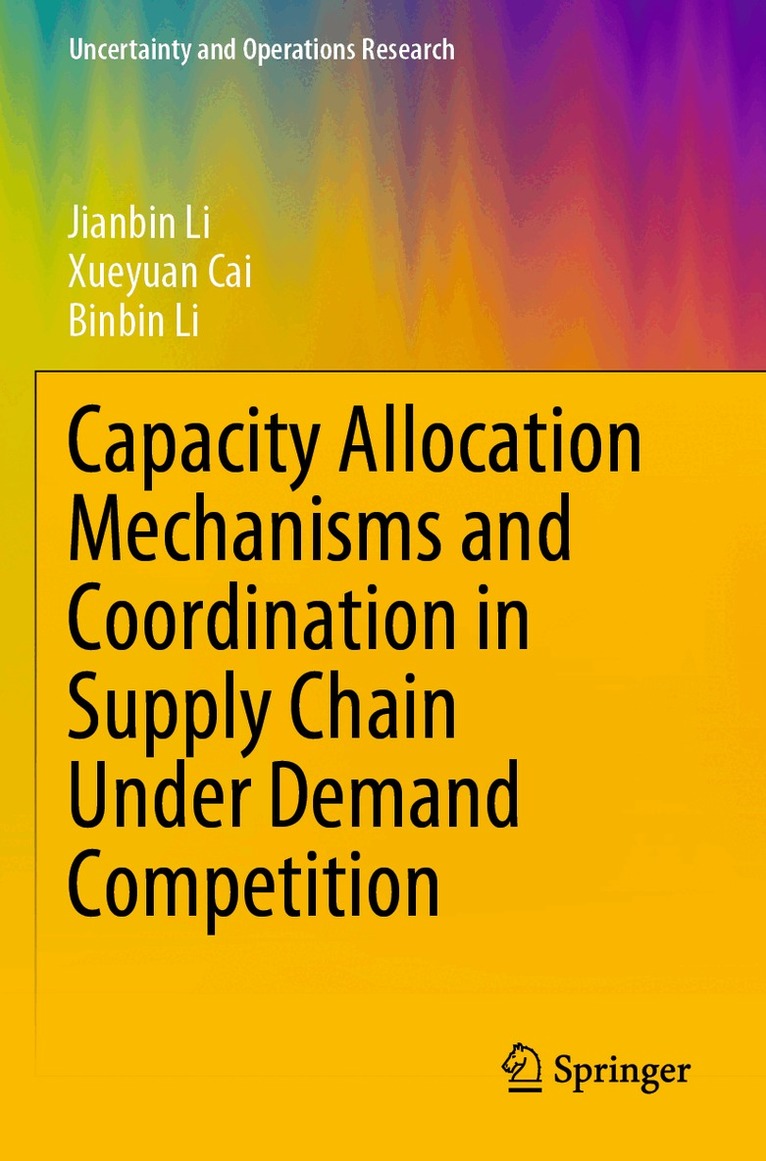
This book aims at providing cases with inspiring findings for global researchers in capacity allocation and reservation. Capacity allocation mechanisms are introduced in the book, as well as the measures to build models and the ways to achieve supply chain coordination. In addition, it illustrates the capacity reservation contract and quantity flexible contract with comparisons and some numerical studies. The book is divided into 7 chapters. Chapter 1 introduces the background and the latest development of the research. Chapter 2 introduces how to manage downstream competition through capacity allocation in symmetric market, including proportional mechanism and lexicographic mechanism. Demand competition is introduced in Chapter 3 as well as the uniform allocation mechanism and the comparisons among three different mechanisms. In Chapter 4, we give information about demand competition with fixed factor allocation, and the comparison with other allocations. Chapter 5 provides the optimal strategies under fixed allocation with multiple retailers and the impacts of fixed proportions. Chapter 6 illustrates how to achieve supply chain coordination through capacity reservation contract and its comparison with the quantity flexibility contract, and in Chapter 7 we describe outsourcing decisions and order policies in different systems with some numerical studies. We sincerely hope that this book can provide some useful suggestions and inspirations for scholars around the world who have the same interests in this field.
E-bok
Engelska, 20221 747 kr
Läs direkt efter köp
This book aims at providing cases with inspiring findings for global researchers in capacity allocation and reservation. Capacity allocation mechanisms are introduced in the book, as well as the measures to build models and the ways to achieve supply chain coordination. In addition, it illustrates the capacity reservation contract and quantity flexible contract with comparisons and some numerical studies. The book is divided into 7 chapters. Chapter 1 introduces the background and the latest development of the research. Chapter 2 introduces how to manage downstream competition through capacity allocation in symmetric market, including proportional mechanism and lexicographic mechanism. Demand competition is introduced in Chapter 3 as well as the uniform allocation mechanism and the comparisons among three different mechanisms. In Chapter 4, we give information about demand competition with fixed factor allocation, and the comparison with other allocations. Chapter 5 provides the optimal strategies under fixed allocation with multiple retailers and the impacts of fixed proportions. Chapter 6 illustrates how to achieve supply chain coordination through capacity reservation contract and its comparison with the quantity flexibility contract, and in Chapter 7 we describe outsourcing decisions and order policies in different systems with some numerical studies. We sincerely hope that this book can provide some useful suggestions and inspirations for scholars around the world who have the same interests in this field.
Häftad, Engelska, 2023
1 458 kr
Skickas inom 10-15 vardagar
This book aims at providing cases with inspiring findings for global researchers in capacity allocation and reservation. Capacity allocation mechanisms are introduced in the book, as well as the measures to build models and the ways to achieve supply chain coordination. In addition, it illustrates the capacity reservation contract and quantity flexible contract with comparisons and some numerical studies. The book is divided into 7 chapters. Chapter 1 introduces the background and the latest development of the research. Chapter 2 introduces how to manage downstream competition through capacity allocation in symmetric market, including proportional mechanism and lexicographic mechanism. Demand competition is introduced in Chapter 3 as well as the uniform allocation mechanism and the comparisons among three different mechanisms. In Chapter 4, we give information about demand competition with fixed factor allocation, and the comparison with other allocations. Chapter 5 provides the optimal strategies under fixed allocation with multiple retailers and the impacts of fixed proportions. Chapter 6 illustrates how to achieve supply chain coordination through capacity reservation contract and its comparison with the quantity flexibility contract, and in Chapter 7 we describe outsourcing decisions and order policies in different systems with some numerical studies. We sincerely hope that this book can provide some useful suggestions and inspirations for scholars around the world who have the same interests in this field.