Jianguo Sun - Böcker
Visar alla böcker från författaren Jianguo Sun. Handla med fri frakt och snabb leverans.
9 produkter
9 produkter
724 kr
Skickas inom 10-15 vardagar
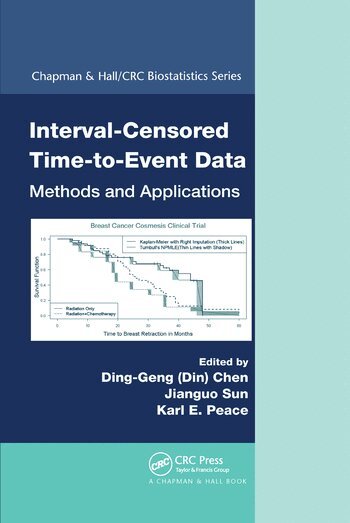
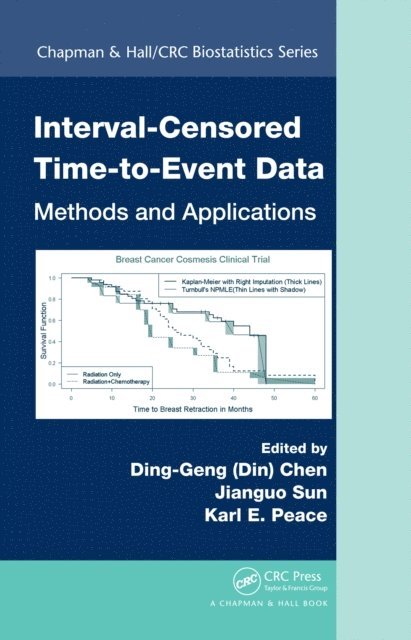
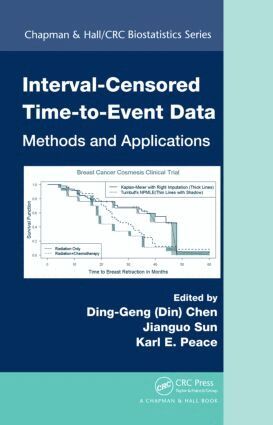
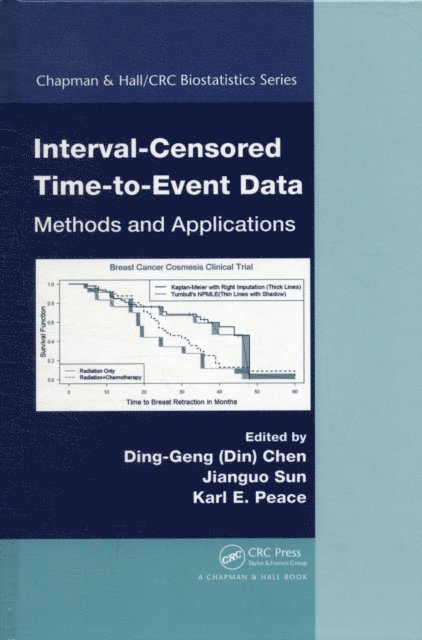
Interval-Censored Time-to-Event Data: Methods and Applications collects the most recent techniques, models, and computational tools for interval-censored time-to-event data. Top biostatisticians from academia, biopharmaceutical industries, and government agencies discuss how these advances are impacting clinical trials and biomedical research.Divided into three parts, the book begins with an overview of interval-censored data modeling, including nonparametric estimation, survival functions, regression analysis, multivariate data analysis, competing risks analysis, and other models for interval-censored data. The next part presents interval-censored methods for current status data, Bayesian semiparametric regression analysis of interval-censored data with monotone splines, Bayesian inferential models for interval-censored data, an estimator for identifying causal effect of treatment, and consistent variance estimation for interval-censored data. In the final part, the contributors use Monte Carlo simulation to assess biases in progression-free survival analysis as well as correct bias in interval-censored time-to-event applications. They also present adaptive decision making methods to optimize the rapid treatment of stroke, explore practical issues in using weighted logrank tests, and describe how to use two R packages.A practical guide for biomedical researchers, clinicians, biostatisticians, and graduate students in biostatistics, this volume covers the latest developments in the analysis and modeling of interval-censored time-to-event data. It shows how up-to-date statistical methods are used in biopharmaceutical and public health applications.
1 907 kr
Skickas inom 10-15 vardagar
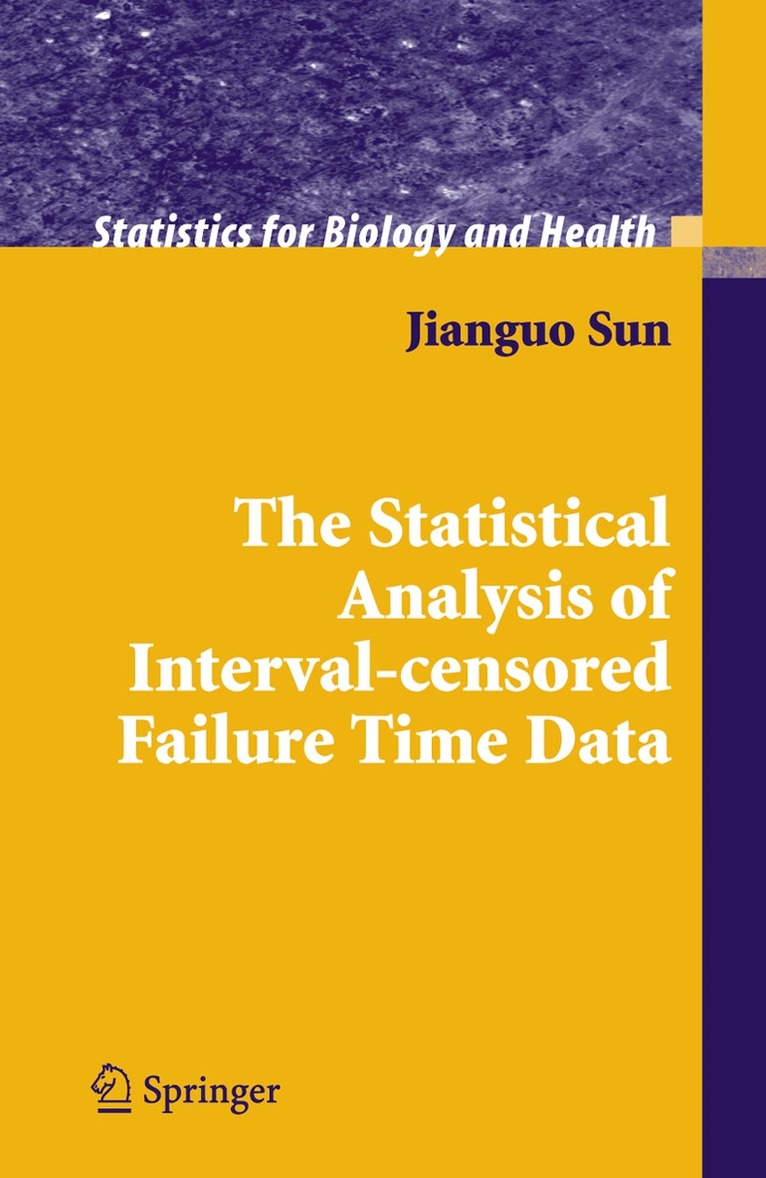
Survival analysis, the analysis of failure time data, is a rapid developing area and a number of books on the topic have been published in last twenty-five years. However, all of these books deal with right-censored failure time data, not the analysis of interval-censored failure time data. Interval-censored data include right-censored data as a special case and occur in many fields. The analysis of interval-censored data is much more difficult than that of right-censored data because the censoring mechanism that yields interval censoring is more complicated than that for right censoring. This book collects and unifies statistical models and methods that have been proposed for analyzing interval-censored failure time data. It provides the first comprehensive coverage of the topic of interval-censored data and complements the books on right-censored data. A number of inference approaches are discussed in the book, including the maximum likelihood, estimating equations, sieve maximum likelihood, and conditional likelihood. One major difference between the analyses of right- and interval-censored data is that the theory of counting processes, which is responsible for substantial advances in the theory and development of modern statistical methods for right-censored data, is not applicable to interval-censored data. The focus of the book is on nonparametric and semiparametric inferences, but it also describes parametric and imputation approaches. In addition, Bayesian methods and the analysis of interval-censored data with informative interval censoring are considered as well as the analysis of interval-censored recurrent event, or panel count, data. This book provides an up-to-date reference for people who are conducting research on the analysis of interval-censored failure time data as well as for those who need to analyze interval-censored data to answer substantive questions. It can also be used as a text for a graduate course in statistics or biostatistics that assume a basic knowledge of probability and statistics.Jianguo (Tony) Sun is a professor at the Department of Statistics of the University of Missouri-Columbia. He has developed novel statistical methods for the analysis of interval-censored failure time data and panel count data over the last fifteen years.
1 907 kr
Skickas inom 10-15 vardagar
Survival analysis, the analysis of failure time data, is a rapid developing area and a number of books on the topic have been published in last twenty-five years. However, all of these books deal with right-censored failure time data, not the analysis of interval-censored failure time data. Interval-censored data include right-censored data as a special case and occur in many fields. The analysis of interval-censored data is much more difficult than that of right-censored data because the censoring mechanism that yields interval censoring is more complicated than that for right censoring. This book collects and unifies statistical models and methods that have been proposed for analyzing interval-censored failure time data. It provides the first comprehensive coverage of the topic of interval-censored data and complements the books on right-censored data. A number of inference approaches are discussed in the book, including the maximum likelihood, estimating equations, sieve maximum likelihood, and conditional likelihood. One major difference between the analyses of right- and interval-censored data is that the theory of counting processes, which is responsible for substantial advances in the theory and development of modern statistical methods for right-censored data, is not applicable to interval-censored data. The focus of the book is on nonparametric and semiparametric inferences, but it also describes parametric and imputation approaches. In addition, Bayesian methods and the analysis of interval-censored data with informative interval censoring are considered as well as the analysis of interval-censored recurrent event, or panel count, data. This book provides an up-to-date reference for people who are conducting research on the analysis of interval-censored failure time data as well as for those who need to analyze interval-censored data to answer substantive questions. It can also be used as a text for a graduate course in statistics or biostatistics that assume a basic knowledge of probability and statistics.Jianguo (Tony) Sun is a professor at the Department of Statistics of the University of Missouri-Columbia. He has developed novel statistical methods for the analysis of interval-censored failure time data and panel count data over the last fifteen years.
Del 80 - Statistics for Biology and Health
Statistical Analysis of Panel Count Data
Inbunden, Engelska, 2013
1 073 kr
Skickas inom 10-15 vardagar
Panel count data occur in studies that concern recurrent events, or event history studies, when study subjects are observed only at discrete time points. By recurrent events, we mean the event that can occur or happen multiple times or repeatedly. Examples of recurrent events include disease infections, hospitalizations in medical studies, warranty claims of automobiles or system break-downs in reliability studies. In fact, many other fields yield event history data too such as demographic studies, economic studies and social sciences. For the cases where the study subjects are observed continuously, the resulting data are usually referred to as recurrent event data.This book collects and unifies statistical models and methods that have been developed for analyzing panel count data. It provides the first comprehensive coverage of the topic. The main focus is on methodology, but for the benefit of the reader, the applications of the methods to real data are also discussed along with numerical calculations. There exists a great deal of literature on the analysis of recurrent event data. This book fills the void in the literature on the analysis of panel count data.This book provides an up-to-date reference for scientists who are conducting research on the analysis of panel count data. It will also be instructional for those who need to analyze panel count data to answer substantive research questions. In addition, it can be used as a text for a graduate course in statistics or biostatistics that assumes a basic knowledge of probability and statistics.
1 748 kr
Skickas inom 10-15 vardagar
Interval-Censored Time-to-Event Data: Methods and Applications collects the most recent techniques, models, and computational tools for interval-censored time-to-event data. Top biostatisticians from academia, biopharmaceutical industries, and government agencies discuss how these advances are impacting clinical trials and biomedical research.Divided into three parts, the book begins with an overview of interval-censored data modeling, including nonparametric estimation, survival functions, regression analysis, multivariate data analysis, competing risks analysis, and other models for interval-censored data. The next part presents interval-censored methods for current status data, Bayesian semiparametric regression analysis of interval-censored data with monotone splines, Bayesian inferential models for interval-censored data, an estimator for identifying causal effect of treatment, and consistent variance estimation for interval-censored data. In the final part, the contributors use Monte Carlo simulation to assess biases in progression-free survival analysis as well as correct bias in interval-censored time-to-event applications. They also present adaptive decision making methods to optimize the rapid treatment of stroke, explore practical issues in using weighted logrank tests, and describe how to use two R packages.A practical guide for biomedical researchers, clinicians, biostatisticians, and graduate students in biostatistics, this volume covers the latest developments in the analysis and modeling of interval-censored time-to-event data. It shows how up-to-date statistical methods are used in biopharmaceutical and public health applications.
Del 80 - Statistics for Biology and Health
Statistical Analysis of Panel Count Data
Häftad, Engelska, 2016
913 kr
Skickas inom 10-15 vardagar
Panel count data occur in studies that concern recurrent events, or event history studies, when study subjects are observed only at discrete time points. By recurrent events, we mean the event that can occur or happen multiple times or repeatedly. Examples of recurrent events include disease infections, hospitalizations in medical studies, warranty claims of automobiles or system break-downs in reliability studies. In fact, many other fields yield event history data too such as demographic studies, economic studies and social sciences. For the cases where the study subjects are observed continuously, the resulting data are usually referred to as recurrent event data.This book collects and unifies statistical models and methods that have been developed for analyzing panel count data. It provides the first comprehensive coverage of the topic. The main focus is on methodology, but for the benefit of the reader, the applications of the methods to real data are also discussed along with numerical calculations. There exists a great deal of literature on the analysis of recurrent event data. This book fills the void in the literature on the analysis of panel count data.This book provides an up-to-date reference for scientists who are conducting research on the analysis of panel count data. It will also be instructional for those who need to analyze panel count data to answer substantive research questions. In addition, it can be used as a text for a graduate course in statistics or biostatistics that assumes a basic knowledge of probability and statistics.
2 118 kr
Skickas inom 10-15 vardagar
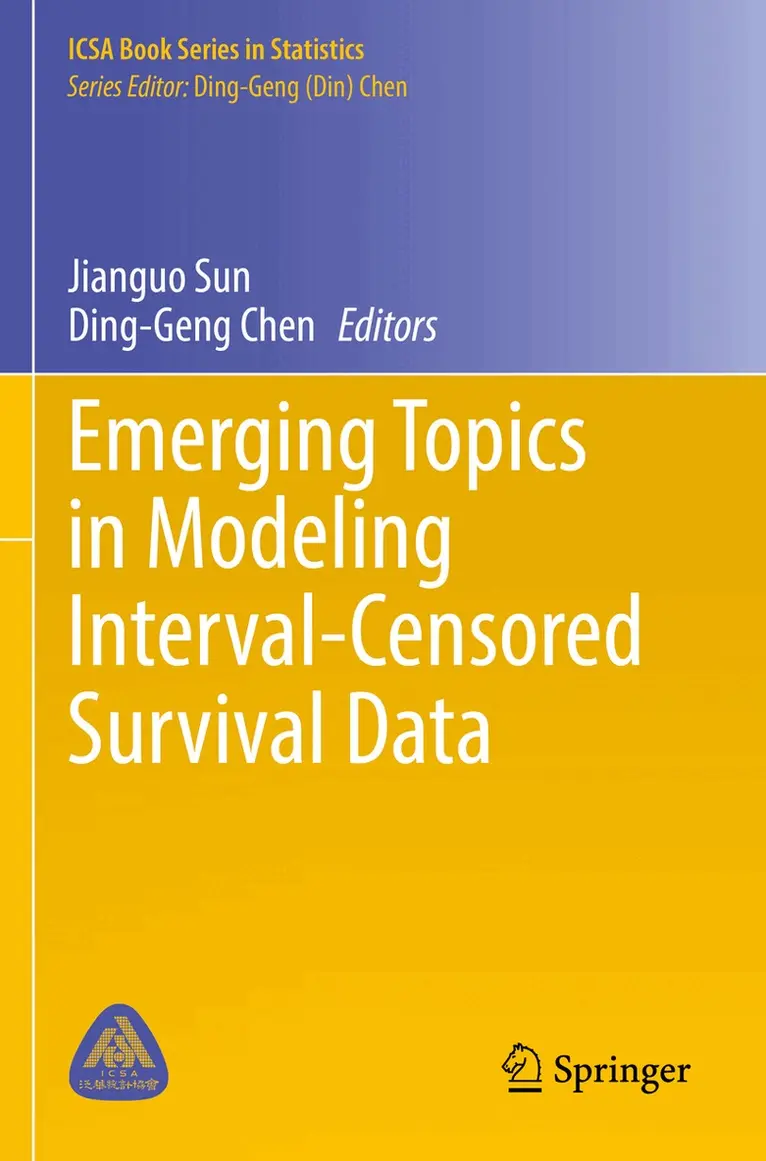
It covers a variety of topics, including univariate interval-censored data, multivariate interval-censored data, clustered interval-censored data, competing risk interval-censored data, data with interval-censored covariates, interval-censored data from electric medical records, and misclassified interval-censored data.
653 kr
Skickas inom 5-8 vardagar
2 118 kr
Skickas inom 10-15 vardagar
It covers a variety of topics, including univariate interval-censored data, multivariate interval-censored data, clustered interval-censored data, competing risk interval-censored data, data with interval-censored covariates, interval-censored data from electric medical records, and misclassified interval-censored data.