Jianhua Wang – författare
Visar alla böcker från författaren Jianhua Wang. Handla med fri frakt och snabb leverans.
7 produkter
7 produkter
E-bok
PDF, Engelska, 20251 136 kr
Läs direkt efter köp
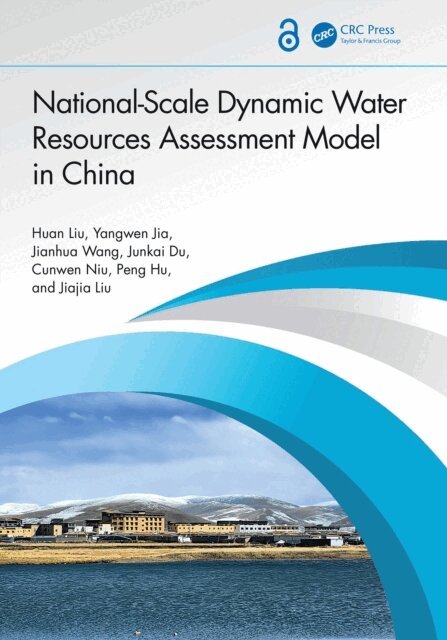
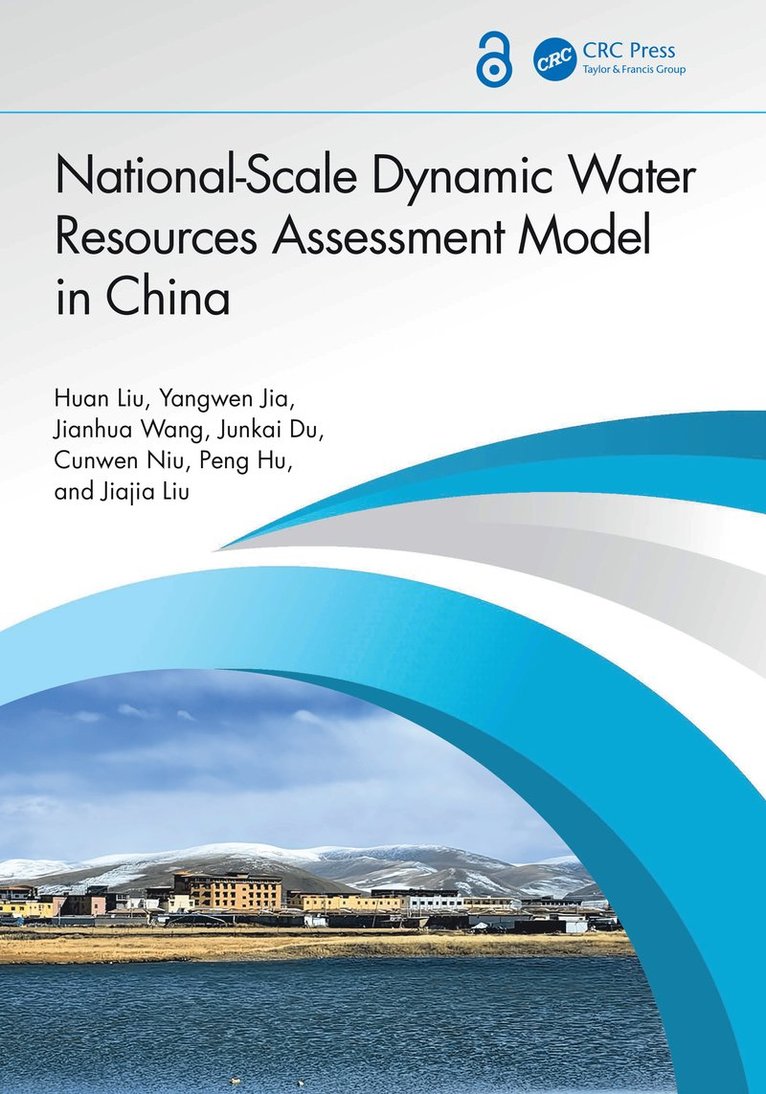
This detailed book introduces China's national dynamic water resources assessment model, presenting its construction, application scenarios, and modern modeling approach to replace traditional statistics-based methods.The book thoroughly explores the applications of distributed hydrological modeling techniques in national water resources assessment. It presents the successful development of the China Water Assessment Model (CWAM), which is based on the WEP-L hydrological model. CWAM demonstrates broad potential in supporting national water information acquisition, uniquely covering both surveyed and un-surveyed regions. The work highlights the model's ability to account for China's diverse climatic and geological characteristics, while improving the efficiency of water resources assessment and providing solutions to dynamic assessment challenges, especially under climate change and human impacts.This work will serve as an essential reference for scholars and students in hydrology and water resources, as well as policy makers and engineers involved in water resources management and assessment.Chapter 1 of this book is freely available as a downloadable Open Access PDF at http://www.taylorfrancis.com under a Creative Commons Attribution-Non Commercial-No Derivatives (CC BY-NC-ND) 4.0 license.
E-bok
Engelska, 20251 136 kr
Läs direkt efter köp
This detailed book introduces China's national dynamic water resources assessment model, presenting its construction, application scenarios, and modern modeling approach to replace traditional statistics-based methods.The book thoroughly explores the applications of distributed hydrological modeling techniques in national water resources assessment. It presents the successful development of the China Water Assessment Model (CWAM), which is based on the WEP-L hydrological model. CWAM demonstrates broad potential in supporting national water information acquisition, uniquely covering both surveyed and un-surveyed regions. The work highlights the model's ability to account for China's diverse climatic and geological characteristics, while improving the efficiency of water resources assessment and providing solutions to dynamic assessment challenges, especially under climate change and human impacts.This work will serve as an essential reference for scholars and students in hydrology and water resources, as well as policy makers and engineers involved in water resources management and assessment.Chapter 1 of this book is freely available as a downloadable Open Access PDF at http://www.taylorfrancis.com under a Creative Commons Attribution-Non Commercial-No Derivatives (CC BY-NC-ND) 4.0 license.
Inbunden, Engelska, 2025
1 226 kr
Skickas inom 10-15 vardagar
This detailed book introduces China's national dynamic water resources assessment model, presenting its construction, application scenarios, and modern modeling approach to replace traditional statistics-based methods.The book thoroughly explores the applications of distributed hydrological modeling techniques in national water resources assessment. It presents the successful development of the China Water Assessment Model (CWAM), which is based on the WEP-L hydrological model. CWAM demonstrates broad potential in supporting national water information acquisition, uniquely covering both surveyed and un-surveyed regions. The work highlights the model's ability to account for China's diverse climatic and geological characteristics, while improving the efficiency of water resources assessment and providing solutions to dynamic assessment challenges, especially under climate change and human impacts.This work will serve as an essential reference for scholars and students in hydrology and water resources, as well as policy makers and engineers involved in water resources management and assessment.Chapter 1 of this book is freely available as a downloadable Open Access PDF at http://www.taylorfrancis.com under a Creative Commons Attribution-Non Commercial-No Derivatives (CC BY-NC-ND) 4.0 license.
Häftad, Engelska, 2025
1 040 kr
Skickas inom 3-6 vardagar
Inbunden, Engelska, 2021
1 956 kr
Skickas inom 10-15 vardagar
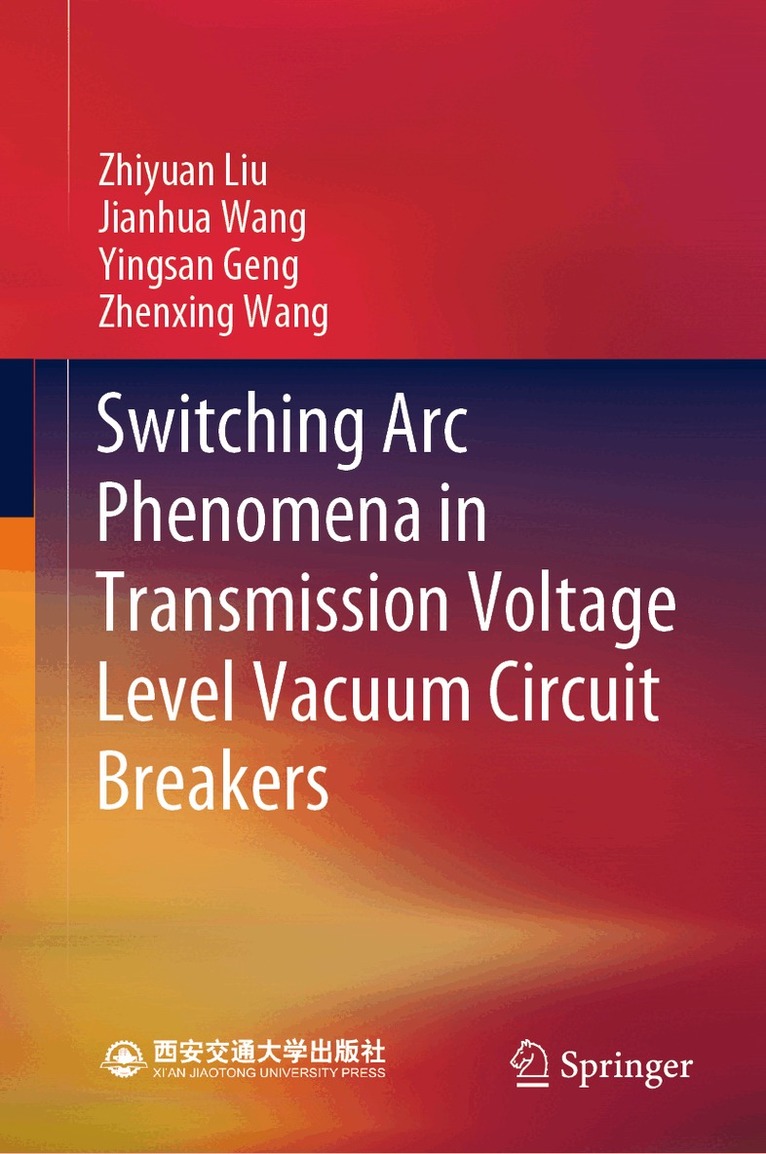
Vacuum circuit breakers are widely used in distribution power systems for their advantages such as maintenance free and eco-friendly. Nowadays, most circuit breakers used at transmission voltage level are SF6 circuit breakers, but the SF6 they emit is one of the six greenhouse gases defined in Kyoto Protocol. Therefore, the development of transmission voltage level vacuum circuit breaker can help the environment. The switching arc phenomena in transmission voltage level vacuum circuit breakers are key issues to explore. This book focuses on the high-current vacuum arcs phenomena at transmission voltage level, especially on the anode spot phenomena, which significantly influence the success or failure of the short circuit current interruption. Then, it addresses the dielectric recovery property in current interruption. Next it explains how to determine the closing/opening displacement curve of transmission voltage level vacuum circuit breakers based on the vacuum arc phenomena. After that, it explains how to determine key design parameters for vacuum interrupters and vacuum circuit breakers at transmission voltage level. At the end, the most challenging issue for vacuum circuit breakers, capacitive switching in vacuum, is addressed. The contents of this book will benefit researchers and engineers in the field of power engineering, especially in the field of power circuit breakers and power switching technology.
2 435 kr
Läs direkt efter köp
Vacuum circuit breakers are widely used in distribution power systems for their advantages such as maintenance free and eco-friendly. Nowadays, most circuit breakers used at transmission voltage level are SF6 circuit breakers, but the SF6 they emit is one of the six greenhouse gases defined in Kyoto Protocol. Therefore, the development of transmission voltage level vacuum circuit breaker can help the environment. The switching arc phenomena in transmission voltage level vacuum circuit breakers are key issues to explore. This book focuses on the high-current vacuum arcs phenomena at transmission voltage level, especially on the anode spot phenomena, which significantly influence the success or failure of the short circuit current interruption. Then, it addresses the dielectric recovery property in current interruption. Next it explains how to determine the closing/opening displacement curve of transmission voltage level vacuum circuit breakers based on the vacuum arc phenomena. After that, it explains how to determine key design parameters for vacuum interrupters and vacuum circuit breakers at transmission voltage level. At the end, the most challenging issue for vacuum circuit breakers, capacitive switching in vacuum, is addressed. The contents of this book will benefit researchers and engineers in the field of power engineering, especially in the field of power circuit breakers and power switching technology.
Häftad, Engelska, 2022
1 415 kr
Skickas inom 10-15 vardagar
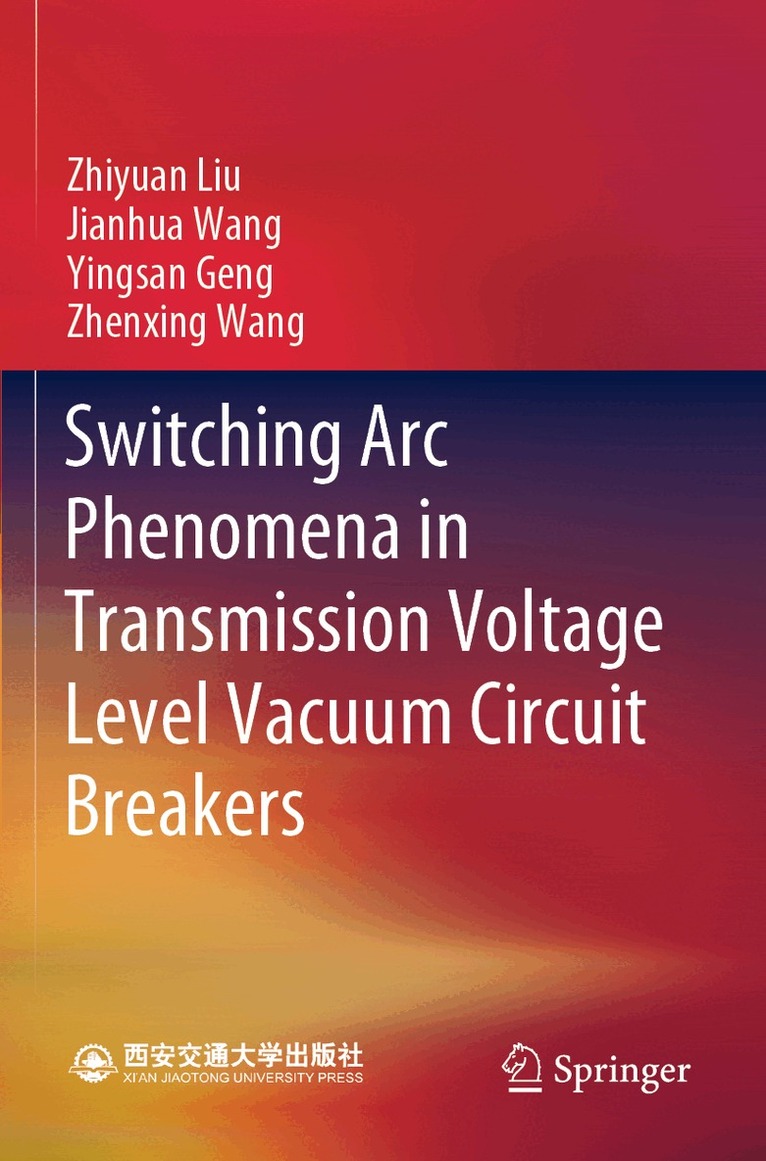
Vacuum circuit breakers are widely used in distribution power systems for their advantages such as maintenance free and eco-friendly. Nowadays, most circuit breakers used at transmission voltage level are SF6 circuit breakers, but the SF6 they emit is one of the six greenhouse gases defined in Kyoto Protocol. Therefore, the development of transmission voltage level vacuum circuit breaker can help the environment. The switching arc phenomena in transmission voltage level vacuum circuit breakers are key issues to explore. This book focuses on the high-current vacuum arcs phenomena at transmission voltage level, especially on the anode spot phenomena, which significantly influence the success or failure of the short circuit current interruption. Then, it addresses the dielectric recovery property in current interruption. Next it explains how to determine the closing/opening displacement curve of transmission voltage level vacuum circuit breakers based on the vacuum arc phenomena. After that, it explains how to determine key design parameters for vacuum interrupters and vacuum circuit breakers at transmission voltage level. At the end, the most challenging issue for vacuum circuit breakers, capacitive switching in vacuum, is addressed. The contents of this book will benefit researchers and engineers in the field of power engineering, especially in the field of power circuit breakers and power switching technology.