Jie Luo – författare
Visar alla böcker från författaren Jie Luo. Handla med fri frakt och snabb leverans.
3 produkter
3 produkter
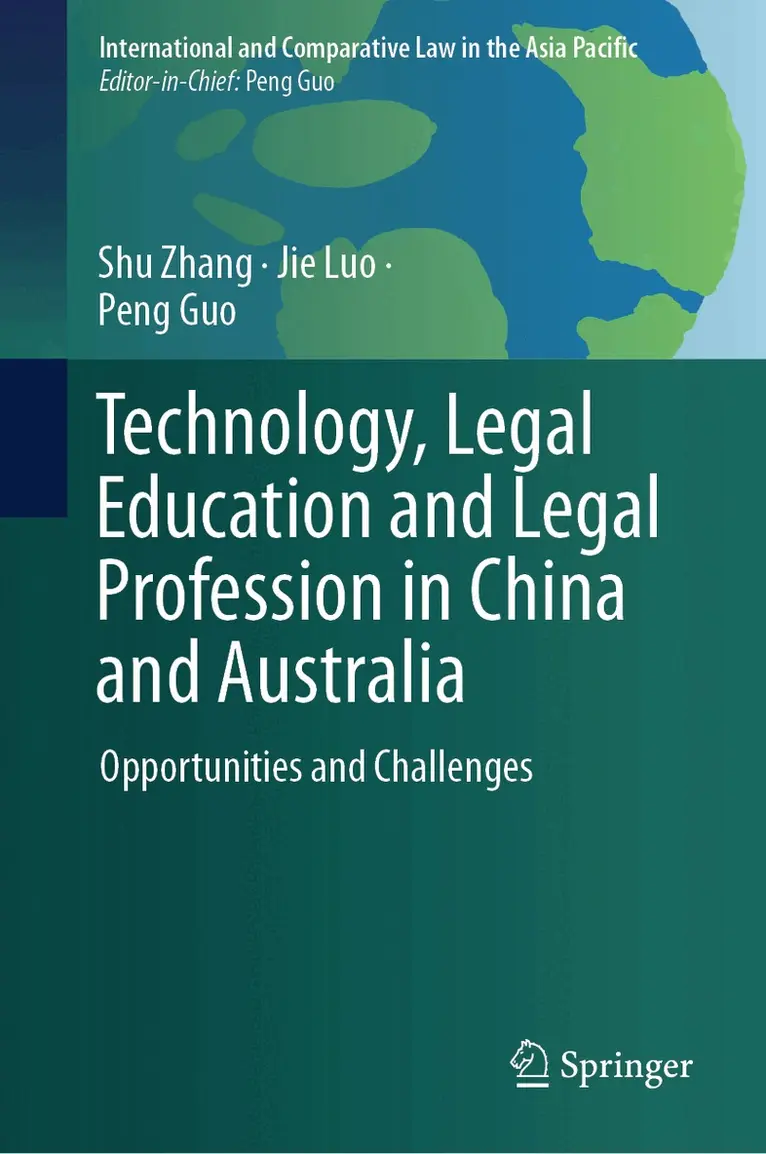
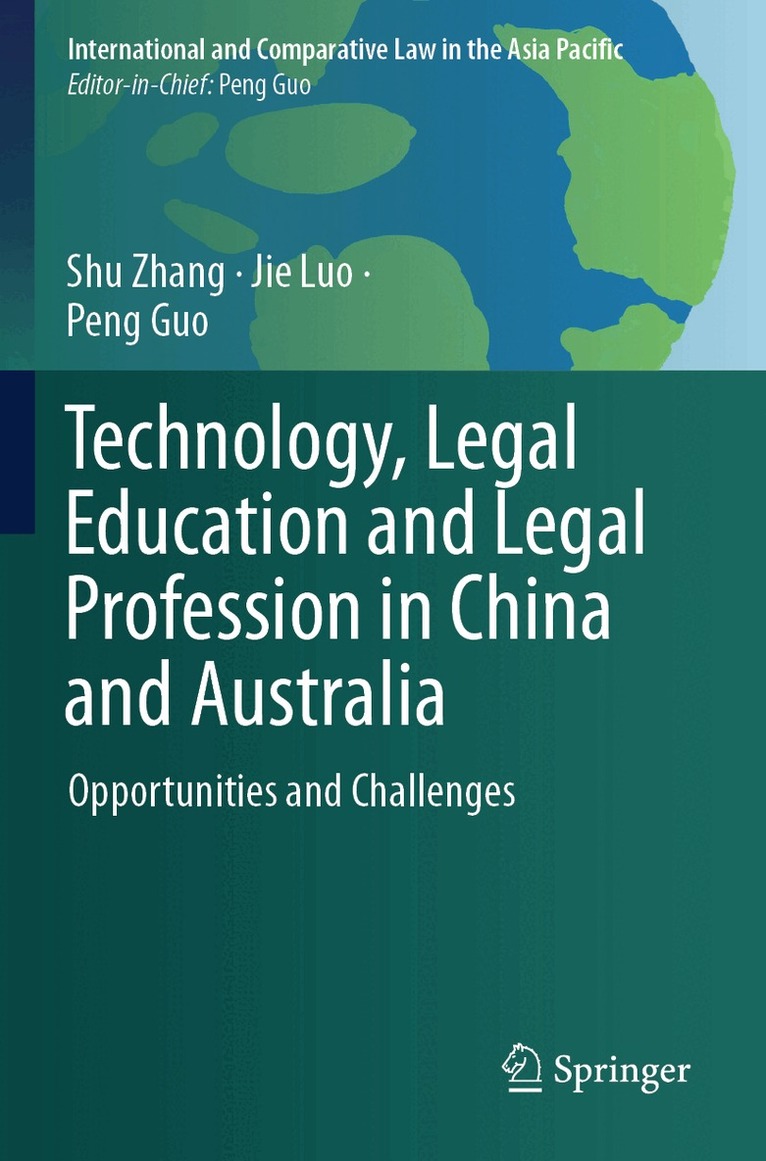
Technology, Legal Education and Legal Profession in China and Australia
Opportunities and Challenges
Inbunden, Engelska, 2025
1 573 kr
Skickas inom 10-15 vardagar
This book adopts a comparative and empirical approach to the discussion relating to the subject matter. The book compares various selected topics in both China and Australia, drawing attention to historical, contemporary, and international characteristics. Also, in discussing the topics, the authors will conduct surveys and interviews to get first-hand materials and describe the real situations in both countries. To the best knowledge of the authors, this is the first time that this approach has been adopted to compare legal education and the legal profession focusing on China and Australia. This book introduces legal education and the legal profession in China and Australia to lay a foundation based on which it further compares them. More importantly, this book discusses some selected topics relating to legal education and the legal profession in the context of globalization, the digital age, and COVID-19. The intended readership is an international audience including students at both undergraduate and graduate levels, legal scholars, and legal practitioners in general, and those in China and Australia in particular. This book intends to analyse the discourse of legal education and identify and create innovative ways of teaching and learning the law in China and Australia. It focuses on research, theory, and practice within legal education and the legal profession based on imaginative and sophisticated educational thinking from an empirical and comparative perspective. It also takes a broad view of theory and practice relating to legal education and the legal profession. It is sensitive to the diversity of contexts in which law is taught, learned, and practised.
1 279 kr
Skickas inom 10-15 vardagar
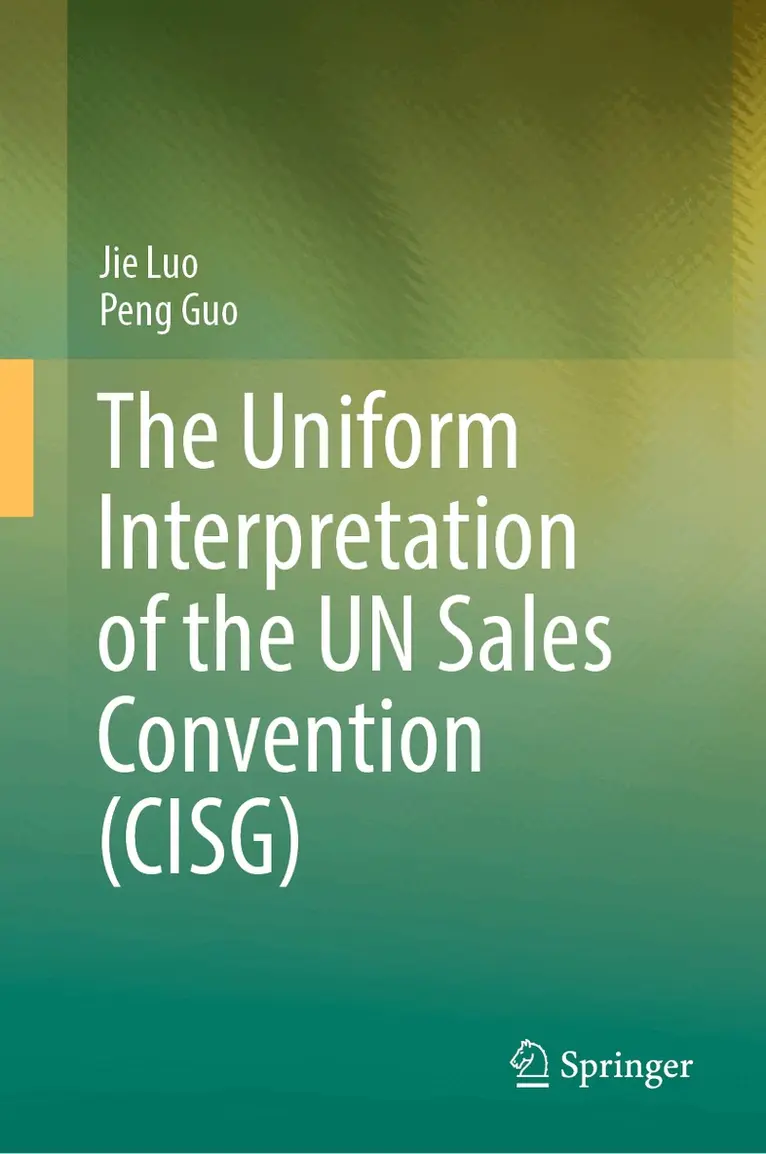
The unification of international commercial law has been a common course for every country of the world. The U.N. Convention on Contracts for International Sale of Goods (CISG) is a milestone in creating a uniform law in the field of the international sale of goods. The CISG coordinated divergent political, economic, and legal systems combined different contract laws and set up a comprehensive and independent legal framework for the international sale of goods.This book examines the basic requirements and criteria of the CISG’s interpretation and investigates how to achieve the uniform interpretation of the CISG based on interpretation rules in the CISG and through appropriate legal interpretation approaches.As a comprehensive and uniform legal framework for the international sale of goods, the CISG still has gaps to fill. Therefore, a uniform interpretation in gap-filling is equally important for the CISG. This book discusses gap-filling in the CISG, explains whyand how to fill its gaps, clarifies gap-filling approaches, their order of application, and eventually concentrates on general principles and the uniform interpretation of the CISG.Another feature of the book is to discuss the supplementary materials that could be used to assist in the uniform interpretation of the CISG. PICC, foreign cases, UNCITRAL Digest, and the CISG Advisory Council opinions will be examined in detail to see whether and how they can fill the gaps in the CISG and promote its uniform interpretation.Only by clarifying the basic requirements and principles relating to the CISG’s uniform interpretation, can courts and arbitral tribunals correct their attitude toward and practices in the interpretation of the CISG. Only by following the autonomous interpretation approach, can the CISG achieve its goal to unify the sale of goods laws and promote the development of international commerce.
1 279 kr
Skickas inom 10-15 vardagar
The unification of international commercial law has been a common course for every country of the world. The U.N. Convention on Contracts for International Sale of Goods (CISG) is a milestone in creating a uniform law in the field of the international sale of goods. The CISG coordinated divergent political, economic, and legal systems combined different contract laws and set up a comprehensive and independent legal framework for the international sale of goods.This book examines the basic requirements and criteria of the CISG’s interpretation and investigates how to achieve the uniform interpretation of the CISG based on interpretation rules in the CISG and through appropriate legal interpretation approaches.As a comprehensive and uniform legal framework for the international sale of goods, the CISG still has gaps to fill. Therefore, a uniform interpretation in gap-filling is equally important for the CISG. This book discusses gap-filling in the CISG, explains whyand how to fill its gaps, clarifies gap-filling approaches, their order of application, and eventually concentrates on general principles and the uniform interpretation of the CISG.Another feature of the book is to discuss the supplementary materials that could be used to assist in the uniform interpretation of the CISG. PICC, foreign cases, UNCITRAL Digest, and the CISG Advisory Council opinions will be examined in detail to see whether and how they can fill the gaps in the CISG and promote its uniform interpretation.Only by clarifying the basic requirements and principles relating to the CISG’s uniform interpretation, can courts and arbitral tribunals correct their attitude toward and practices in the interpretation of the CISG. Only by following the autonomous interpretation approach, can the CISG achieve its goal to unify the sale of goods laws and promote the development of international commerce.