Jill Hamilton - Böcker
Visar alla böcker från författaren Jill Hamilton. Handla med fri frakt och snabb leverans.
5 produkter
5 produkter
608 kr
Tillfälligt slut
God, Guns and Israel
Britain, the First World War and the Jews in the Holy City
Häftad, Engelska, 2004
130 kr
Tillfälligt slut
The roots of today's Middle East conflict are extremely deep and exceedingly tangled and Jill Hamilton has done a wonderful job in unravelling a complicated story. Describing the background to the present conflict - she intertwines the sad story of mistakes and broken promises with the age-old fascination that Jerusalem holds for Jews, Muslims and Christians. New insights are given into the decisions taken by the key men in the British and American governments and the effect on Old Testament beliefs and Nonconformity in their decisions is examined.Woven into the narrative is the story of David Ben-Gurion and the other soldiers in the Jewish Legion. It follows them from their first tottering steps on the moors of Devon to their quarter-century as members of the secret underground army, the Haganah, to May 1948 when Ben-Gurion read the Declaration of Independence of the new state of Israel.
111 kr
Tillfälligt slut
Rich people from the times of the Greeks and Romans had always travelled for pleasure, indeed there was nothing new in the aristocratic Grand Tours taking in Paris and Rome, but it was Thomas Cook - aided by the spreading of the railways, an increase in statutory holidays and his wide use of advertising - who first helped to bring mobility to the masses. In this, the first book to look at the man behind the business, Jill Hamilton explores the origins of the former Baptist lay-preacher who wanted to take campaigners to a temperance meeting in the Midlands and thus organised the first ever package holiday in the history of modern travel and created the beginnings of Thos. Cook & Son.
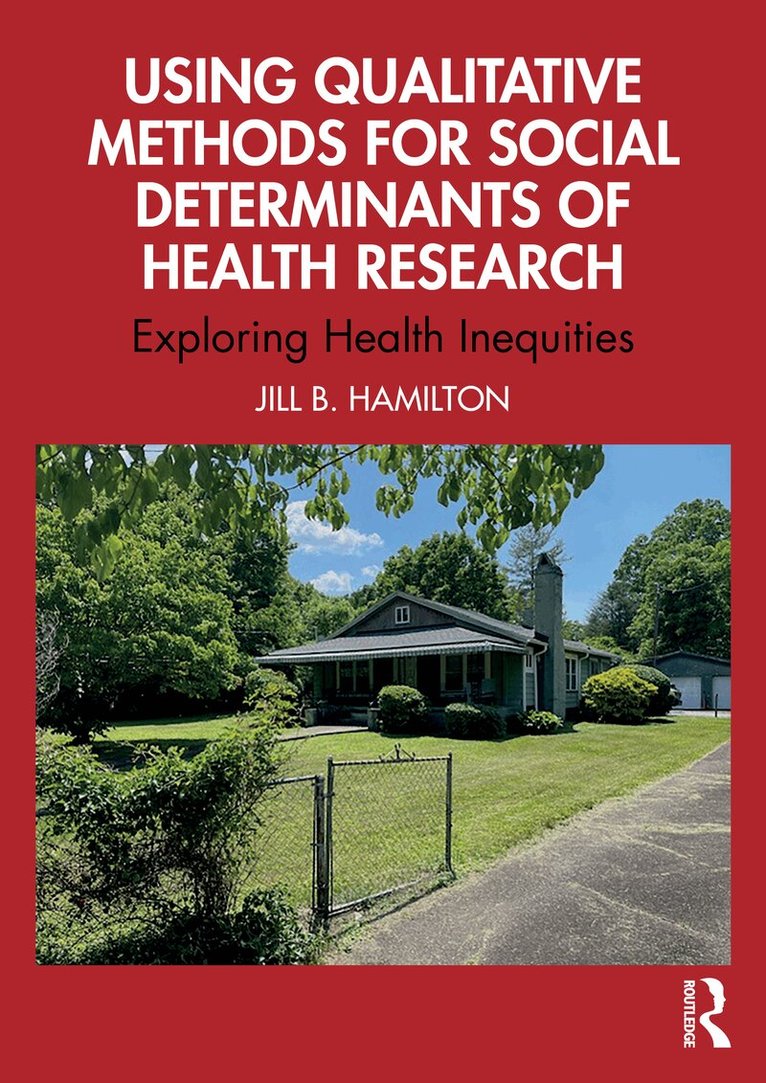
Using Qualitative Methods for Social Determinants of Health Research
Exploring Health Inequities
Häftad, Engelska, 2026
746 kr
Skickas inom 10-15 vardagar
This book provides researchers, faculty, and students with a comprehensive resource for applying qualitative methods in Social Determinants of Health (SDOH) research among underrepresented communities.Addressing a significant gap in existing literature, this book extends beyond traditional qualitative texts by offering targeted instruction on utilizing these methods to explore social, cultural, environmental, and political factors that shape health inequities. It is an extension of texts that define qualitative research, distinguish qualitative from quantitative research, and provide instruction or guidance on ways to implement, analyze, and evaluate this methodology in populations experiencing illness events. Key features include practical guidance on conducting qualitative research throughout the entire study process—from planning and data collection to analysis and dissemination. The author draws on over 20 years of experience, integrating real-world examples that illustrate the effective use of qualitative methods in diverse contexts.Ideal for researchers and faculty in nursing, public health, medicine, theology, and divinity, it serves as a resource for emerging and experienced scholars who may be initiating new projects on SDOH, integrating SDOH into existing research, and/or adapting measures or interventions for cultural relevance among underrepresented communities. It is also a vital resource for those teaching and mentoring students in rigorous and innovative SDOH research.
Using Qualitative Methods for Social Determinants of Health Research
Exploring Health Inequities
Inbunden, Engelska, 2026
2 167 kr
Skickas inom 10-15 vardagar
This book provides researchers, faculty, and students with a comprehensive resource for applying qualitative methods in Social Determinants of Health (SDOH) research among underrepresented communities.Addressing a significant gap in existing literature, this book extends beyond traditional qualitative texts by offering targeted instruction on utilizing these methods to explore social, cultural, environmental, and political factors that shape health inequities. It is an extension of texts that define qualitative research, distinguish qualitative from quantitative research, and provide instruction or guidance on ways to implement, analyze, and evaluate this methodology in populations experiencing illness events. Key features include practical guidance on conducting qualitative research throughout the entire study process—from planning and data collection to analysis and dissemination. The author draws on over 20 years of experience, integrating real-world examples that illustrate the effective use of qualitative methods in diverse contexts.Ideal for researchers and faculty in nursing, public health, medicine, theology, and divinity, it serves as a resource for emerging and experienced scholars who may be initiating new projects on SDOH, integrating SDOH into existing research, and/or adapting measures or interventions for cultural relevance among underrepresented communities. It is also a vital resource for those teaching and mentoring students in rigorous and innovative SDOH research.