Jill Jäger - Böcker
Visar alla böcker från författaren Jill Jäger. Handla med fri frakt och snabb leverans.
7 produkter
7 produkter
2 170 kr
Skickas inom 10-15 vardagar
In 2050, the billions of people living on Earth have found a way to manage the planetary system effectively. Everyone has access to adequate food, shelter, and clean water. Human health is no longer considered outside of the health of the ecosystems in which people live. Ecological awareness is an integral part of education. People respond effectively to social and environmental hazards, and societies care for the most vulnerable amongst them. The economy, too, has shifted. Carbon dioxide management is under control, and energy efficiency is the norm. The remaining rainforests have been preserved. Coral reefs are recovering. Fish stocks are thriving. Is any of this really possible? How can our complex social and economic systems interact with a complex planetary system undergoing rapid change to create a future we all want?This book is a contextualised collation of ideas articulated by the 50 participants of the Planet 2050 workshop held in Lund in October 2008, as part of The Planet in 2050, an interdisciplinary Fast Track Initiative of the International Geosphere-Biosphere Programme. Participants were selected from academia and the sustainability practice community to give a wide-ranging, multi-cultural, trans-disciplinary set of perspectives.This collection explores four broad sectoral themes: energy and technologies; development, economies and culture; environment; and land use change. By doing so, this book emphasises the importance of a social dialogue on our collective future, and our responsibility to the Earth. It makes strong statements about what needs to happen to the global economy for a sustainable future and documents a new kind of scholarly discussion, engaging people from diverse knowledge communities in a spirit of exploration and reflexivity. The book provides a focus for dialogue and further study for postgraduates and researchers interested in global change as a multi-faceted, socio-environmental phenomenon, and as the book is written in an accessible scholarly style, assuming no prior specialist knowledge, it is also suitable for those involved in sustainability initiatives and policy.
676 kr
Skickas inom 10-15 vardagar
In 2050, the billions of people living on Earth have found a way to manage the planetary system effectively. Everyone has access to adequate food, shelter, and clean water. Human health is no longer considered outside of the health of the ecosystems in which people live. Ecological awareness is an integral part of education. People respond effectively to social and environmental hazards, and societies care for the most vulnerable amongst them. The economy, too, has shifted. Carbon dioxide management is under control, and energy efficiency is the norm. The remaining rainforests have been preserved. Coral reefs are recovering. Fish stocks are thriving. Is any of this really possible? How can our complex social and economic systems interact with a complex planetary system undergoing rapid change to create a future we all want?This book is a contextualised collation of ideas articulated by the 50 participants of the Planet 2050 workshop held in Lund in October 2008, as part of The Planet in 2050, an interdisciplinary Fast Track Initiative of the International Geosphere-Biosphere Programme. Participants were selected from academia and the sustainability practice community to give a wide-ranging, multi-cultural, trans-disciplinary set of perspectives.This collection explores four broad sectoral themes: energy and technologies; development, economies and culture; environment; and land use change. By doing so, this book emphasises the importance of a social dialogue on our collective future, and our responsibility to the Earth. It makes strong statements about what needs to happen to the global economy for a sustainable future and documents a new kind of scholarly discussion, engaging people from diverse knowledge communities in a spirit of exploration and reflexivity. The book provides a focus for dialogue and further study for postgraduates and researchers interested in global change as a multi-faceted, socio-environmental phenomenon, and as the book is written in an accessible scholarly style, assuming no prior specialist knowledge, it is also suitable for those involved in sustainability initiatives and policy.
2 310 kr
Skickas inom 10-15 vardagar
The interactions between environmental change and human societies have a long, complex history spanning many millennia, but these have changed fundamentally in the last century. Human activities are now so pervasive and profound that they are altering the Earth in ways which threaten the very life support system upon which humans depend. This book describes what is known about the Earth System and the impact of changes caused by humans. It considers the consequences of these changes with respect to the stability of the Earth System and the well-being of humankind; as well as exploring future paths towards Earth System science in support of global sustainability.
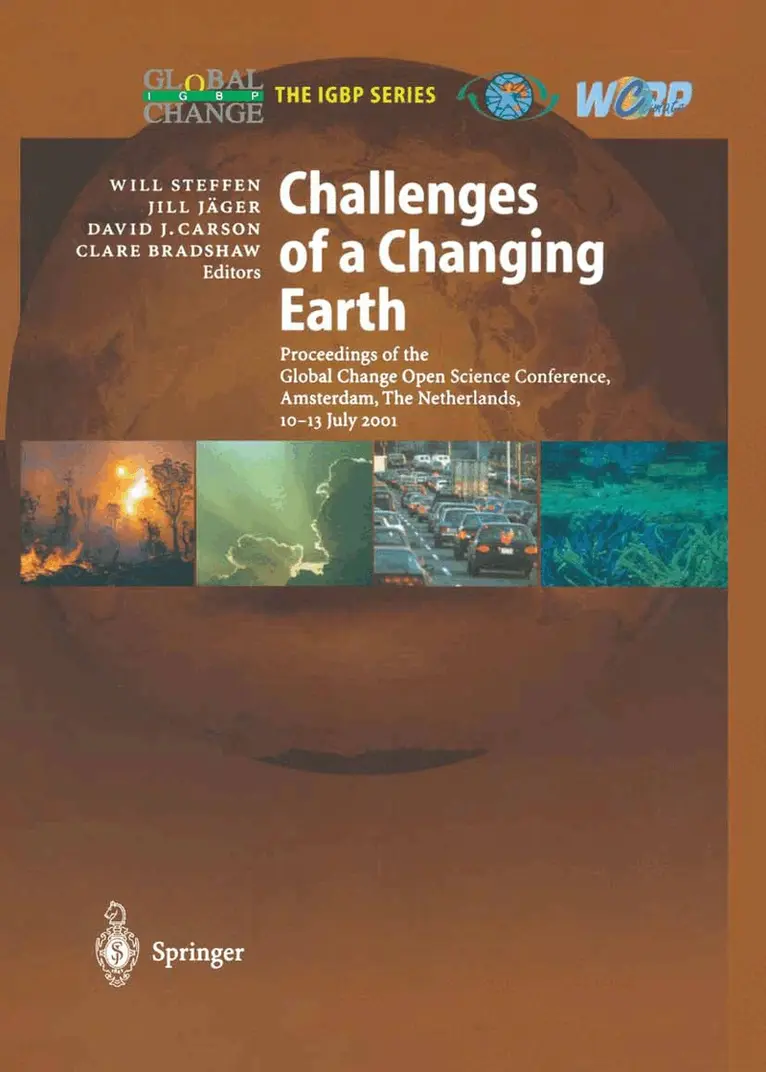
Challenges of a Changing Earth
Proceedings of the Global Change Open Science Conference, Amsterdam, The Netherlands, 10–13 July 2001
Inbunden, Engelska, 2002
2 100 kr
Skickas inom 10-15 vardagar
This book presents a state-of-the-science overview of global change and its consequences for human societies. It highlights four areas of critical importance - food, water resources, air quality and the carbon cycle - from both science and policy perspectives, and points the way towards the new scientific approaches needed to study the Earth System in the future. The book also summarises recent advances in understanding in global change science: the climate system, global biogeochemistry, land-ocean interactions and changing land cover and the Earth System.
1 073 kr
Skickas inom 10-15 vardagar
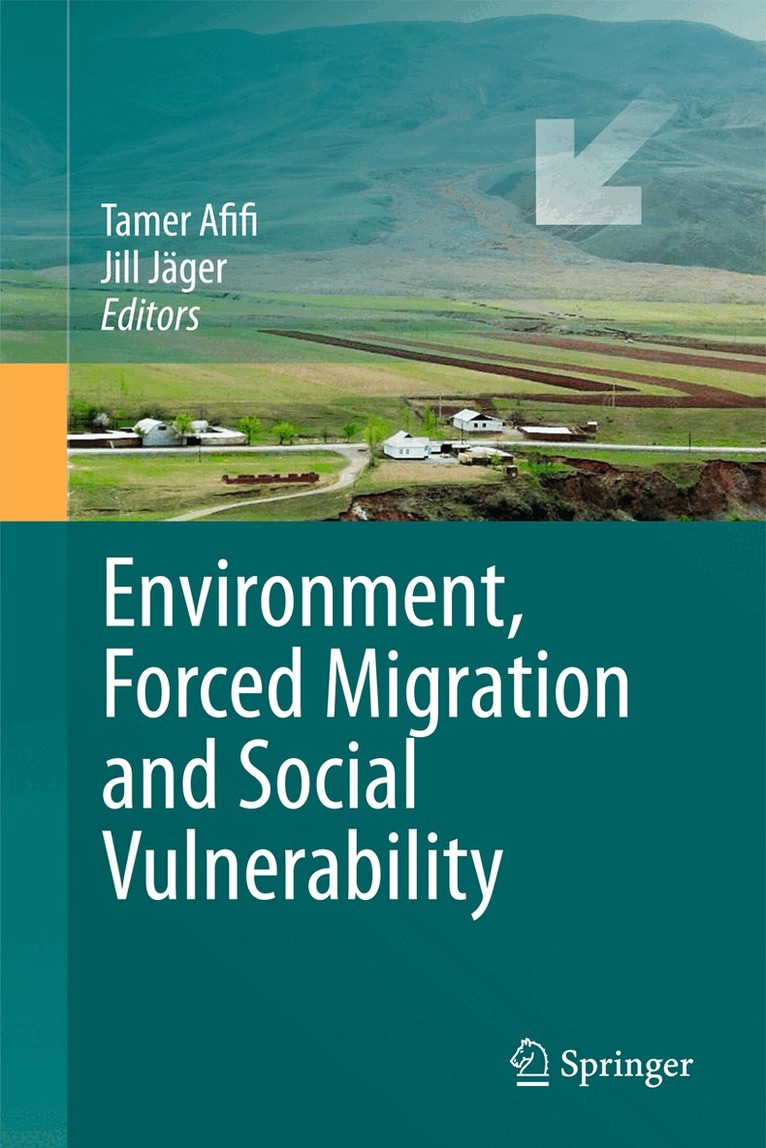
This book is one of the outputs of the conference on ‘Environmental Change, Forced Migration, and Social Vulnerability’ (EFMSV) held in Bonn in October 2008. Migration is one of the oldest adaptation measures of humanity. Indeed, without migration the multitude of civilizations and interactions between them – peaceful and otherwise – would be hard to imagine. The United Nations (UN)-led global dialogue on migration is a clear sign that governments and the specialized UN agencies and bodies have recognized the need to view, govern, manage, and facilitate migration; to mitigate its negative effects; and to capitalize on the positive ones. It is a common expectation among experts that environmentally induced migration will further increase in the decades to come. Hence, next to the political, economic, ethnic, social, financial, humanitarian, and security aspects of migration, the environmental component should urgently be considered in the ongoing international dialogue on migration. This need is also a challenge. Without appropriate scientific knowledge, assessment, definitions, and classifications, the intergovernmental frameworks would not be able to deal with these complex phenomena. The Five-Pronged-Approach as formulated by the United Nations University (UNU) may serve as a framework to identify the additional dimensions of this challenge next to – and actually simultaneously with – the scientific one.
1 073 kr
Skickas inom 10-15 vardagar
This book is one of the outputs of the conference on ‘Environmental Change, Forced Migration, and Social Vulnerability’ (EFMSV) held in Bonn in October 2008.
Challenges of a Changing Earth
Proceedings of the Global Change Open Science Conference, Amsterdam, The Netherlands, 10–13 July 2001
Häftad, Engelska, 2012
2 118 kr
Skickas inom 10-15 vardagar
This volume is based on plenary presentations from Challenges of a Changing Earth, a Global Change Open Science Conference held in Amsterdam, The Neth- lands, in July 2001. The meeting brought together about 1400 scientists from 105 co- tries around the world to describe, discuss and debate the latest scientific - derstanding of natural and human-driven changes to our planet. It examined the effects of these changes on our societies and our lives, and explored what the future might hold. The presentations drew upon global change science from an exceptionally wide range of disciplines and approaches. Issues of societal importance – the food system, air quality, the carbon cycle, and water resources – were highlighted from both policy and science perspectives. Many of the talks presented the exciting scientific advances of the past decade of international research on global change. Several challenged the scientific community in the future. What are the visionary and creative new approaches needed for studying a complex planetary system in which human activities are in- mately interwoven with natural processes? This volume aims to capture the timeliness and excitement of the science p- sented in Amsterdam. The plenary speakers were given a daunting task: to reproduce their presentations in a way that delivers their scientific messages accurately and in sufficient detail but at the same time reaches a very broad audience well beyond their own disciplines. Furthermore, they were required to do this in just a few pages.