Jill Lindsey Harrison – författare
231 kr
Läs direkt efter köp
An examination of political conflicts over pesticide drift and the differing conceptions of justice held by industry, regulators, and activists.
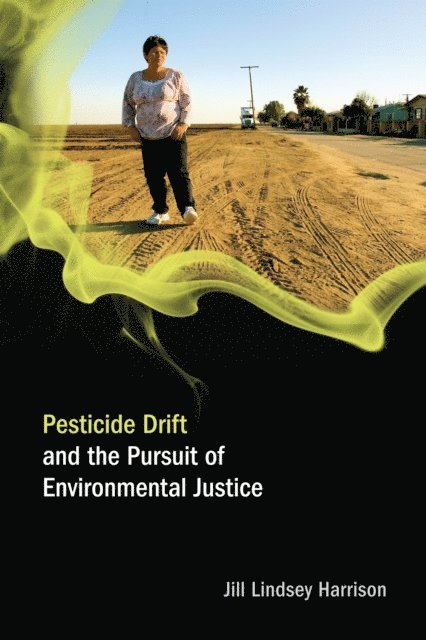
The widespread but virtually invisible problem of pesticide drift—the airborne movement of agricultural pesticides into residential areas—has fueled grassroots activism from Maine to Hawaii. Pesticide drift accidents have terrified and sickened many living in the country''s most marginalized and vulnerable communities. In this book, Jill Lindsey Harrison considers political conflicts over pesticide drift in California, using them to illuminate the broader problem and its potential solutions.
The fact that pesticide pollution and illnesses associated with it disproportionately affect the poor and the powerless raises questions of environmental justice (and political injustice). Despite California''s impressive record of environmental protection, massive pesticide regulatory apparatus, and booming organic farming industry, pesticide-related accidents and illnesses continue unabated. To unpack this conundrum, Harrison examines the conceptions of justice that increasingly shape environmental politics and finds that California''s agricultural industry, regulators, and pesticide drift activists hold different, and conflicting, notions of what justice looks like.
Drawing on her own extensive ethnographic research as well as in-depth interviews with regulators, activists, scientists, and public health practitioners, Harrison examines the ways industry, regulatory agencies, and different kinds of activists address pesticide drift, connecting their efforts to communitarian and libertarian conceptions of justice. The approach taken by pesticide drift activists, she finds, not only critiques theories of justice undergirding mainstream sustainable-agriculture activism, but also offers an entirely new notion of what justice means. To solve seemingly intractable environmental problems such as pesticide drift, Harrison argues, we need a different kind of environmental justice. She proposes the precautionary principle as a framework for effectively and justly addressing environmental inequities in the everyday work of environmental regulatory institutions.
397 kr
Läs direkt efter köp
An examination of why government agencies allow environmental injustices to persist.
Many state and federal environmental agencies have put in place programs, policies, and practices to redress environmental injustices, and yet these efforts fall short of meeting the principles that environmental justice activists have fought for. In From the Inside Out, Jill Lindsey Harrison offers an account of the bureaucratic culture that hinders regulatory agencies'' attempts to reduce environmental injustices.
It is now widely accepted that America''s poorest communities, communities of color, and Native American communities suffer disproportionate harm from environmental hazards, with higher exposure to pollution and higher incidence of lead poisoning, cancer, asthma, and other diseases linked to environmental ills. And yet, Harrison reports, some regulatory staff view these problems as beyond their agencies'' area of concern, requiring too many resources, or see neutrality as demanding “color-blind” administration. Drawing on more than 160 interviews (with interviewees including 89 current or former agency staff members and more than 50 environmental justice activists and others who interact with regulatory agencies) and more than 50 hours of participant observation of agency meetings (both open- and closed-door), Harrison offers a unique account of how bureaucrats resist, undermine, and disparage environmental justice reform—and how environmental justice reformers within the agencies fight back by trying to change regulatory practice and culture from the inside out. Harrison argues that equity, not just aggregated overall improvement, should be a metric for evaluating environmental regulation.
107 kr
Tillfälligt slut
256 kr
Tillfälligt slut
338 kr
Tillfälligt slut