Jim Glassman - Böcker
Visar alla böcker från författaren Jim Glassman. Handla med fri frakt och snabb leverans.
4 produkter
4 produkter
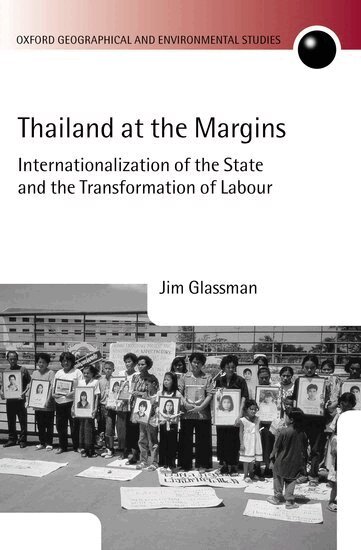
Thailand at the Margins
Internationalization of the State and the Transformation of Labour
Inbunden, Engelska, 2004
2 931 kr
Skickas inom 5-8 vardagar
Jim Glassman addresses the role of the state in the industrial transformation of what was, before the economic crisis of 1997-98, one of Southeast Asia's fastest growing economies. Approaching this issue from a different angle to those dominating 1980s and 1990s debates about the role of states in East Asian growth, Glassman argues that the Thai state has been both proactive and interventionist in encouraging industrial transformation - contrary to what neo-liberals have asserted - but at the same time has not been a 'developmental' state of the sort championed by neo-Weberian analysts of East Asia.Analyzing the Cold War period, the period of the economic boom, as well as the economic crisis and its political aftershock, Thailand at the Margins recasts the story of the Thai state's post-World War II development performance by focusing on uneven industrialization and the interaction between internationalization and the transformation of Thai labour.
605 kr
Skickas inom 7-10 vardagar
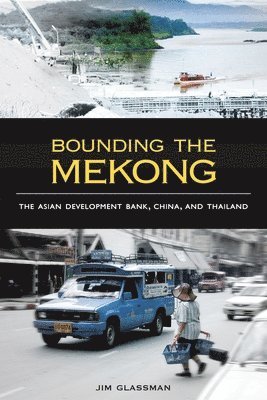
Transnational economic integration has been described by globalization boosters as a rising tide that will lift all boats, an opportunity for all participants to achieve greater prosperity through a combination of political cooperation and capitalist economic competition. The Asian Development Bank (ADB) has championed such rhetoric in promoting the integration of China, Southeast Asia’s formerly socialist states, and Thailand into a regional project called the Greater Mekong Subregion (GMS). But while the GMS project is in fact hastening regional economic integration, Jim Glassman shows that the approach belies the ADB’s idealized description of "win-win" outcomes. The process of "actually existing globalization" in the GMS does provide varied opportunities for different actors, but it is less a rising tide that lifts all boats than an uneven flood of transnational capitalist development whose outcomes are determined by intense class struggles, market competition, and regulatory battles.Glassman makes the case for adopting a class-based approach to analysis of GMS development, regionalization, and actually existing globalization. First he analyzes the interests and actions of various Thai participants in GMS development, then the roles of different Chinese actors in GMS integration. He next provides two cases illustrating the serious limits of any notion that GMS integration is a relatively egalitarian process―Laos’ participation in GMS development and the role of migrant Burmese workers in the production of the GMS. He finds that Burmese migrant workers, dam-displaced Chinese and Laotian villagers, and economically-stressed Thai farmers and small businesses are relative "losers" compared to the powerful business interests that shape GMS integration from locations like Bangkok and Kunming, as well as key sites outside the GMS like Beijing, Singapore, and Tokyo. The final chapter blends geographical-historical analysis with an assessment of uneven development and actually existing globalization in the GMS.Cogent and persuasive, Bounding the Mekong will attract attention from the growing number of scholars analyzing globalization, neoliberalism, regionalization, and multiple scales of governance. It is suitable for graduate courses in geography, political science, and sociology as well as courses with a regional focus.
Drums of War, Drums of Development
The Formation of a Pacific Ruling Class and Industrial Transformation in East and Southeast Asia, 19451980
Häftad, Engelska, 2019
640 kr
Skickas inom 5-8 vardagar
In Drums of War, Drums of Development, Jim Glassman analyses the geopolitical economy of industrial development in East and Southeast Asia during the Vietnam War era, showing how it was shaped by the collaborative planning of US and Asian elites. Challenging both neoliberal and neo-Weberian accounts of East Asian development, Glassman offers evidence that the growth of industry (the "East Asian miracle") was deeply affected by the geopolitics of war and military spending (the "East Asian massacres"). Thus, while Asian industrial development has been presented as providing models for emulation, Glassman cautions that this industrial dynamism was a product of Pacific ruling class manoeuvring which left a contradictory legacy of rapid growth, death, and ongoing challenges for development and democracy.
Del 166 - Historical Materialism Book Series
Drums of War, Drums of Development: The Formation of a Pacific Ruling Class and Industrial Transformation in East and Southeast Asia, 1945-1980
Inbunden, Engelska, 2018
3 670 kr
Skickas inom 5-8 vardagar
In Drums of War, Drums of Development, Jim Glassman analyses the geopolitical economy of industrial development in East and Southeast Asia during the Vietnam War era, showing how it was shaped by the collaborative planning of US and Asian elites. Challenging both neo-liberal and neo-Weberian accounts of East Asian development, Glassman offers evidence that the growth of industry (the 'East Asian miracle') was deeply affected by the geopolitics of war and military spending (the 'East Asian massacres'). Thus, while Asian industrial development has been presented as providing models for emulation, Glassman cautions that this industrial dynamism was a product of Pacific ruling class manoeuvring which left a contradictory legacy of rapid growth, death, and ongoing challenges for development and democracy.Shortlisted for the 2019 Deutscher Memorial Prize