Jim Hlavac – författare
Visar alla böcker från författaren Jim Hlavac. Handla med fri frakt och snabb leverans.
9 produkter
Chinese–English Interpreting and Intercultural Communication
Häftad, 2021
728 kr
Lägg i varukorg
Chinese and English are the world’s largest languages, and the number of interpreter-mediated interactions involving Chinese and English speakers has increased exponentially over the last 30 years. This book presents and describes examples of Chinese–English interpreting across a large number of …
Chinese–English Interpreting and Intercultural Communication
Inbunden, 2020
2596 kr
Lägg i varukorg
Chinese and English are the world’s largest languages, and the number of interpreter-mediated interactions involving Chinese and English speakers has increased exponentially over the last 30 years. This book presents and describes examples of Chinese–English interpreting across a large number of …
Chinese-English Interpreting and Intercultural Communication
E-bok, 2020
856 kr
Lägg i varukorg
Chinese and English are the world’s largest languages, and the number of interpreter-mediated interactions involving Chinese and English speakers has increased exponentially over the last 30 years. This book presents and describes examples of Chinese–English interpreting across a large number …
Chinese-English Interpreting and Intercultural Communication
E-bok, 2020
856 kr
Lägg i varukorg
Chinese and English are the world’s largest languages, and the number of interpreter-mediated interactions involving Chinese and English speakers has increased exponentially over the last 30 years. This book presents and describes examples of Chinese–English interpreting across a large number …
Diaspora Language Contact
The Speech of Croatian Speakers Abroad
E-bok, 2021
2298 kr
Lägg i varukorg
This book is an innovative contribution to contact linguistics as it presents a rarely studied but sizeable diaspora language community in contact with five languages – English, German, Italian, Norwegian and Spanish – across four continents. Foregrounded by diachronic descriptions of heritage …
Diaspora Language Contact
The Speech of Croatian Speakers Abroad
E-bok, 2021
2298 kr
Lägg i varukorg
This book is an innovative contribution to contact linguistics as it presents a rarely studied but sizeable diaspora language community in contact with five languages – English, German, Italian, Norwegian and Spanish – across four continents. Foregrounded by diachronic descriptions of heritage …
Diaspora Language Contact
The Speech of Croatian Speakers Abroad
Inbunden, 2021
2272 kr
Lägg i varukorg
No detailed description available for "Diaspora Language Contact".
Diaspora Language Contact
The Speech of Croatian Speakers Abroad
Häftad, 2023
458 kr
Lägg i varukorg
No detailed description available for "Diaspora Language Contact".
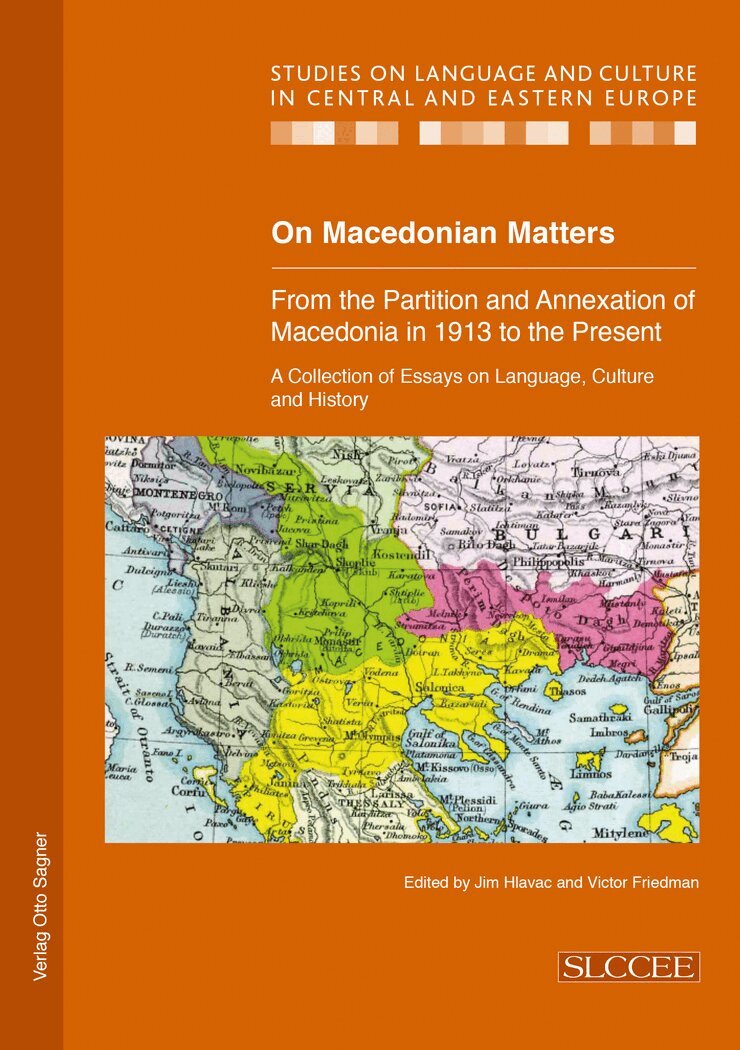
On Macedonian Matters: from the Partition and Annexation of Macedonia in 1913 to the Present
A Collection of Essays on Language, Culture and History
Av Jim Hlavac, Victor Friedman
Häftad, 2015
467 kr
Lägg i varukorg
Since the fall of communism in 1989, cross-border co-operation between neighbouring states has become a feature of the 'common European home' project. A prominent exception to this trend is Macedonia which today is still subjected to blockade politics and the absence of respect and recognition for …