Jim Kanaris - Böcker
Visar alla böcker från författaren Jim Kanaris. Handla med fri frakt och snabb leverans.
8 produkter
8 produkter
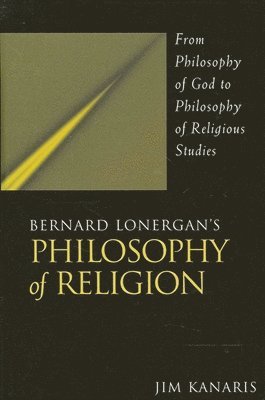
Bernard Lonergan's Philosophy of Religion
From Philosophy of God to Philosophy of Religious Studies
Inbunden, Engelska, 2002
1 057 kr
Tillfälligt slut
Explicates the philosophy of religion emerging from the work of Bernard Lonergan, the esteemed theologian who reinvigorated Catholic thought in the twentieth century.Jim Kanaris provides a comprehensive understanding of esteemed theologian Bernard Lonergan's philosophy of religion and a crucial means of identifying precisely the points of contact between Lonergan's thoughts on God and religion and the issues presently discussed by philosophers of religion. Defining Lonergan's philosophy of religion presents a challenge because he does not use the term as it is generally understood. Rather, Lonergan addresses these issues under the guise of philosophy of God or natural theology, understands the role of religious experience idiosyncratically, and allows this concept to play various roles in his thought. The dynamics of these various components, their interrelationships, and their function from early to late development are fleshed out in this work.Kanaris finds Lonergan's philosophy of religion developing at that period when he attributes a new importance to the influence of religious experience. What this means for Lonergan's controversial proof of God's existence, the role of Lonergan's concept of consciousness, and the specifically religious dimension of the notion of experience are explored, along with the emergence of what is technically philosophy of religion.
Bernard Lonergan's Philosophy of Religion
From Philosophy of God to Philosophy of Religious Studies
Häftad, Engelska, 2002
566 kr
Skickas inom 3-6 vardagar
Explicates the philosophy of religion emerging from the work of Bernard Lonergan, the esteemed theologian who reinvigorated Catholic thought in the twentieth century.Jim Kanaris provides a comprehensive understanding of esteemed theologian Bernard Lonergan's philosophy of religion and a crucial means of identifying precisely the points of contact between Lonergan's thoughts on God and religion and the issues presently discussed by philosophers of religion. Defining Lonergan's philosophy of religion presents a challenge because he does not use the term as it is generally understood. Rather, Lonergan addresses these issues under the guise of philosophy of God or natural theology, understands the role of religious experience idiosyncratically, and allows this concept to play various roles in his thought. The dynamics of these various components, their interrelationships, and their function from early to late development are fleshed out in this work.Kanaris finds Lonergan's philosophy of religion developing at that period when he attributes a new importance to the influence of religious experience. What this means for Lonergan's controversial proof of God's existence, the role of Lonergan's concept of consciousness, and the specifically religious dimension of the notion of experience are explored, along with the emergence of what is technically philosophy of religion.
989 kr
Skickas inom 7-10 vardagar
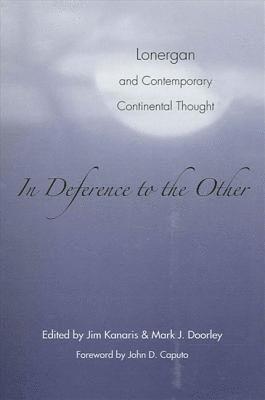
Explores the work of Bernard Lonergan in light of contemporary continental thought.In Deference to the Other brings contemporary continental thought into conversation with that of Bernard Lonergan (1904–1984), the Jesuit philosopher and theologian. This is an opportune moment to open such a dialogue: philosophers and theologians indebted to Lonergan have increasingly found themselves challenged by the insights of thinkers typically dubbed "postmodern," while postmodernists, most notably Jacques Derrida, have begun to ask the "God question." While Lonergan was not a continental philosopher, neither was he an analytic philosopher. Concerned with both epistemology and cognition, his systematic and hermeneutic-like proposals resonate with the concerns of philosophers such as Derrida, Foucault, Levinas, and Kristeva. Contributors to this volume find insight and affiliation between Lonergan's thought and contemporary continental thought in a wide-ranging work that engages the philosophical problems of authenticity, self-appropriation, ethics, and the human subject.
594 kr
Skickas inom 3-6 vardagar
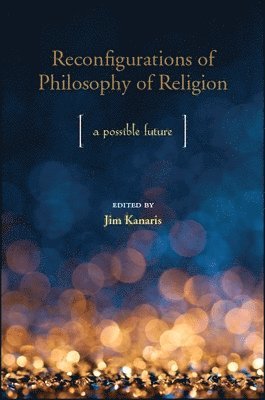
Explores the place and meaning of philosophy of religion in our current poststructuralist, postsecular, postcolonialist context.This collection addresses, as it exemplifies, an identity crisis in contemporary philosophy of religion. It represents a unique two-way dialogue between philosophers of religion and scholars of religion and broaches issues pertaining to the philosophy of religion and the philosophical tradition, on the one hand, and religious studies, theology, and the modern academy on the other. While each author manages the current challenges in philosophy of religion differently, one can nonetheless discern a polyphony of interests surrounding a postcritical, postsecular appreciation of religion. In part 1, contributors ask how philosophy of religion can accommodate both the strengths and weaknesses of Western analytic and continental traditions; incorporate developments in ideology critique, gender studies, and Asian philosophies; and negotiate the perceived stalemate in philosophy of religion. Part 2 addresses these questions in terms of a philosophy of religion that is postcolonial in intention and multidisciplinary in orientation and features scholarship from the fields of both religion and theology. An underlying theme is the importance of ushering philosophy of religion into a postphenomenological era of religious studies and theology. This is a neglected dimension in many laudable discussions about philosophy of religion that this volume hopes to emend.
1 117 kr
Skickas inom 5-8 vardagar
Explores the place and meaning of philosophy of religion in our current poststructuralist, postsecular, postcolonialist context.This collection addresses, as it exemplifies, an identity crisis in contemporary philosophy of religion. It represents a unique two-way dialogue between philosophers of religion and scholars of religion and broaches issues pertaining to the philosophy of religion and the philosophical tradition, on the one hand, and religious studies, theology, and the modern academy on the other. While each author manages the current challenges in philosophy of religion differently, one can nonetheless discern a polyphony of interests surrounding a postcritical, postsecular appreciation of religion. In part 1, contributors ask how philosophy of religion can accommodate both the strengths and weaknesses of Western analytic and continental traditions; incorporate developments in ideology critique, gender studies, and Asian philosophies; and negotiate the perceived stalemate in philosophy of religion. Part 2 addresses these questions in terms of a philosophy of religion that is postcolonial in intention and multidisciplinary in orientation and features scholarship from the fields of both religion and theology. An underlying theme is the importance of ushering philosophy of religion into a postphenomenological era of religious studies and theology. This is a neglected dimension in many laudable discussions about philosophy of religion that this volume hopes to emend.
1 456 kr
Skickas inom 3-6 vardagar
Offers a unique perspective on the study of religion revolutionized by contemporary continental thinking.In this important work, Jim Kanaris provides a unique approach to the study of religion, aiming to alleviate the methodological and ideological barriers that divide philosophers, theologians, and social scientists. This is a "philosophy of religion" for a wider audience than that designation usually circumscribes, and, for that reason, Kanaris opts for the broader "philosophy of religious studies." He hybridizes insights principally from the works of Bernard Lonergan and Martin Heidegger but also those of Jacques Derrida, Charles Winquist, and Tyler Roberts, among others. Kanaris combines this with a distinctive hermeneutical approach that gives rise to what he calls "enecstatic" philosophy, one that manages the irreducible complexity of one's individuality, a singularity, in the negotiation of one's objects of concern. Toward a Philosophy of Religious Studies is unlike any other book in religious studies. It provides a unique way to surface personal involvement in the study of religion without compromising scholarly objectivity and philosophical integrity.
566 kr
Skickas inom 3-6 vardagar
Offers a unique perspective on the study of religion revolutionized by contemporary continental thinking.In this important work, Jim Kanaris provides a unique approach to the study of religion, aiming to alleviate the methodological and ideological barriers that divide philosophers, theologians, and social scientists. This is a "philosophy of religion" for a wider audience than that designation usually circumscribes, and, for that reason, Kanaris opts for the broader "philosophy of religious studies." He hybridizes insights principally from the works of Bernard Lonergan and Martin Heidegger but also those of Jacques Derrida, Charles Winquist, and Tyler Roberts, among others. Kanaris combines this with a distinctive hermeneutical approach that gives rise to what he calls "enecstatic" philosophy, one that manages the irreducible complexity of one's individuality, a singularity, in the negotiation of one's objects of concern. Toward a Philosophy of Religious Studies is unlike any other book in religious studies. It provides a unique way to surface personal involvement in the study of religion without compromising scholarly objectivity and philosophical integrity.
1 044 kr
Skickas inom 5-8 vardagar
Philosophy of religion is a highly diversified field. An apt description of it is “zoo.” It conjures imagery of a species-wide cacophony of sights and sounds. While some bemoan what this description implies, contributors to this volume appreciate it. There is no reason why a zoo should intimate a den of confusion rather than an important condition of emergence and novelty. “Polyphonic” is the catchall term to capture this sentiment. It signals a way of thinking that resists the desire to siphon insight into manageable packets of information in the name of historicality and finitude. A polyphonic, then, is a variegated and discontinuous study that breaks with a tradition that desires continuity and unification, without being erratic.This volume is an exercise in polyphonic thinking. Each contributing scholar develops ideas in connection with his or her research interests. Despite the fluctuation of themes, symmetry exists as each piece sounds off a core melody of religion and the divine. The book contributes to the advancement of current research in contemporary Continental philosophy of religion. By juxtaposing articles by cultural theorists and philosophers of religion, religionists and theologians, the book emphasizes the importance of interdisciplinary and polyphonic conversation to the development of matters of topical interest and issues related to method and ethics in religious studies, and theology.