Jim Mansell – författare
Visar alla böcker från författaren Jim Mansell. Handla med fri frakt och snabb leverans.
6 produkter
6 produkter
Häftad, Engelska, 1996
621 kr
Skickas inom 10-15 vardagar
The number of people in institutions for the intellectually disabled in Britain, Scandinavia and the USA has fallen markedly over the last 25 years. Deinstitutionalization and Community Living reviews the changes that have taken place, identifies the lessons that have been learned and highlights the issues that remain to be addressed.
E-bok
Engelska, 2012474 kr
Läs direkt efter köp
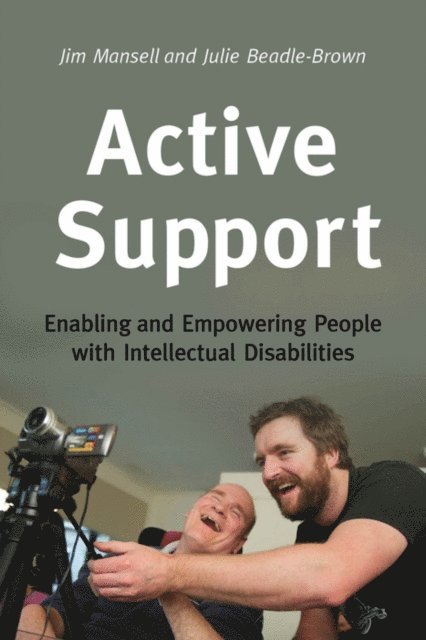
Active Support is a proven model of care that enables and empowers people with intellectual disabilities to participate fully in all aspects of their lives. This evidence-based approach is particularly effective for working with people with more severe disabilities, and is of growing interest to those responsible for providing support and services. The authors provide a comprehensive overview of Active Support and how it can be used in practice, based on the theory and research underpinning the methods involved. They describe how to engage people with intellectual disabilities in meaningful activity as active participants, and look at the communication style needed to foster positive relationships between carers and the people they are supporting. Highlighting the main issues for those trying to put Active Support into practice, they explain what is needed on a day-to-day basis to support the implementation, improvement and maintenance of the approach, along with possible solutions for the difficulties they may encounter. Finally, they look at how to integrate Active Support with other person-centred approaches, drawing on examples from various organisations and individual case studies. The definitive text on Active Support, this book will be essential reading for anyone professionally concerned with the quality of life of people with intellectual disabilities, including psychologists, behaviour specialists, social workers, care managers, occupational therapists and inspectors and regulators of services, as well as families.
E-bok
PDF, Engelska, 2013708 kr
Läs direkt efter köp
This is a timely book. The question of how to help people with challenging behaviour -and how to design and manage services so that staff, families and users feel that what should be done is being done - is at the top of the agenda. Failure to deal com petently with the issue results in disaffection, poor quality ser vices and a less than optimal quality of life for service users. Moreover, the credibility of services for all people with learning disabilities is intimately connected with how we cope with chal lenging behaviour, a point made recently by a Department of Health Working Group chaired by Jim Mansell (Department of Health, 1993). The book is welcome because it draws together what is known about the important questions from a British perspective, although, of course, most of the underlying issues have world wide relevance. The contributors, while all having a good deal of experience and authority, do not put forward simple portrayals of the problems, nor glib solutions, and this is one of the book''s major strengths. Clarity in the field of challenging behaviour is sometimes elu sive. What is presented here forces the reader to confront argu ments in a rational and logical fashion.
E-bok
PDF, Engelska, 2013771 kr
Läs direkt efter köp
Häftad, Engelska, 1994
533 kr
Skickas inom 10-15 vardagar
This is a timely book. The question of how to help people with challenging behaviour -and how to design and manage services so that staff, families and users feel that what should be done is being done - is at the top of the agenda. Failure to deal com petently with the issue results in disaffection, poor quality ser vices and a less than optimal quality of life for service users. Moreover, the credibility of services for all people with learning disabilities is intimately connected with how we cope with chal lenging behaviour, a point made recently by a Department of Health Working Group chaired by Jim Mansell (Department of Health, 1993). The book is welcome because it draws together what is known about the important questions from a British perspective, although, of course, most of the underlying issues have world wide relevance. The contributors, while all having a good deal of experience and authority, do not put forward simple portrayals of the problems, nor glib solutions, and this is one of the book's major strengths. Clarity in the field of challenging behaviour is sometimes elu sive. What is presented here forces the reader to confront argu ments in a rational and logical fashion.
Häftad, Engelska, 2012
484 kr
Skickas inom 5-8 vardagar
Active Support is a proven model of care that enables and empowers people with intellectual disabilities to participate fully in all aspects of their lives. This evidence-based approach is particularly effective for working with people with more severe disabilities, and is of growing interest to those responsible for providing support and services. The authors provide a comprehensive overview of Active Support and how it can be used in practice, based on the theory and research underpinning the methods involved. They describe how to engage people with intellectual disabilities in meaningful activity as active participants, and look at the communication style needed to foster positive relationships between carers and the people they are supporting. Highlighting the main issues for those trying to put Active Support into practice, they explain what is needed on a day-to-day basis to support the implementation, improvement and maintenance of the approach, along with possible solutions for the difficulties they may encounter. Finally, they look at how to integrate Active Support with other person-centred approaches, drawing on examples from various organisations and individual case studies. The definitive text on Active Support, this book will be essential reading for anyone professionally concerned with the quality of life of people with intellectual disabilities, including psychologists, behaviour specialists, social workers, care managers, occupational therapists and inspectors and regulators of services, as well as families.