Jim O'Neill – författare
Visar alla böcker från författaren Jim O'Neill. Handla med fri frakt och snabb leverans.
6 produkter
6 produkter
E-bok
Engelska, 2011122 kr
Läs direkt efter köp
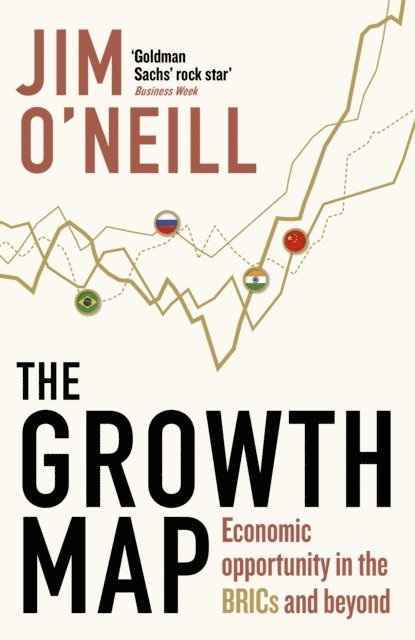
Jim O'Neill, one of the most influential economists today, shares his insights on how and why he developed one of the most compelling economic concepts of our time in The Growth Map. 'O'Neill has redefined how investors and Western business leaders see the world. This book tells the unlikely story of how O'Neill developed this path-breaking idea . . . lively, powerful and highly accessible' Gillian Tett, Financial Times Ten years ago, Jim O'Neill predicted that globalization would help Brazil, Russia, India and China (the BRICs) - busy, ambitious countries full of raw materials - overtake the largest Western economies. With all four BRIC nations set to do just that, no other idea has proved as significant for the new century. But these changes have provoked business and political uncertainty and in The Growth Map O'Neill examines what is coming next. Can the BRICs sustain their exceptional growth? Which nations will come next? And what, for all of us, does the future hold?'Goldman Sachs' rock star' Business Week'Sharp, shrewd. Tells the big story of our time. The fundamental shift of economic power from the West' Niall Ferguson'O'Neill has changed how the world thinks about economic growth - and how the BRICs think about themselves' Lloyd Blankfein, Chairman And Ceo, Goldman Sachs'One of the most sought-after economic commentators on the planet' Daily TelegraphJim O'Neill is Chairman of Goldman Sachs Asset Management. He joined Goldman Sachs in 1995, rising to chief economist, and in 2001 he led the team that conducted the original BRIC analysis. He is chairman of the charity SHINE, and a member of the boards of the UK Royal Economic Society, Itinera and Bruegel. He has a lifelong passion for Manchester United FC, and has served as a non-executive director of the club's board.
Inbunden, Engelska, 2018
296 kr
Skickas inom 10-15 vardagar
Antibiotics are powerful drugs that can prevent and treat infections, but they are becoming less effective as a result of drug resistance. Resistance develops because the bacteria that antibiotics target can evolve ways to defend themselves against these drugs. When antibiotics fail, there is very little else to prevent an infection from spreading.Unnecessary use of antibiotics in both humans and animals accelerates the evolution of drug-resistant bacteria, with potentially catastrophic personal and global consequences. Our best defenses against infectious disease could cease to work, surgical procedures would become deadly, and we might return to a world where even small cuts are life-threatening. The problem of drug resistance already kills over one million people across the world every year and has huge economic costs. Without action, this problem will become significantly worse.Following from their work on the Review on Antimicrobial Resistance, William Hall, Anthony McDonnell, and Jim O’Neill outline the major systematic failures that have led to this growing crisis. They also provide a set of solutions to tackle these global issues that governments, industry, and public health specialists can adopt. In addition to personal behavioral modifications, such as better handwashing regimens, Superbugs argues for mounting an offense against this threat through agricultural policy changes, an industrial research stimulus, and other broad-scale economic and social incentives.
Häftad, Engelska, 2013
178 kr
Skickas inom 5-8 vardagar
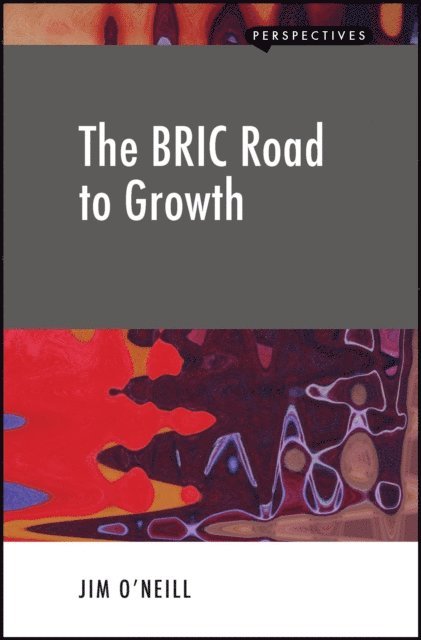
The idea that Brazil, Russia, India and China (The 'BRICs') are the economic stars of our times is now widely accepted. Jim O'Neill now introduces us to four new rising stars in the economic firmament: the 'MINT' countries (Mexico, Indonesia, Nigeria and Turkey). However, the struggling 'old' developed nations have still not adjusted to the challenges posed by the new world order. This book looks closely at the role of China in this new order, and in particular at its influential role in Africa where more nations are beginning to emerge as significant economic players to be reckoned with. What is the scale of South-South trade and, crucially, how is this new aspect of globalization being accommodated in global economic governance? How should the world engage with the new economic powerhouses?
E-bok
Engelska, 201392 kr
Läs direkt efter köp
The idea that Brazil, Russia, India and China (the "BRICs") are the rising stars of the world economy is now widely accepted. However, the "old" developed nations have not adjusted to the new world order as they struggle with the legacy of the financial crisis. The BRICs and others (especially Korea) have already ‘emerged’ as economic powers. This requires rapid adjustment in economic policies and especially global economic institutions. This book makes a strong case for a radical overhaul of global economic governance to put these powerful new economies at the heart of decision-making. The author argues that, while the new growth economies still have significant policy adjustments to make, it is also essential for old-world economies to learn from them too and to accept the new order. He looks at the roles of China, Korea and Africa and at the scale of South-South trade. What does all this mean for the EU and for the UK in particular? How should the world engage with the new economic powerhouses?
E-bok
PDF, Engelska, 201389 kr
Läs direkt efter köp
The idea that Brazil, Russia, India and China (the "BRICs") are the rising stars of the world economy is now widely accepted. However, the "old" developed nations have not adjusted to the new world order as they struggle with the legacy of the financial crisis. The BRICs and others (especially Korea) have already ‘emerged’ as economic powers. This requires rapid adjustment in economic policies and especially global economic institutions. This book makes a strong case for a radical overhaul of global economic governance to put these powerful new economies at the heart of decision-making. The author argues that, while the new growth economies still have significant policy adjustments to make, it is also essential for old-world economies to learn from them too and to accept the new order. He looks at the roles of China, Korea and Africa and at the scale of South-South trade. What does all this mean for the EU and for the UK in particular? How should the world engage with the new economic powerhouses?
Inbunden, Engelska
340 kr
Tillfälligt slut