Jing Qi – författare
Visar alla böcker från författaren Jing Qi. Handla med fri frakt och snabb leverans.
3 produkter
3 produkter
Häftad, Engelska, 2017
701 kr
Skickas inom 10-15 vardagar
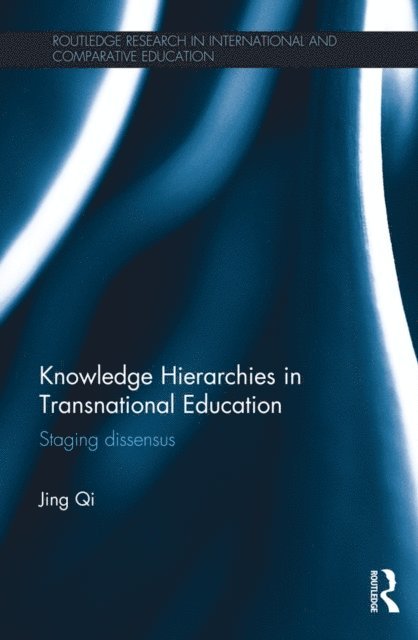
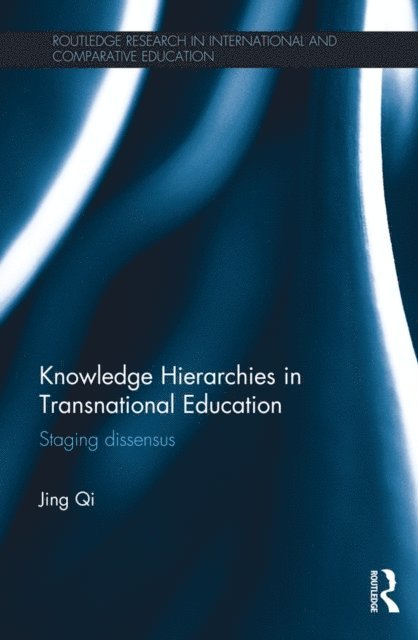
Transnational education seeks equivalence in standards and/or relevance of outcomes through the transfer of Western theories, concepts and methods. Utilising a critique-interpretative approach, Jing Qi argues that equivalence/relevance-oriented approaches to transnational education assume the legitimacy of the global knowledge hierarchy. Euro-American educational theories are imposed as defaults in non-Western educational communities of imagined consensus. Grounded in a study of a five-year transnational teacher education and community capacity-building program in Northern Chile, the book investigates the relationships between theoretical knowledge, knowledge hierarchies and critique. Transnational education communities are recognised as sites of critiques where conflictual and conceptual ‘dissensus’ disrupts global and local knowledge hierarchies. Critique is deployed by educational actors in their everyday engagement in transnational education to stage dissensus, which constantly re-draws the lines of possibility for knowledge co-construction.A matrix mapping system is designed to chart and theorise the Chilean educational actors’ critiques along the trail of concept translation, learning, application and innovation of knowledge hierarchies, which operate at and across global, transnational, local and the newly-created local-global levels. This book examines how these critiques modulate the ascendancy of knowledge hierarchies to enfranchise non-western educational actors for theoretical knowledge production that addresses local needs. Knowledge Hierarchies in Transnational Education will be of key value to researchers, academics and postgraduate students in the fields of international education, teacher education and globalisation.
Inbunden, Engelska, 2015
2 210 kr
Skickas inom 10-15 vardagar
Transnational education seeks equivalence in standards and/or relevance of outcomes through the transfer of Western theories, concepts and methods. Utilising a critique-interpretative approach, Jing Qi argues that equivalence/relevance-oriented approaches to transnational education assume the legitimacy of the global knowledge hierarchy. Euro-American educational theories are imposed as defaults in non-Western educational communities of imagined consensus. Grounded in a study of a five-year transnational teacher education and community capacity-building program in Northern Chile, the book investigates the relationships between theoretical knowledge, knowledge hierarchies and critique. Transnational education communities are recognised as sites of critiques where conflictual and conceptual ‘dissensus’ disrupts global and local knowledge hierarchies. Critique is deployed by educational actors in their everyday engagement in transnational education to stage dissensus, which constantly re-draws the lines of possibility for knowledge co-construction.A matrix mapping system is designed to chart and theorise the Chilean educational actors’ critiques along the trail of concept translation, learning, application and innovation of knowledge hierarchies, which operate at and across global, transnational, local and the newly-created local-global levels. This book examines how these critiques modulate the ascendancy of knowledge hierarchies to enfranchise non-western educational actors for theoretical knowledge production that addresses local needs. Knowledge Hierarchies in Transnational Education will be of key value to researchers, academics and postgraduate students in the fields of international education, teacher education and globalisation.
Inbunden, Engelska, 2026
1 284 kr
Skickas inom 10-15 vardagar
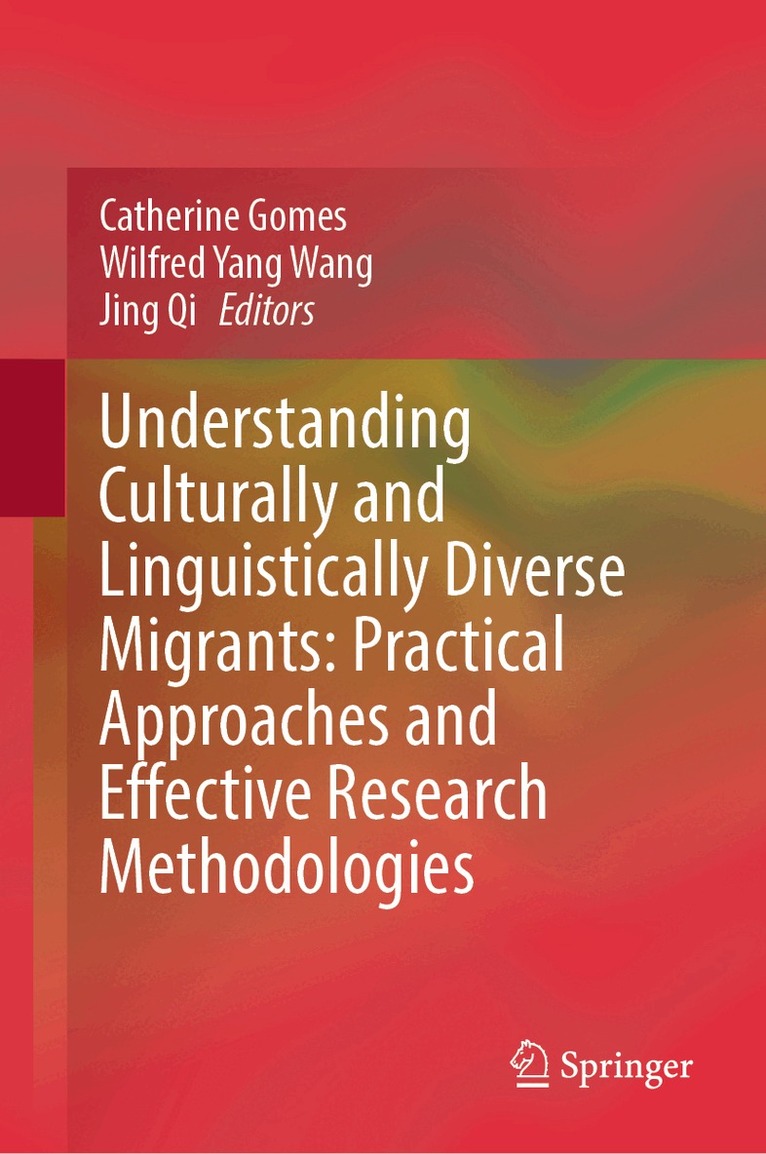
This book provides readers with practical, culturally aware and engaging ways to research migrant culturally and linguistically diverse (CALD) communities. Through the diverse disciplinary perspectives of Communication Studies, Media Studies, Sociology, Cultural Studies, Education, Business, and Data Science, the case studies documented in this book offer readers effective methodologies leading to deep and nuanced knowledge of CALD migrants and the communities they belong to. This book looks at research design, including insider-outsider perspectives, recruitment, data collection (ethnographic, individual, and focus group interviews, non-intrusive observations, artifacts, quantitative, data scraping, online, face-to-face and so on), data analysis, conceptual and theoretical frameworks, communication of research and research translation. It describes and reflects on appropriate methodologies for CALD migrant people. With its rich, insightful, and practical examples, this book is a necessary reference for anyone researching the lived experience of migrants in multicultural settings.