Jingling Xue – författare
Visar alla böcker från författaren Jingling Xue. Handla med fri frakt och snabb leverans.
7 produkter
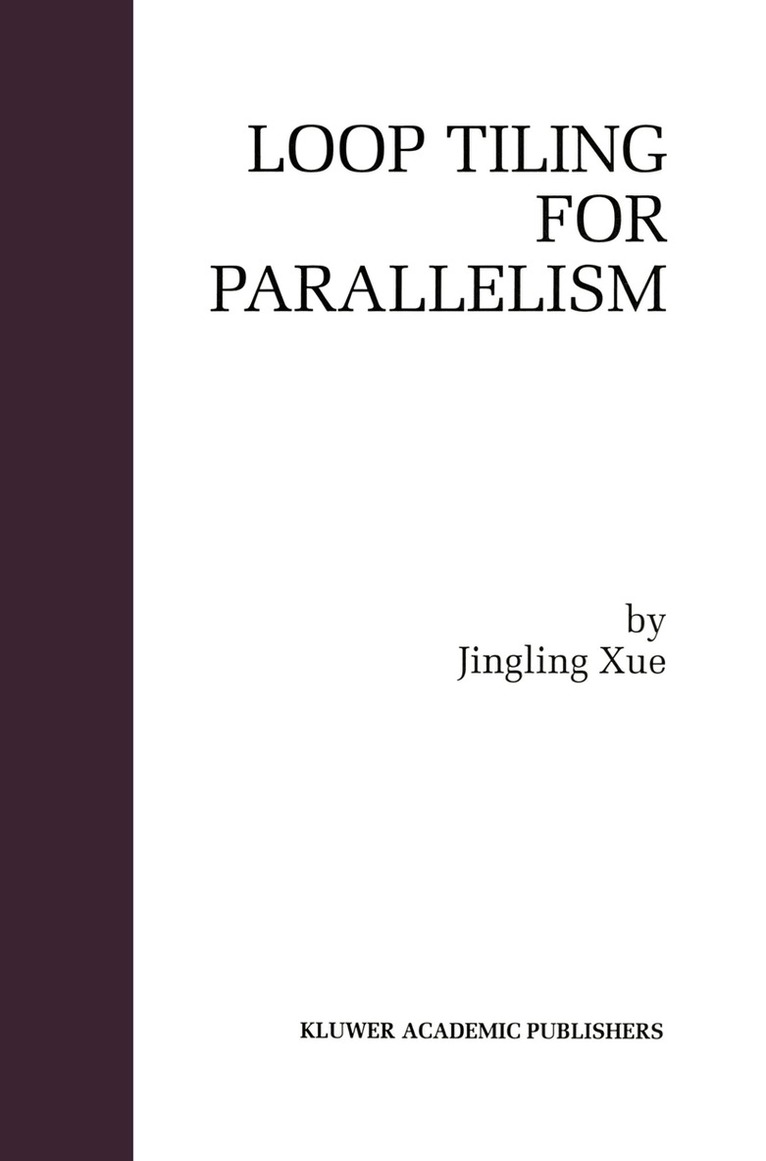
Loop Tiling for Parallelism
Av Jingling Xue
Inbunden, 2000
1685 kr
Lägg i varukorg
Loop tiling, as one of the most important compiler optimizations, is beneficial for both parallel machines and uniprocessors with a memory hierarchy. This book explores the use of loop tiling for reducing communication cost and improving parallelism for distributed memory machines. The author …
Loop Tiling for Parallelism
Av Jingling Xue
Häftad, 2012
1685 kr
Lägg i varukorg
Loop tiling, as one of the most important compiler optimizations, is beneficial for both parallel machines and uniprocessors with a memory hierarchy. This book explores the use of loop tiling for reducing communication cost and improving parallelism for distributed memory machines. The author …
Loop Tiling for Parallelism
Av Jingling Xue
E-bok, 2012
2127 kr
Lägg i varukorg
Loop tiling, as one of the most important compiler optimizations, is beneficial for both parallel machines and uniprocessors with a memory hierarchy. This book explores the use of loop tiling for reducing communication cost and improving parallelism for distributed memory machines. The author …
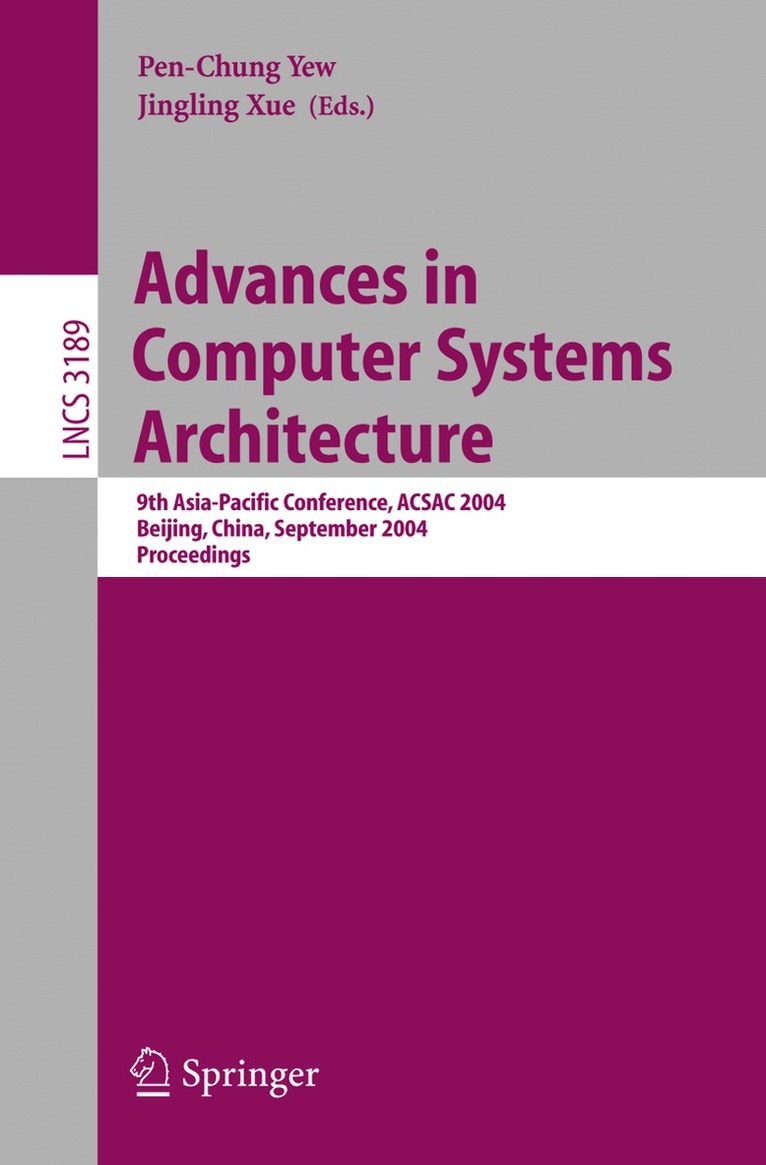
Advances in Computer Systems Architecture
9th Asia-Pacific Conference, ACSAC 2004, Beijing, China, September 7-9, 2004, Proceedings
Av Pen-Chung Yew, Jingling Xue
Häftad, 2004
1126 kr
Lägg i varukorg
On behalf of the program committee, we were pleased to present this year’s program for ACSAC: Asia-Paci?c Computer Systems Architecture Conference. Now in its ninth year, ACSAC continues to provide an excellent forum for researchers, educators and practitioners to come to the Asia-Paci?c region to …
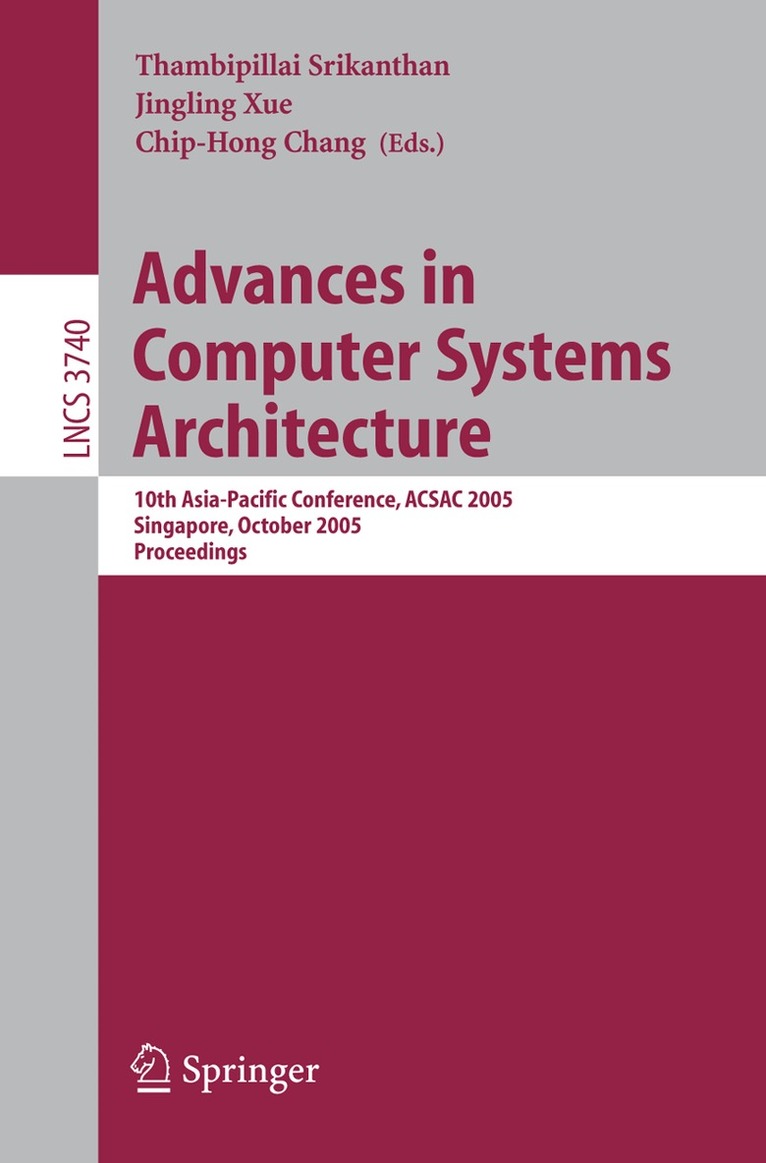
Advances in Computer Systems Architecture
10th Asia-Pacific Conference, ACSAC 2005, Singapore, October 24-26, 2005, Proceedings
Av Thambipillai Srikanthan, Jingling Xue m. fl.
Häftad, 2005
1126 kr
Lägg i varukorg
On behalf of the ProgramCommittee, we are pleased to present the proceedings of the 2005 Asia-Paci?c Computer Systems Architecture Conference (ACSAC 2005) held in the beautiful and dynamic country of Singapore. This conference was the tenth in its series, one of the leading forums for sharing the …
Advances in Computer Systems Architecture
9th Asia-Pacific Conference, ACSAC 2004, Beijing, China, September 7-9, 2004, Proceedings
Av Jingling Xue, Pen-Chung Yew
E-bok, 2004
1455 kr
Lägg i varukorg
On behalf of the program committee, we were pleased to present this year’s program for ACSAC: Asia-Paci?c Computer Systems Architecture Conference. Now in its ninth year, ACSAC continues to provide an excellent forum for researchers, educators and practitioners to come to the Asia-Paci?c region to …
Advances in Computer Systems Architecture
10th Asia-Pacific Conference, ACSAC 2005, Singapore, October 24-26, 2005, Proceedings
Av Chip-Hong Chang, Jingling Xue m. fl.
E-bok, 2005
1502 kr
Lägg i varukorg
On behalf of the ProgramCommittee, we are pleased to present the proceedings of the 2005 Asia-Paci?c Computer Systems Architecture Conference (ACSAC 2005) held in the beautiful and dynamic country of Singapore. This conference was the tenth in its series, one of the leading forums for sharing the …