Jini Kim Watson - Böcker
Visar alla böcker från författaren Jini Kim Watson. Handla med fri frakt och snabb leverans.
9 produkter
9 produkter
326 kr
Skickas inom 7-10 vardagar
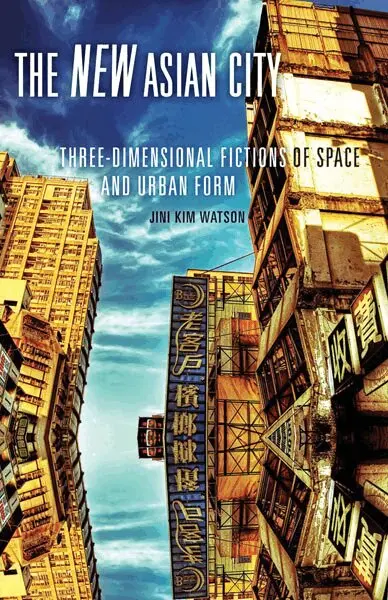
Under Jini Kim Watson’s scrutiny, the Asian Tiger metropolises of Seoul, Taipei, and Singapore reveal a surprising residue of the colonial environment. Drawing on a wide array of literary, filmic, and political works, and juxtaposing close readings of the built environment, Watson demonstrates how processes of migration and construction in the hypergrowth urbanscapes of the Pacific Rim crystallize the psychic and political dramas of their colonized past and globalized present.Examining how newly constructed spaces-including expressways, high-rises, factory zones, department stores, and government buildings-become figured within fictional and political texts uncovers how massive transformations of citizenries and cities were rationalized, perceived, and fictionalized. Watson shows how literature, film, and poetry have described and challenged contemporary Asian metropolises, especially around the formation of gendered and laboring subjects in these new spaces. She suggests that by embracing the postwar growth-at-any-cost imperative, they have buttressed the nationalist enterprise along neocolonial lines. The New Asian City provides an innovative approach to how we might better understand the gleaming metropolises of the Pacific Rim. In doing so, it demonstrates how reading cultural production in conjunction with built environments can enrich our knowledge of the lived consequences of rapid economic and urban development.
1 406 kr
Skickas inom 7-10 vardagar
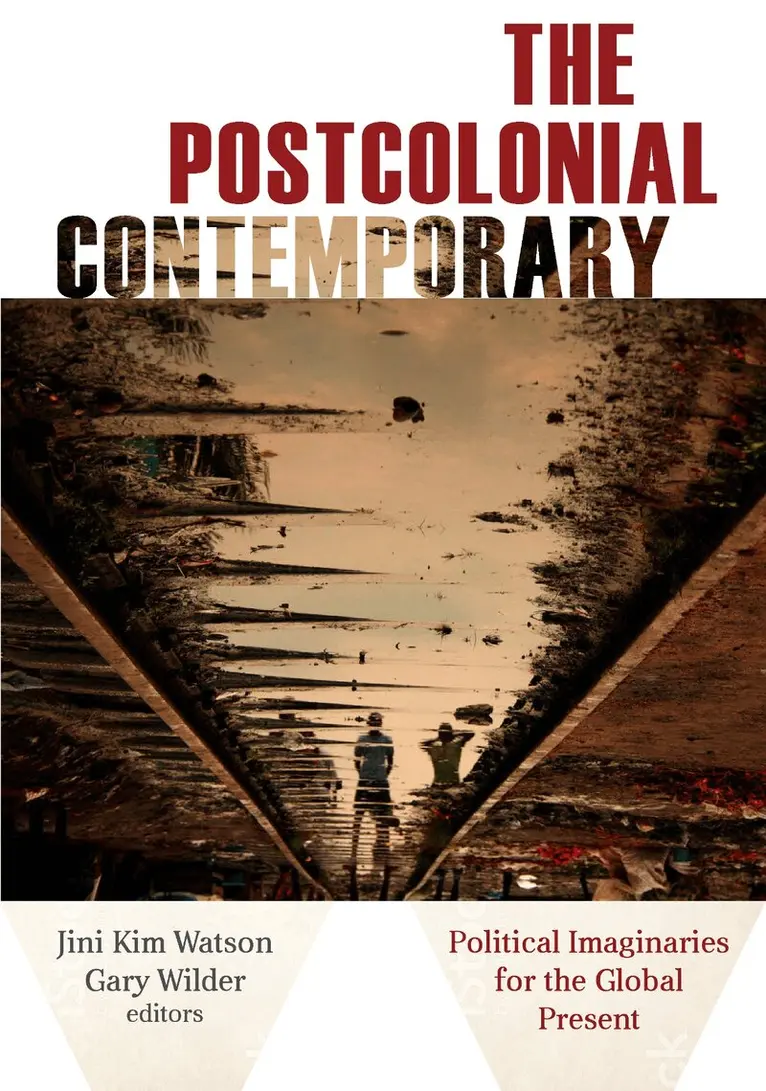
This volume invokes the "postcolonial contemporary" in order to recognize and reflect upon the postcolonial character of the contemporary conjuncture, as well as to inquire into whether postcolonial criticism can adequately grasp it. Neither simply for nor against postcolonialism, the book seeks to cut across this false alternative and to think with postcolonial theory about political contemporaneity.Many of the most influential frameworks of postcolonial theory were developed from the 1970s to 1990s, during what we may now recognize as the twilight of the postwar period. If forms of capitalist imperialism are entering into new configurations of neoliberal privatization, wars-without-end, xenophobic nationalism, and unsustainable extraction, what aspects of postcolonial inquiry must be reworked or revised in order to grasp our political present?In twelve essays that draw from a number of disciplines—history, anthropology, literature, geography, indigenous studies— and regional locations (the Black Atlantic, South Africa, South Asia, East Asia, Australia, Argentina) The Postcolonial Contemporary seeks to move beyond the habitual oppositions that have often characterized the field: universal vs. particular; Marxism vs. postcolonialism; politics vs. culture. The essays reckon with new and persisting postcolonial predicaments, doing so under four interrelated analytics: postcolonial temporality; deprovincializing the global south; beyond Marxism versus postcolonial studies; and postcolonial spatiality and new political imaginaries.From the book's powerful and substantial Introduction through its dozen compelling chapters, The Postcolonial Contemporary will be a landmark volume for reassessing a crucial critical framework for today's world.Contributors: Sadia Abbas, Anthony C. Alessandrini, Sharad Chari, Carlos A. Forment, Vinay Gidwani, Peter Hitchcock, Laurie Lambert, Stephen Muecke, Anupama Rao, Adam Spanos, Jini Kim Watson, Gary Wilder
418 kr
Skickas inom 7-10 vardagar
This volume invokes the "postcolonial contemporary" in order to recognize and reflect upon the postcolonial character of the contemporary conjuncture, as well as to inquire into whether postcolonial criticism can adequately grasp it. Neither simply for nor against postcolonialism, the book seeks to cut across this false alternative and to think with postcolonial theory about political contemporaneity.Many of the most influential frameworks of postcolonial theory were developed from the 1970s to 1990s, during what we may now recognize as the twilight of the postwar period. If forms of capitalist imperialism are entering into new configurations of neoliberal privatization, wars-without-end, xenophobic nationalism, and unsustainable extraction, what aspects of postcolonial inquiry must be reworked or revised in order to grasp our political present?In twelve essays that draw from a number of disciplines—history, anthropology, literature, geography, indigenous studies— and regional locations (the Black Atlantic, South Africa, South Asia, East Asia, Australia, Argentina) The Postcolonial Contemporary seeks to move beyond the habitual oppositions that have often characterized the field: universal vs. particular; Marxism vs. postcolonialism; politics vs. culture. The essays reckon with new and persisting postcolonial predicaments, doing so under four interrelated analytics: postcolonial temporality; deprovincializing the global south; beyond Marxism versus postcolonial studies; and postcolonial spatiality and new political imaginaries.From the book's powerful and substantial Introduction through its dozen compelling chapters, The Postcolonial Contemporary will be a landmark volume for reassessing a crucial critical framework for today's world.Contributors: Sadia Abbas, Anthony C. Alessandrini, Sharad Chari, Carlos A. Forment, Vinay Gidwani, Peter Hitchcock, Laurie Lambert, Stephen Muecke, Anupama Rao, Adam Spanos, Jini Kim Watson, Gary Wilder
1 303 kr
Skickas inom 10-15 vardagar
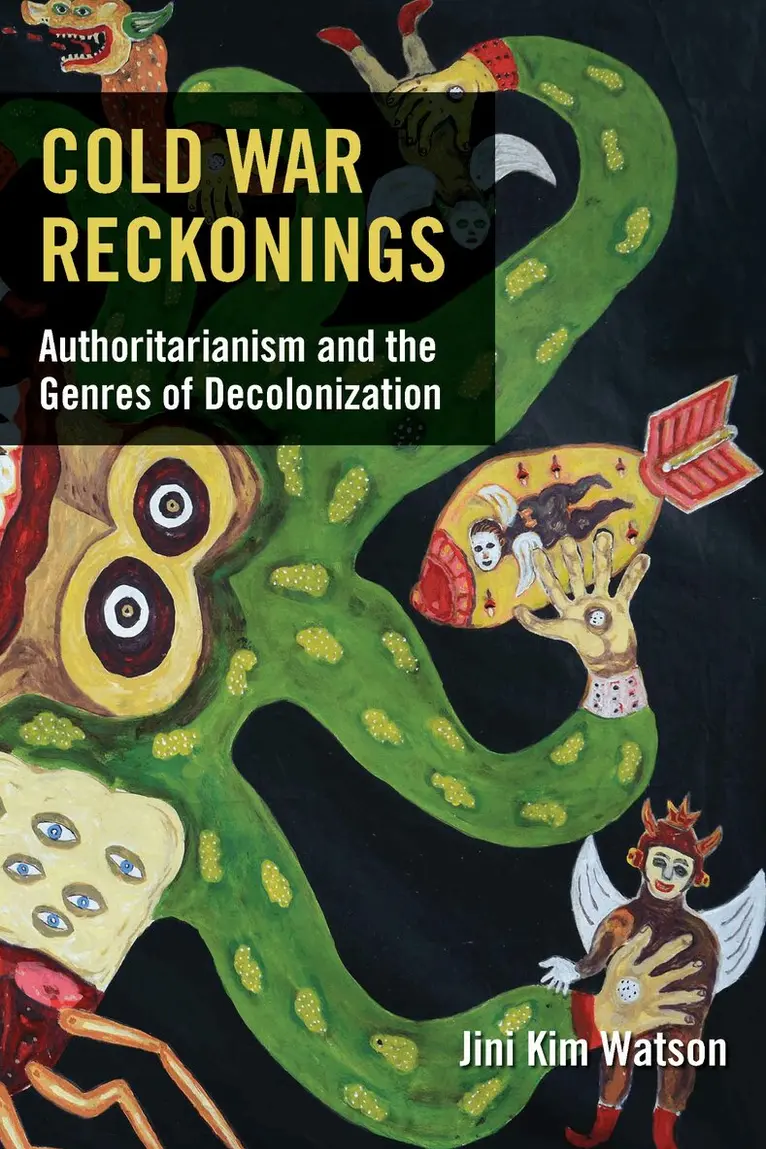
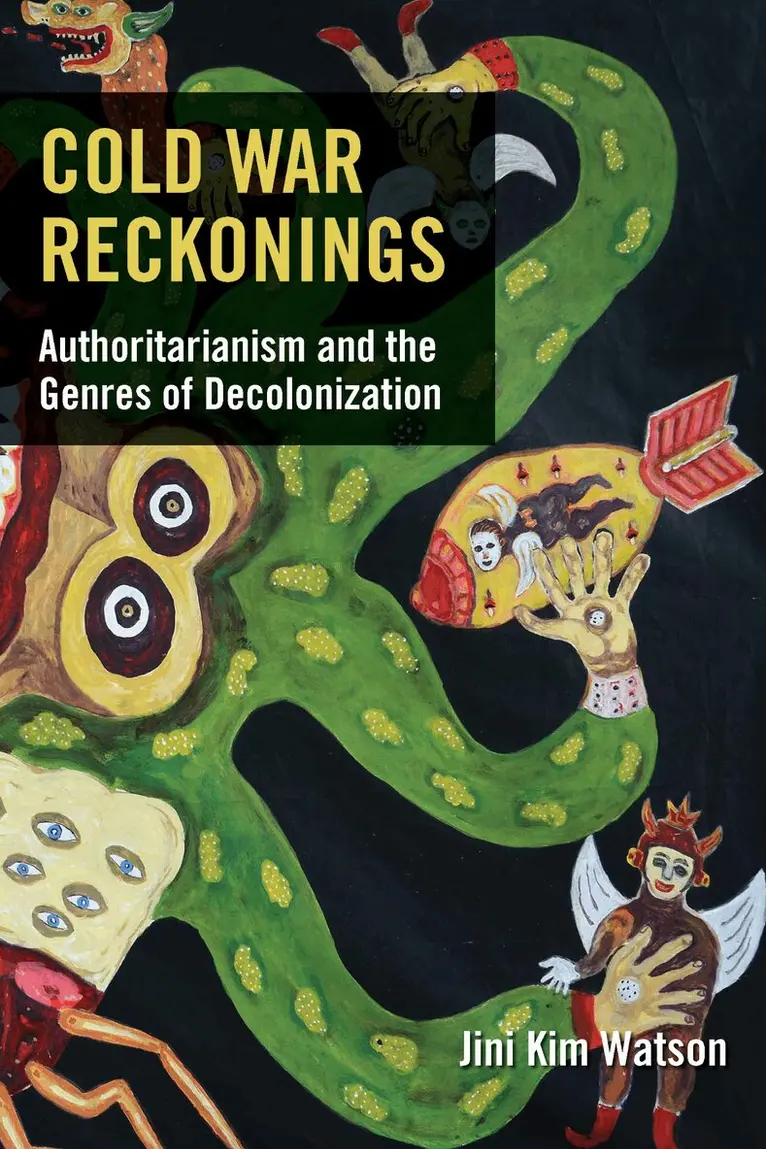
Honorable Mention, James Russell Lowell Prize, Modern Language AssociationHonorable Mention, René Wellek Prize, American Comparative Literature Association How did the Cold War shape culture and political power in decolonizing countries and give rise to authoritarian regimes in the so-called free world? Cold War Reckonings tells a new story about the Cold War and the global shift from colonialism to independent nation-states. Assembling a body of transpacific cultural works that speak to this historical conjuncture, Jini Kim Watson reveals autocracy to be not a deficient form of liberal democracy, but rather the result of Cold War entanglements with decolonization.Focusing on East and Southeast Asia, the book scrutinizes cultural texts ranging from dissident poetry, fiction, and writers' conference proceedings of the Cold War period, to more recent literature, graphic novels, and films that retrospectively look back to these decades with a critical eye. Paying particular attention to anti-communist repression and state infrastructures of violence, the book provides a richaccount of several U.S.–allied Cold War regimes in the Asia Pacific, including the South Korean military dictatorship, Marcos' rule in the Philippines, illiberal Singapore under Lee Kuan Yew, and Suharto's Indonesia. Watson's book argues that the cultural forms and narrative techniques that emerged from the Cold War-decolonizing matrix offer new ways of comprehending these histories and connecting them to our present. The book advances our understanding of the global reverberations of the Cold War and its enduring influence on cultural and political formations in the Asia Pacific. Cold War Reckonings is available from the publisher on an open-access basis.
362 kr
Skickas inom 10-15 vardagar
Honorable Mention, James Russell Lowell Prize, Modern Language AssociationHonorable Mention, René Wellek Prize, American Comparative Literature Association How did the Cold War shape culture and political power in decolonizing countries and give rise to authoritarian regimes in the so-called free world? Cold War Reckonings tells a new story about the Cold War and the global shift from colonialism to independent nation-states. Assembling a body of transpacific cultural works that speak to this historical conjuncture, Jini Kim Watson reveals autocracy to be not a deficient form of liberal democracy, but rather the result of Cold War entanglements with decolonization.Focusing on East and Southeast Asia, the book scrutinizes cultural texts ranging from dissident poetry, fiction, and writers' conference proceedings of the Cold War period, to more recent literature, graphic novels, and films that retrospectively look back to these decades with a critical eye. Paying particular attention to anti-communist repression and state infrastructures of violence, the book provides a richaccount of several U.S.–allied Cold War regimes in the Asia Pacific, including the South Korean military dictatorship, Marcos' rule in the Philippines, illiberal Singapore under Lee Kuan Yew, and Suharto's Indonesia. Watson's book argues that the cultural forms and narrative techniques that emerged from the Cold War-decolonizing matrix offer new ways of comprehending these histories and connecting them to our present. The book advances our understanding of the global reverberations of the Cold War and its enduring influence on cultural and political formations in the Asia Pacific. Cold War Reckonings is available from the publisher on an open-access basis.
824 kr
Skickas inom 7-10 vardagar
Global Asias: Tactics & Theories is the inaugural volume in an exciting new series that explores critical concerns animating Global Asias scholarship. It challenges the silos of academic knowledge formation that currently make legible and organize the study of Asia and its multiple diasporas. Transits, Indigeneity, Epistemology, Language, and A/Geography: These keywords highlight potential overlaps and points of disagreement between area studies, ethnic studies, and diaspora studies. Through an inventive approach and structure, the book exemplifies how the collaborative ethos of Global Asias praxis can catalyze new methods of scholarship and pedagogy—and create innovative models of academic knowledge-production. Editors offer a substantive overview of the emergent multidisciplinary field of Global Asias followed by a set of collaboratively authored research forums and pedagogical materials by a varied group of scholars working across ranks, disciplines, fields, geographies, and languages. Global Asias: Tactics & Theories will be an indispensable guide for anyone interested in learning more about this emerging field. It is crafted to provide resources for a wide range of readers: researchers, teachers, students, and administrators. The diversity and originality of the materials and approaches reflect a broad understanding of scholarly work that resists mastery by building structures of intellectual experimentation that embrace disagreement and differences. Readers will discover provocative conversations that redefine what it means to work in, at, for, and around Global Asias—not as a settled object of knowledge but a dynamic praxis of engagement.
341 kr
Skickas inom 7-10 vardagar
This book forges new ground in the relationship between cities and World Literature. Through a series of essays spanning a variety of metropolises, it shows how cities have given rise to key aesthetic dispositions, acts of linguistic and cultural translation, topographic conceptualizations, global imaginaries, and narratives of self-fashioning that are central to understanding World Literature and its debates. Alongside an introduction and three theoretical chapters, each chapter focuses on a particular city in the Global North or Global South, and brings World Literary debates-on translation, literary networks, imperial and migrant imaginaries, centers and peripheries-into conversation with the urban literary histories of Beijing, Bombay/Mumbai, Dublin, Cairo, Istanbul, Johannesburg, Lagos, London, Mexico City, Moscow and St Petersburg, New York, Paris, Singapore, and Sydney.
1 068 kr
Skickas inom 7-10 vardagar
This book forges new ground in the relationship between cities and World Literature. Through a series of essays spanning a variety of metropolises, it shows how cities have given rise to key aesthetic dispositions, acts of linguistic and cultural translation, topographic conceptualizations, global imaginaries, and narratives of self-fashioning that are central to understanding World Literature and its debates. Alongside an introduction and three theoretical chapters, each chapter focuses on a particular city in the Global North or Global South, and brings World Literary debates-on translation, literary networks, imperial and migrant imaginaries, centers and peripheries-into conversation with the urban literary histories of Beijing, Bombay/Mumbai, Dublin, Cairo, Istanbul, Johannesburg, Lagos, London, Mexico City, Moscow and St Petersburg, New York, Paris, Singapore, and Sydney.
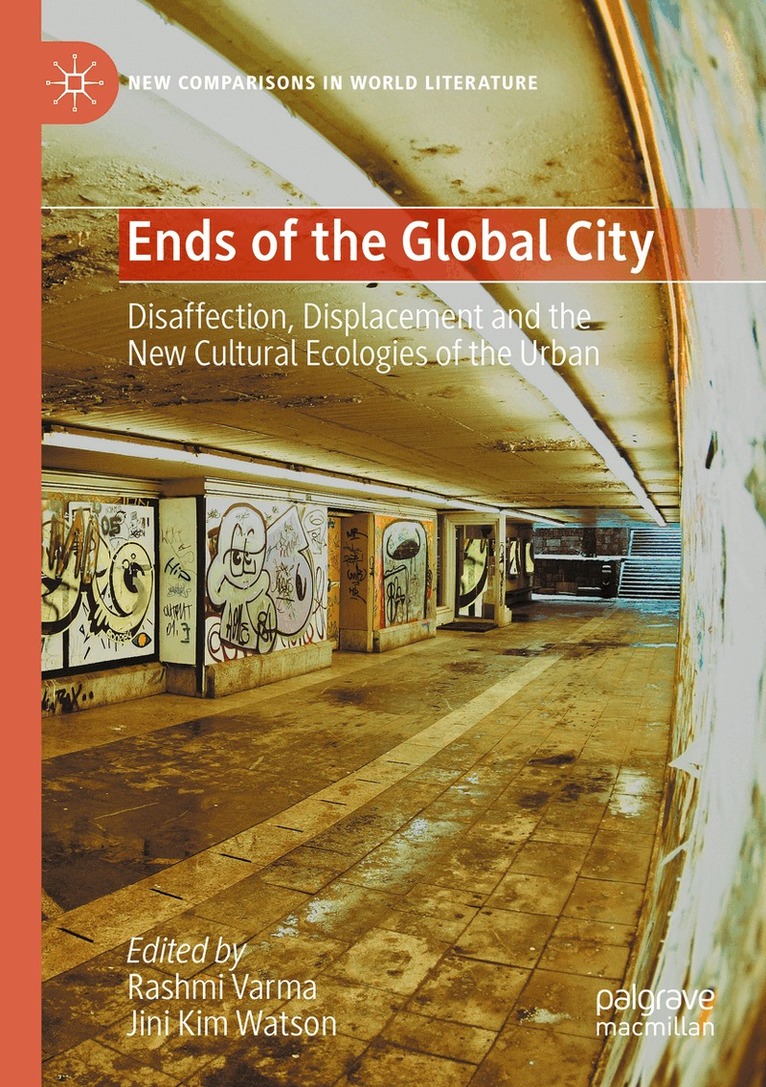
Ends of the Global City
Disaffection, Displacement and the New Cultural Ecologies of the Urban
Inbunden, Engelska, 2025
1 735 kr
Skickas inom 10-15 vardagar
This volume of essays explores how the global city is confronting new forms of crises and disruption. Examining cities in the Caribbean, North America, Africa, the Persian Gulf, Asia and Australia, the essays use literary and cultural analysis to examine the pasts, present and futures of the global city.