
Jinkyun Park – författare
Visar alla böcker från författaren Jinkyun Park. Handla med fri frakt och snabb leverans.
3 produkter
3 produkter
Häftad, Engelska, 2012
1 633 kr
Skickas inom 10-15 vardagar
We think we have scientific knowledge when we know the cause. (Aristotle, Posterior Analytics Book II, Part 11) About 12 years ago, when I was a graduate student, many people were concerned about my Ph. D. topic – investigating the effect of the complexity of procedu- lized tasks on the performance of human operators working in nuclear power plants. Although they agreed with the fact that procedures (especially emergency operating procedures) play a crucial role in securing the safety of nuclear power plants, it was amazing that most of them pointed out a very similar issue: “I cannot understand why operating personnel see any difficulty (or complexity) in condu- ing procedures, because all that they have to do is to follow a simple IF-THEN- ELSE rule as written. ” Actually, this issue is closely related to one of the main questions I was recently asked, such as “Don’t you think your work is too acad- ic to apply to actual procedures?” or “I guess we don’t need to consider the c- plexity of procedures, because we can develop a good procedure using many pr- tical procedure writers’ guidelines. Then what is the real contribution of your work?” I absolutely agree with the latter comment. Yes, we can develop a good pro- dure with the support of many practical and excellent guidelines.
Inbunden, Engelska, 2009
1 633 kr
Skickas inom 10-15 vardagar
We think we have scientific knowledge when we know the cause. (Aristotle, Posterior Analytics Book II, Part 11) About 12 years ago, when I was a graduate student, many people were concerned about my Ph. D. topic – investigating the effect of the complexity of procedu- lized tasks on the performance of human operators working in nuclear power plants. Although they agreed with the fact that procedures (especially emergency operating procedures) play a crucial role in securing the safety of nuclear power plants, it was amazing that most of them pointed out a very similar issue: “I cannot understand why operating personnel see any difficulty (or complexity) in condu- ing procedures, because all that they have to do is to follow a simple IF-THEN- ELSE rule as written. ” Actually, this issue is closely related to one of the main questions I was recently asked, such as “Don’t you think your work is too acad- ic to apply to actual procedures?” or “I guess we don’t need to consider the c- plexity of procedures, because we can develop a good procedure using many pr- tical procedure writers’ guidelines. Then what is the real contribution of your work?” I absolutely agree with the latter comment. Yes, we can develop a good pro- dure with the support of many practical and excellent guidelines.
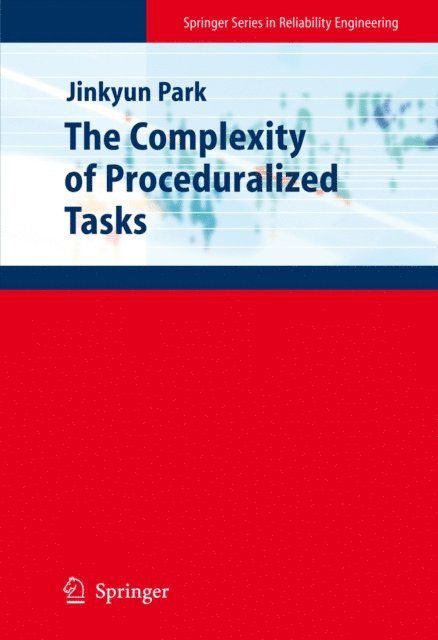
E-bok
PDF, Engelska, 20091 977 kr
Läs direkt efter köp
We think we have scientific knowledge when we know the cause. (Aristotle, Posterior Analytics Book II, Part 11) About 12 years ago, when I was a graduate student, many people were concerned about my Ph. D. topic – investigating the effect of the complexity of procedu- lized tasks on the performance of human operators working in nuclear power plants. Although they agreed with the fact that procedures (especially emergency operating procedures) play a crucial role in securing the safety of nuclear power plants, it was amazing that most of them pointed out a very similar issue: “I cannot understand why operating personnel see any difficulty (or complexity) in condu- ing procedures, because all that they have to do is to follow a simple IF-THEN- ELSE rule as written. ” Actually, this issue is closely related to one of the main questions I was recently asked, such as “Don’t you think your work is too acad- ic to apply to actual procedures?” or “I guess we don’t need to consider the c- plexity of procedures, because we can develop a good procedure using many pr- tical procedure writers’ guidelines. Then what is the real contribution of your work?” I absolutely agree with the latter comment. Yes, we can develop a good pro- dure with the support of many practical and excellent guidelines.