Jioji Ravulo – författare
Visar alla böcker från författaren Jioji Ravulo. Handla med fri frakt och snabb leverans.
5 produkter
5 produkter
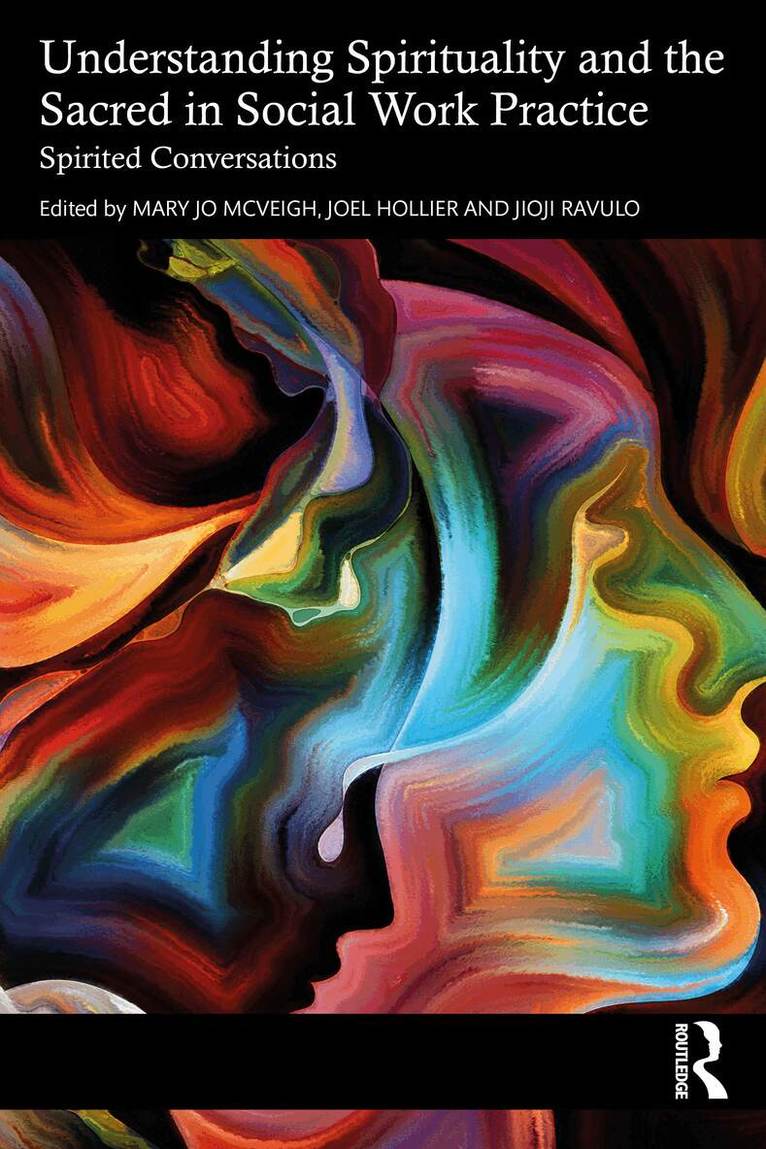
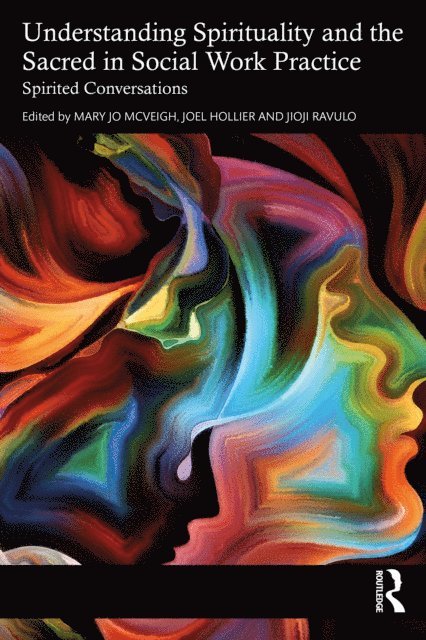
Understanding Spirituality and the Sacred in Social Work Practice
Spirited Conversations
Häftad, Engelska, 2025
578 kr
Skickas inom 10-15 vardagar
Social work is constantly epistemically evolving and embracing diverse bodies of knowledge to inform its ontology and practice frameworks.Over the years, the impact of feminist, post-colonial, and queer theory, for example, has broadened the social work lens and invited a welcome departure from dominant Westernised, patriarchal, and positivist paradigms. However, the separation of the spiritual realm from casework, clinical, community, and group work traditions of social work remained steadfast. The last decade or so has seen forages into the issues of social work and spirituality. This examination into spirituality and social work has shown that for many service users, spiritual practices (be they religious or non-religious) are important in their lives and their way out of difficulties. Concurrently, relationships between socio-political movements and global religions have grown increasingly complex. To create a truly holistic approach to the needs of service users it is important that social work policy and practice give voice to these complexities and understand the place of spirituality within service delivery. This book critically reflects upon and discusses the intersecting role of spirituality in the lives of people who access social work services.By gathering contributions from people with lived experience, practitioners, and academics, this book will explore a comprehensive range of issues, opening the area of spirituality to current critical, socio-political, and cultural thought. It will be of interest to all social work scholars, students, and practitioners.
Understanding Spirituality and the Sacred in Social Work Practice
Spirited Conversations
Inbunden, Engelska, 2025
2 113 kr
Skickas inom 10-15 vardagar
Social work is constantly epistemically evolving and embracing diverse bodies of knowledge to inform its ontology and practice frameworks.Over the years, the impact of feminist, post-colonial, and queer theory, for example, has broadened the social work lens and invited a welcome departure from dominant Westernised, patriarchal, and positivist paradigms. However, the separation of the spiritual realm from casework, clinical, community, and group work traditions of social work remained steadfast. The last decade or so has seen forages into the issues of social work and spirituality. This examination into spirituality and social work has shown that for many service users, spiritual practices (be they religious or non-religious) are important in their lives and their way out of difficulties. Concurrently, relationships between socio-political movements and global religions have grown increasingly complex. To create a truly holistic approach to the needs of service users it is important that social work policy and practice give voice to these complexities and understand the place of spirituality within service delivery. This book critically reflects upon and discusses the intersecting role of spirituality in the lives of people who access social work services.By gathering contributions from people with lived experience, practitioners, and academics, this book will explore a comprehensive range of issues, opening the area of spirituality to current critical, socio-political, and cultural thought. It will be of interest to all social work scholars, students, and practitioners.
2 113 kr
Skickas inom 10-15 vardagar
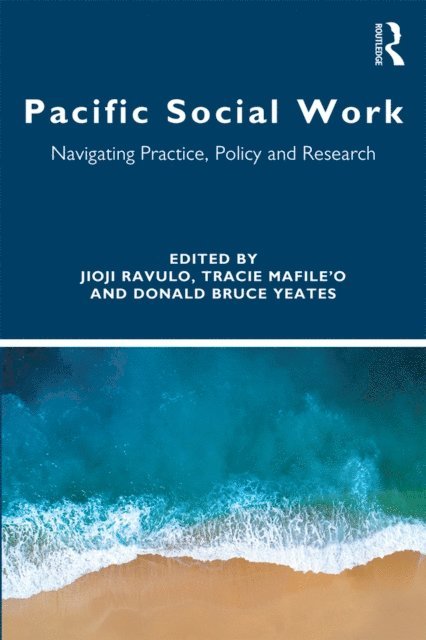
As a region, the Pacific is changing rapidly. This edited collection, the first of its kind, centres Pacific-Indigenous ways of knowing, doing and being in Pacific social work. In so doing, the authors decolonise the dominant western rhetoric that is evident in contemporary social work practice in the region and rejuvenate practice models with evolving Pacific perspectives. Pacific Social Work:• Incorporates Pacific epistemologies and ontologies in social and community work practice, social policy and research• Profiles contemporary Pacific needs – including health, education, environmental, justice and welfare• Demonstrates the application of Pacific-Indigenous knowledges in practice in diverse Pacific contexts• Examines Pacific-Indigenous research approaches to promote inform practice and positive outcomes• Reviews Pacific models of social and community work and their application• Fosters Pacific perspectives for social work and community work education and training in the Pacific region.Pacific Social Work demonstrates the role of social work within societies where social and cultural differences are evident, and practitioners, community groups, researchers, educators, and governments are encouraged to consider the integration between local indigenous and international knowledge and practice. Providing rigorously researched case studies, questions and exercises, this book will be a key learning resource for social work and human and community services students, practitioners, social services managers and policy makers in Australia, New Zealand and various Pacific Island states across the Pacific including Fiji, Tonga, Samoa, Vanuatu and Papua New Guinea.
564 kr
Skickas inom 10-15 vardagar
As a region, the Pacific is changing rapidly. This edited collection, the first of its kind, centres Pacific-Indigenous ways of knowing, doing and being in Pacific social work. In so doing, the authors decolonise the dominant western rhetoric that is evident in contemporary social work practice in the region and rejuvenate practice models with evolving Pacific perspectives. Pacific Social Work:• Incorporates Pacific epistemologies and ontologies in social and community work practice, social policy and research• Profiles contemporary Pacific needs – including health, education, environmental, justice and welfare• Demonstrates the application of Pacific-Indigenous knowledges in practice in diverse Pacific contexts• Examines Pacific-Indigenous research approaches to promote inform practice and positive outcomes• Reviews Pacific models of social and community work and their application• Fosters Pacific perspectives for social work and community work education and training in the Pacific region.Pacific Social Work demonstrates the role of social work within societies where social and cultural differences are evident, and practitioners, community groups, researchers, educators, and governments are encouraged to consider the integration between local indigenous and international knowledge and practice. Providing rigorously researched case studies, questions and exercises, this book will be a key learning resource for social work and human and community services students, practitioners, social services managers and policy makers in Australia, New Zealand and various Pacific Island states across the Pacific including Fiji, Tonga, Samoa, Vanuatu and Papua New Guinea.
8 336 kr
Skickas inom 10-15 vardagar
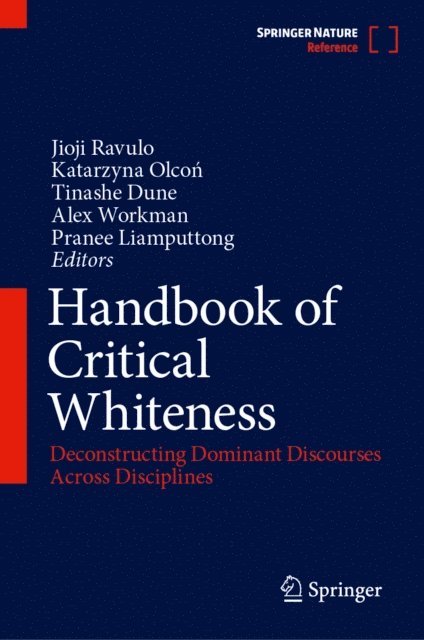
This timely handbook responds to the international drive to know more about Whiteness – its origins, its impacts and, importantly, the means for diffusing it. Guided by critical Whiteness theory, the volume deconstructs, decodes and disrupts Whiteness as it is constructed and employed in contemporary and diverse contexts. To do so, the international contributors discuss and critique the role of 21st-century Whiteness across a range of professions and disciplines relevant to the needs of contemporary global citizens. Failure to deconstruct Whiteness as an ideology and the power structure underlying national and global racial inequalities undermines the efforts to improve social, health and economic outcomes for societies and nations on a grand scale. The handbook is comprehensive in its nature and contents, with 10 themed parts ranging from a more disciplinary-based approach, theoretical frameworks, and methodological frameworks, to different aspects of decolonized approaches to social, health, political and economic well-being. It navigates how various disciplines respond to the pervasive and persuasive nature of Whiteness in their operational settings, across individual, professional, organisational and systemic levels. The volume is unique in its dual focus on deconstructing Whiteness and providing examples and recommendations on how diverse groups seek to decolonize their communities and people through action. Examples and recommendations are discussed with particular focus on: 1) the interconnection between integrating indigenous and diverse knowledges and perspectives in deconstructing Whiteness; 2) the urgency for critical Whiteness discourse, dialogue and professional development across disciplines; and 3) institutional accountability to decolonisation and anti-racism. Considering the ongoing marginalization and institutional racism directed at non-White individuals and communities and the rise of White supremacy movements, critical Whiteness pedagogy and research is more important than ever. Handbook of Critical Whiteness: Deconstructing Dominant Discourses Across Disciplines is an essential resource for students, educators, academics, researchers, higher education administrators, practitioners, policy-makers, organisational leaders, government stakeholders, and other professionals in social sciences, medicine, STEM, allied/global/public health, legal and political disciplines, and health and social care institutions. It especially engages those interested in decolonisation, critical race theory, critical Whiteness theory, critical multiculturalism, social justice, anti-racism and Indigenous knowledges.