
Jiří Večerník – författare
Visar alla böcker från författaren Jiří Večerník. Handla med fri frakt och snabb leverans.
2 produkter
2 produkter
Häftad, Engelska, 2022
330 kr
Skickas inom 5-8 vardagar
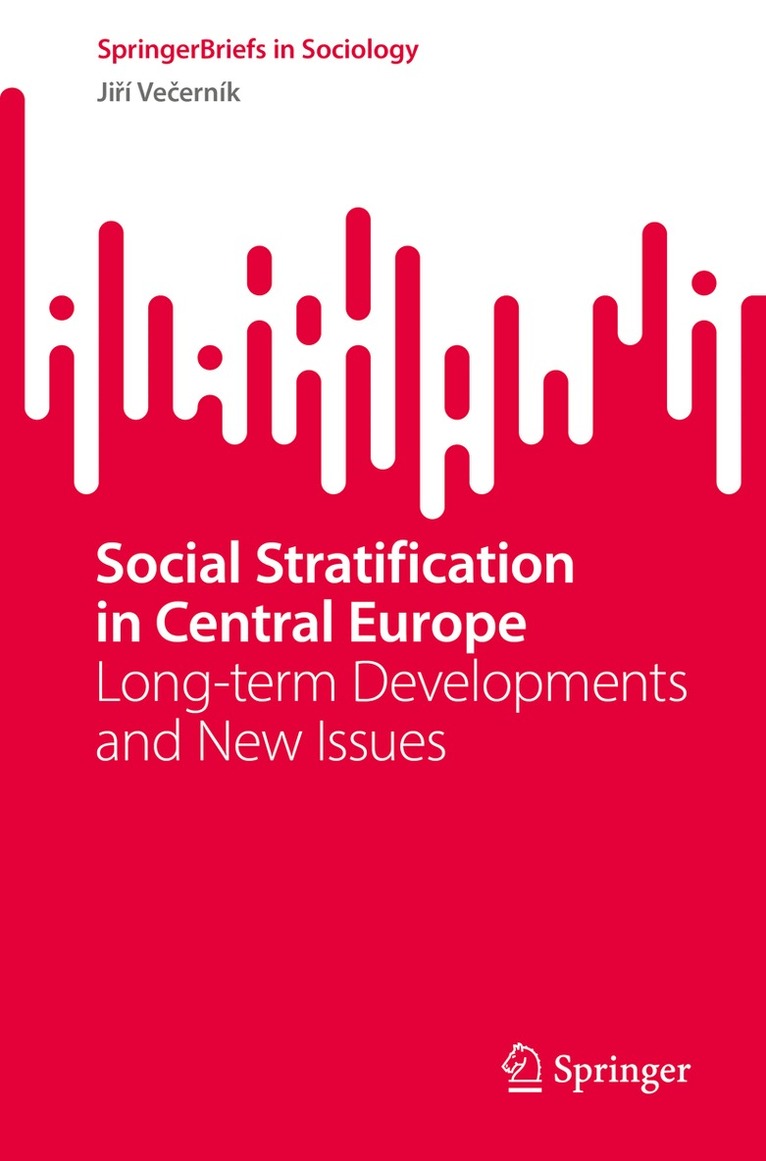
This book provides a comparative and contemporary account of social stratification in the Central European states of Czechia, Poland, Hungary, and Slovakia (the Visegrad Four – V4 group), and also by contrast with Austria. It looks at the shared history of these countries as part of the erstwhile Austro-Hungarian Empire. While the V4 states experienced, for decades, the regressive authoritarian Soviet rule, Austria escaped this fate. The question is how some common historical roots, impact of the communist regime, and transition paths have shaped the specific social structures of V4 countries which differ despite belonging to a relatively homogeneous region. The book examines the changes and developments through analyses of large comparative surveys and other data collected after 1990, most notably using the European Union’s survey “Statistics on Income and Living Conditions” (EU-SILC) that has been fielded since 2005. The book starts with an outline of the long-term developmentsin key social structure dimensions which occurred during the post-communist transition. The analytical chapters then discuss topics previously not much examined in social stratification perspective: subjective well-being, couples’ status, cultural activities and differences among retirees. This book is intended for social scientists working on stratification research, and, specifically, V4 societies and politics.
E-bok
Engelska, 2022687 kr
Läs direkt efter köp
This book provides a comparative and contemporary account of social stratification in the Central European states of Czechia, Poland, Hungary, and Slovakia (the Visegrad Four – V4 group), and also by contrast with Austria. It looks at the shared history of these countries as part of the erstwhile Austro-Hungarian Empire. While the V4 states experienced, for decades, the regressive authoritarian Soviet rule, Austria escaped this fate. The question is how some common historical roots, impact of the communist regime, and transition paths have shaped the specific social structures of V4 countries which differ despite belonging to a relatively homogeneous region. The book examines the changes and developments through analyses of large comparative surveys and other data collected after 1990, most notably using the European Union’s survey “Statistics on Income and Living Conditions” (EU-SILC) that has been fielded since 2005. The book starts with an outline of the long-term developmentsin key social structure dimensions which occurred during the post-communist transition. The analytical chapters then discuss topics previously not much examined in social stratification perspective: subjective well-being, couples’ status, cultural activities and differences among retirees. This book is intended for social scientists working on stratification research, and, specifically, V4 societies and politics.