J.J. Chambliss – författare
Visar alla böcker från författaren J.J. Chambliss. Handla med fri frakt och snabb leverans.
3 produkter
3 produkter
2 648 kr
Skickas inom 10-15 vardagar
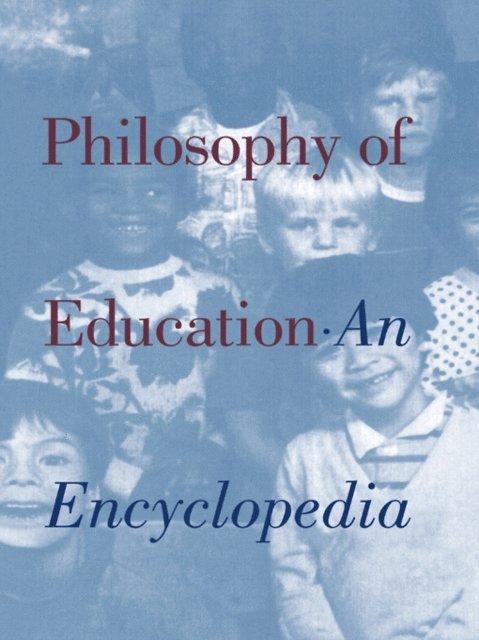
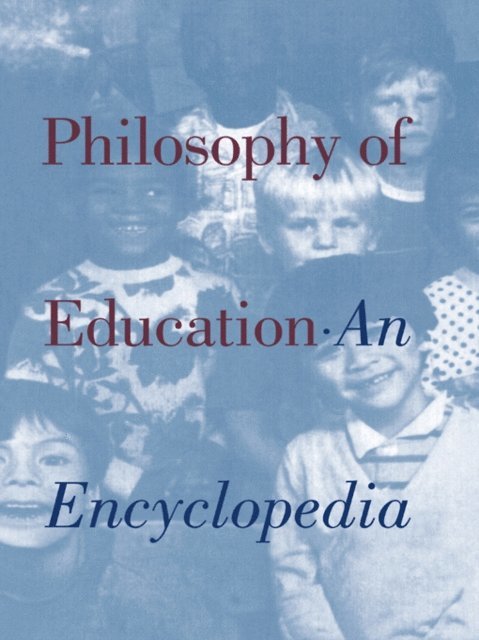
First Published in 1996. This first of its kind Encyclopaedia charts the influence of philosophic ideas that have had the greatest influence on education from Ancient Greece to the present. It covers classical thinkers as Plato, Augustine, Hypatia, Locke and Rousseau, as well as recent figures such as Montessori, Heldegger, Du Bois and Dewey. It illuminates time-hounded ideas and concepts such as idealism, practical wisdom, scholasticism, tragedy and truth, as well as modern constructs as critical theory, existentialism, phenomenology, Marxism and post-Colonialism. The coverage consists of 228 articles by 184 contributors who survey the full spectrum of the philosophy of education.
773 kr
Skickas inom 10-15 vardagar
First Published in 1996. This first of its kind Encyclopaedia charts the influence of philosophic ideas that have had the greatest influence on education from Ancient Greece to the present. It covers classical thinkers as Plato, Augustine, Hypatia, Locke and Rousseau, as well as recent figures such as Montessori, Heldegger, Du Bois and Dewey. It illuminates time-hounded ideas and concepts such as idealism, practical wisdom, scholasticism, tragedy and truth, as well as modern constructs as critical theory, existentialism, phenomenology, Marxism and post-Colonialism. The coverage consists of 228 articles by 184 contributors who survey the full spectrum of the philosophy of education.
Imagination and Reason in Plato, Aristotle, Vico, Rousseau and Keats
An Essay on the Philosophy of Experience
Häftad, Engelska, 1974
534 kr
Skickas inom 10-15 vardagar
The present essay grew out of an inte:rest in exploring the relationship be tween "imagination" and "reason" in the history of naturalistic thinking. The essay tries to show something of the spirit of naturalism coming to terms with the place of imagination and reason in knowing, making, and doing as activities of human experience. This spirit is discussed by taking as its point of departure the thinking of five writers: Plato, Aristotle, Giam battista Vieo, Jean-Jacques Rousseau, and John Keats. Plato and Aristotle are considered as spokesmen of reason in a world which appeared to be dominated by non-reason. They found it essential for human beings to try to learn how to distinguish between the work of imagin ation and the work of reason. In trying to make such a distinction, it becomes clear that imagination has its legitimate place, along with reason, in human activity. Or we might say that determining the place which each has is a continuing problem when human beings take seriously what is involved in shaping mind and character.