Joachim Stark – författare
Visar alla böcker från författaren . Handla med fri frakt och snabb leverans.
8 produkter
8 produkter
Del 432 - Haithabu-Schleswig-Danewerk
Haithabu-Schleswig-Danewerk
Aspekte einer Forschungsgeschichte mittelalterlicher Anlagen in Schleswig-Holstein
Häftad, Tyska, 1988
960 kr
Skickas inom 5-8 vardagar
Inbunden, Engelska, 2021
1 913 kr
Skickas inom 5-8 vardagar
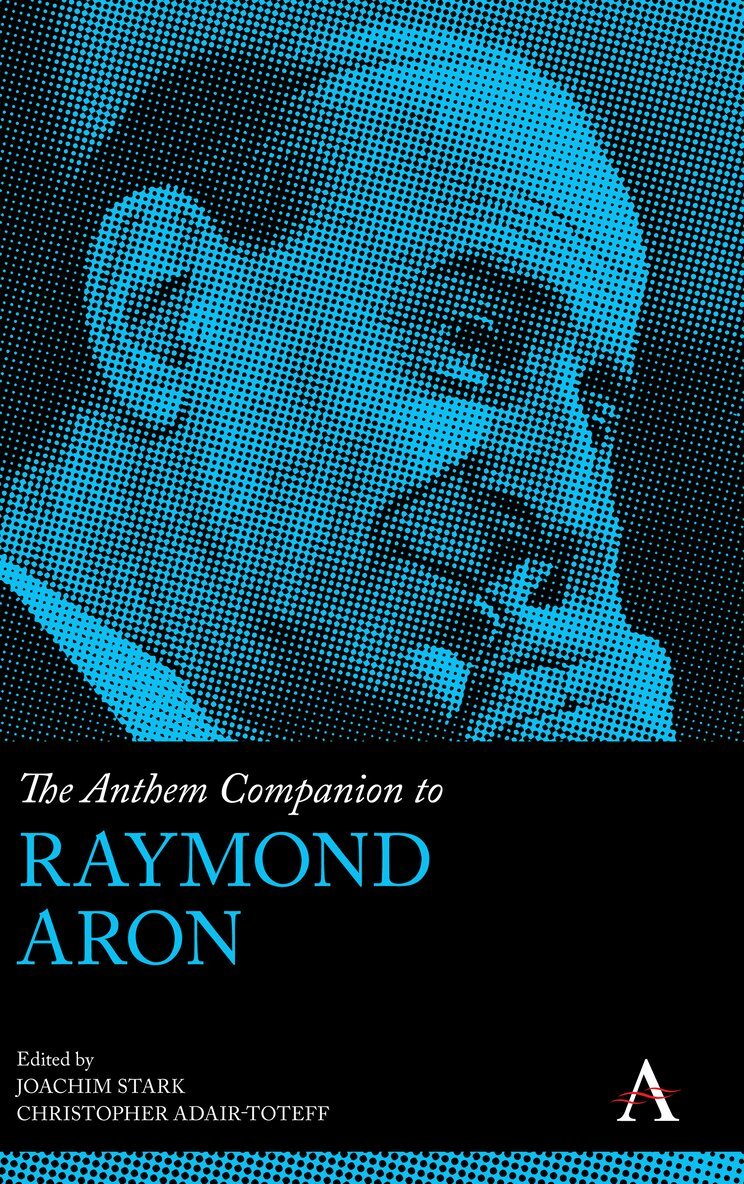
Raymond Aron is an exceptional figure among twentieth-century sociological and political thinkers. The book focuses on the sociological work of this author of the century, who analyzed his age both in its grand-scale political and socio-economic traits and in the complex social ramifications of its day-to-day life.Aron experts from a total of seven countries examine his sociology in detail starting with his epistemological studies on the limits of objective knowledge in history and the social sciences in which he moves away from Durkheim's approach and instead adopts Max Weber's sociology of understanding. His comparative sociology of industrial society in its market economy and planned economy variants, its social stratification, the structure of the ruling elites and the pluralistic and one-party political regimes are presented, as is Aron's analysis of the dialectic of modern society between the idea of equality and the authority structures in the state and the economic process. This is accompanied by Aron's lifelong criticism of those intellectuals who hope that a messianic ideology will abolish all social contradictions.
E-bok
PDF, Tyska, 2013570 kr
Läs direkt efter köp
Ein großer Kreis von Schülern und Freunden Arons, versammelt in der Societe des Amis de Raymond Aron, bemüht sich seit Mitte der achtziger Jahre um die Sammlung, Sichtung und Edition des Aronschen Werks, dabei tatkräftig unterstützt von einer amerikanischen und einer deutschen Stiftung. So ist das philosophische Frühwerk Arons bei Gallimard neu aufgelegt wor den, ebenso wie Arons Vorlesungen über Geschichtsphilosophie aus den frü hen siebziger Jahren. 1 1990 sind Arons Schriften aus der Londoner Zeit (1940-1944) in einem sorgfältig edierten Band erschienen. Ende 1990 schließlich ist der erste Band von Arons Leitartikeln aus dem Figaro zur in ternationalen Politik aus den Jahren 1947 bis 1955 herausgekommen, dem 2 noch zwei weitere Bände folgen sollen. Für 1993 ist eine große Aron-Bio graphie geplant, die zum ersten Mal auch den umfangreichen Briefwechsel 3 Arons mit anderen Persönlichkeiten der Zeitgeschichte auswerten wird. Die in diesem Band gesammelten frühen politischen Schriften Arons er möglichen zum ersten Mal den direkten Einblick in die Entstehungsphase dieses außerordentlich umfangreichen und vielgestaltigen Aronschen Werks Zu den Philosophen wird Aron hierzulande noch nicht gerechnet. Im Band von Margot Aeischer (Hg.): Philosophen des Zwanzigsten Jahrhunderts; Dannstadt 1990 gibt es keine Abhandlung über ihn. Immer hin hat aber ein Aufsatz über Aron, auf welchem Wege auch immer, seinen Weg gefunden in den Band von Karl Graf BaIlestreml Henning Ottmann (Hg.): Politische Philosophie des Zwanzigsten Jahrhunderts; München 1990.
561 kr
Skickas inom 10-15 vardagar
Ein großer Kreis von Schülern und Freunden Arons, versammelt in der Societe des Amis de Raymond Aron, bemüht sich seit Mitte der achtziger Jahre um die Sammlung, Sichtung und Edition des Aronschen Werks, dabei tatkräftig unterstützt von einer amerikanischen und einer deutschen Stiftung. So ist das philosophische Frühwerk Arons bei Gallimard neu aufgelegt wor den, ebenso wie Arons Vorlesungen über Geschichtsphilosophie aus den frü hen siebziger Jahren. 1 1990 sind Arons Schriften aus der Londoner Zeit (1940-1944) in einem sorgfältig edierten Band erschienen. Ende 1990 schließlich ist der erste Band von Arons Leitartikeln aus dem Figaro zur in ternationalen Politik aus den Jahren 1947 bis 1955 herausgekommen, dem 2 noch zwei weitere Bände folgen sollen. Für 1993 ist eine große Aron-Bio graphie geplant, die zum ersten Mal auch den umfangreichen Briefwechsel 3 Arons mit anderen Persönlichkeiten der Zeitgeschichte auswerten wird. Die in diesem Band gesammelten frühen politischen Schriften Arons er möglichen zum ersten Mal den direkten Einblick in die Entstehungsphase dieses außerordentlich umfangreichen und vielgestaltigen Aronschen Werks Zu den Philosophen wird Aron hierzulande noch nicht gerechnet. Im Band von Margot Aeischer (Hg.): Philosophen des Zwanzigsten Jahrhunderts; Dannstadt 1990 gibt es keine Abhandlung über ihn. Immer hin hat aber ein Aufsatz über Aron, auf welchem Wege auch immer, seinen Weg gefunden in den Band von Karl Graf BaIlestreml Henning Ottmann (Hg.): Politische Philosophie des Zwanzigsten Jahrhunderts; München 1990.
Häftad, Engelska, 2010
782 kr
Skickas inom 3-6 vardagar
E-bok
PDF, Engelska, 2010391 kr
Läs direkt efter köp
Master's Thesis from the year 2008 in the subject Art - Sculpture / Plastics, grade: distinction, The Open University (Department of Art History), language: English, abstract: This research project wants to assess to what extent Louise Bourgeois is employing Surrealist practices in her work. Another question is in what way Bourgeois criticized the practices of historical Surrealism and how she has developed these practices further in order to adapt them to new subject matter, for instance feminist themes. Chapter I tries to elucidate, how art historians and art critics since the 1980s referred to Surrealism when interpreting Bourgeois work. It is possible to show that Bourgeois used the concept of the Surrealist object for her installations. However, she did this in a way in which the female body is only present by implication. The erotic dimension, which was of great importance for the Surrealists, is destroyed by allusions to old age and death. Bourgeois installations of the 1990s can therefore be considered as a radical and feminist reuse of the surrealist object. Chapter II looks at works which imply allusions to the unconscious and psycho-analysis, like the installations Arch of Hysteria (1992/3) and Precious Liquids (1992). Here I also take into account Bourgeois own comments on her work. Although artist s comments do not represent a definitive interpretation of a work of art, this aspect seems justified as Bourgeois claims that her art is the result of her direct access to her unconscious. At least according to Freud this direct access is impossible, the unconscious being something impenetrable, which communicates with the conscious only by signs. However, in her installations Bourgeois consistently makes allusions to the erotic and desire, but she also shows their reverse side: fear, pain, violence, voyeurism, ephemerality, and the ambiguities of male and female identity. Chapter III looks at the overall social context of the 1960s and 1970s, to which Bourgeois responded with her art, for instance by supporting the Women s Liberation movement. It seems likely that the story of her personal traumatic experiences as a young girl in France was motivated so late in life by changes in the art world, where Modernism had lost its impact and where art again should deal with content and the biographical. Conclusion: Louise Bourgeois uses the aspects of emancipation and critique inherent in historical Surrealism, in order to criticize the patriarchal aspects of Surrealism. At the same time she develops Surrealist practices further in order to deal with new subject matter, like feminism, the body, and emotional violence.
E-bok
PDF, Engelska, 2010208 kr
Läs direkt efter köp
Essay from the year 2006 in the subject Art - Installation / Action/Performance Art / Modern Art, grade: good, The Open University (Department of Art History), course: Themes and issues in Contemporary Art History, language: English, abstract: This essay tries to point out that Christo and Jeanne-Claude's work deals with concepts of identity, gender and the performative, ideas which inform a great deal of the art that has been produced since the 1960s. These aspects in the work of the two artists have generally been overlooked due perhaps to the giganticism of many of their projects realized since the end of the 1960s, like "e;Wrapped Coast"e; (1968/69, Australia), "e;Valley Curtain"e; (1970/72 USA), "e;Surrounded Islands"e; (1980-83 USA), "e;Pont Neuf Wrapped"e; (1975/85, France), "e;Wrapped Reichstag"e; (1971-1995 Germany), or "e;The Gates"e; (2005 USA). Questions of identity, gender, and performance have not really been adressed in interpretations of Chisto and Jeanne-Claude's work. But at least since 2002 there are statements by Christo himself, which make clear that identity and gender have indeed been on his mind and that there also was quite early a link to Dada and Surrealism. In this respect it is certainly relevant that in 1963 Christo met Marcel Duchamp, who until 1968, the year of Duchamp's death, remained a friend and supporter. Christo's wrappings imply the blurring of identities, they transform male forms into feminine forms, or even try to introduce the impression of the formless, a concept developed by George Bataille. The performative points in the same direction. The concept of performance will have to be modified and enlarged in the case of Christo and Jeanne-Claude, as ther performances are not bound to a specific time and location, for instance in a gallery or a theatre. The performances often extend over several years or even decades and imply the presence of the artists at numerous different locations. Here the aspect of politics comes into view. As their environmental installations involve public buildings and /or public spaces and often extend over huge distances , a considerable number of different interests (for instance those of the political authorities, private landowners, pressure groups, the media) have to be taken into account. Thus, political processes serve the aim of realizing a work of art, and not the other way round.

Häftad, Engelska, 2011
377 kr
Skickas inom 3-6 vardagar