Joachim Ullrich – författare
Visar alla böcker från författaren Joachim Ullrich. Handla med fri frakt och snabb leverans.
7 produkter
7 produkter
Inbunden, Engelska, 2003
2 173 kr
Skickas inom 10-15 vardagar
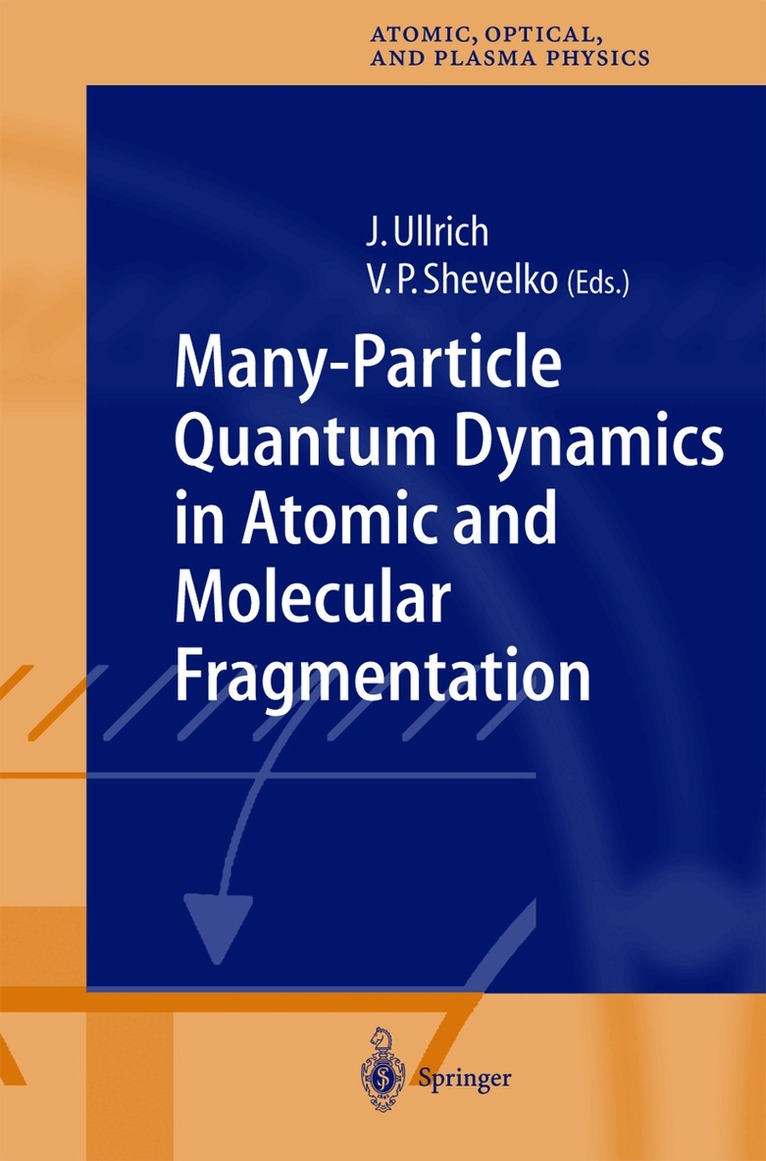
This book aims to give a comprehensive view on the present status of a tremendously fast-developing field - the quantum dynamics of fragmenting many-particle Coulomb systems. In striking contrast to the profound theo retical knowledge, achieved from extremely precise experimental results on the static atomic and molecular structure, it was only three years ago when the three-body fundamental dynamical problem of breaking up the hydro gen atom by electron impact was claimed to be solved in a mathematically consistent way. Until now, more "complicated", though still fundamental scenarios, ad dressing the complete fragmentation of the "simplest" many-electron system, the helium atom, under the action of a time-dependent external force, have withstood any consistent theoretical description. Exceptions are the most "trivial" situations where the breakup is induced by the impact of a single real photon or of a virtual photon under a perturbation caused by fast, low charged particle impact. Similarly, the dissociation of the "simplest" molecu lar systems like Ht or HD+, fragmentating in collisions with slow electrons, or the H3 molecule breaking apart into two or three" pieces" as a result of a single laser-photon excitation, establish a major challenge for state-of-the-art theoretical approaches.
Inbunden, Engelska, 2008
1 631 kr
Skickas inom 10-15 vardagar
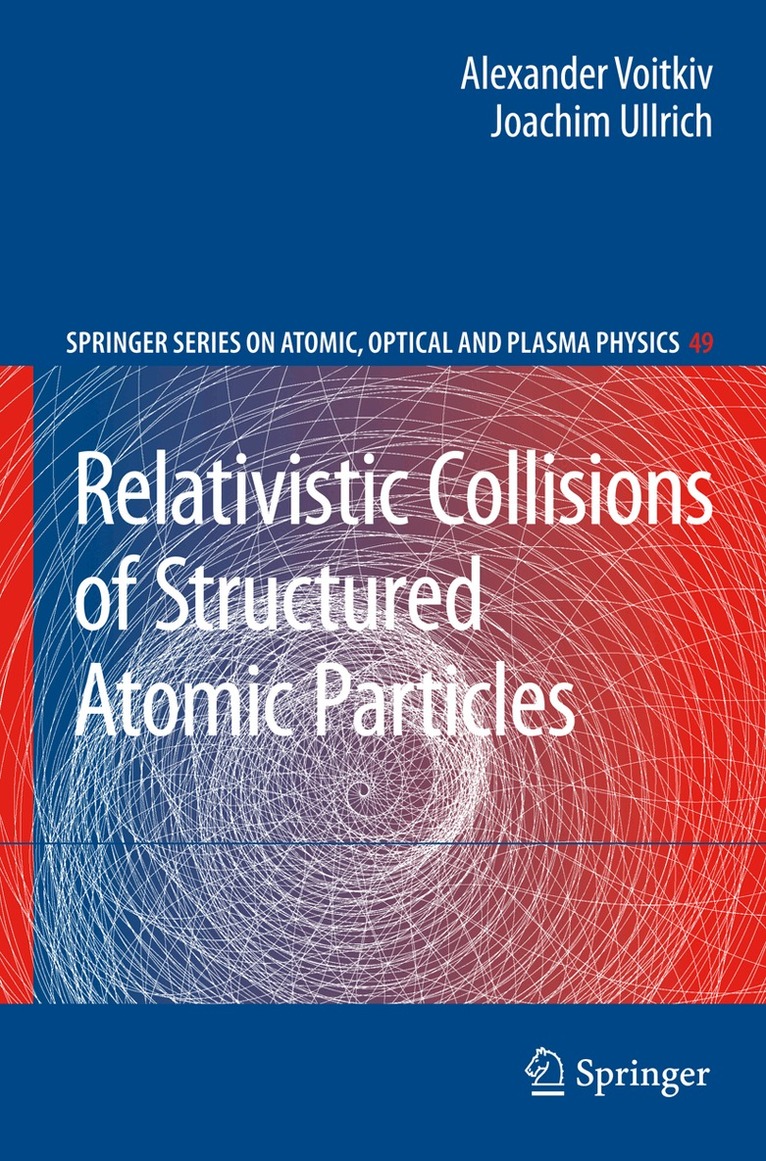
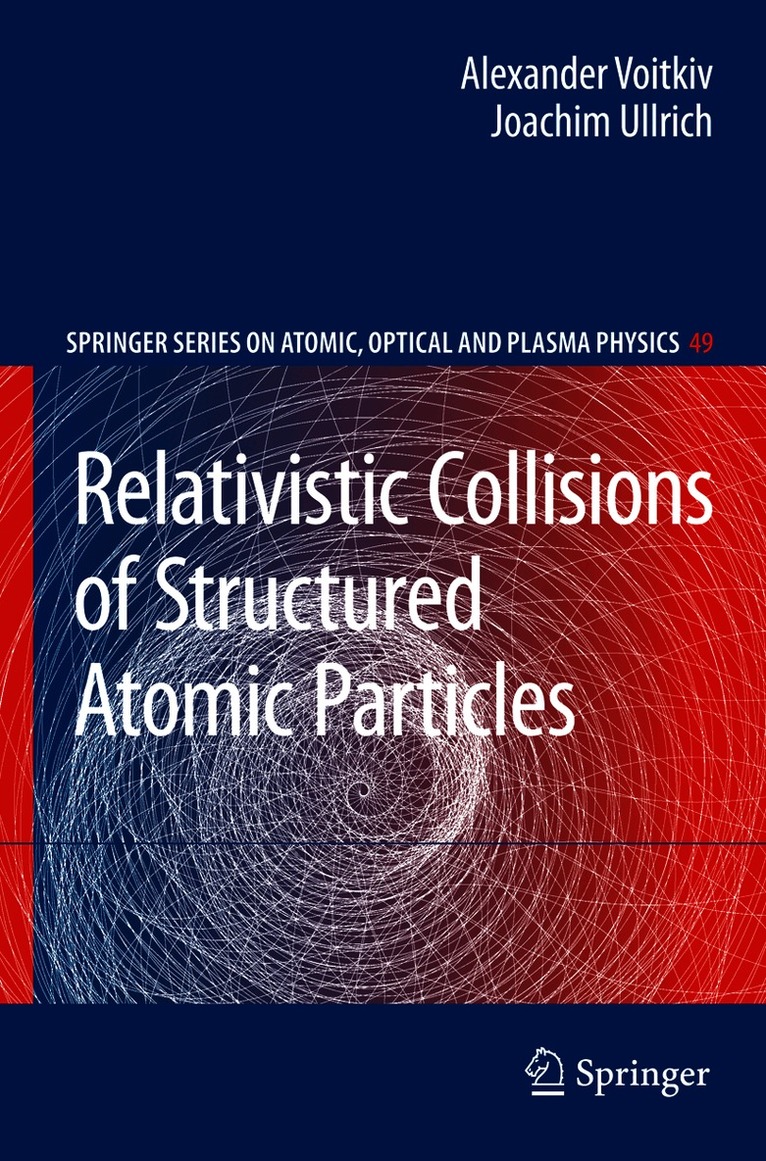
During the last two decades the explorations of di?erent processes accom- nyingion–atom collisions athigh-impactenergieshavebeenasubjectofmuch interest. This interest was generated not only by the advent of accelerators of relativistic heavy ions which enabled one to investigate these collisions in an experiment and possible applications of obtained results in other ?elds of physics, but also by the variety of physical mechanisms underlying the atomic collisional phenomena at high impact energies. Often highly charged projectiles produced at accelerators of heavy ions are not fully stripped ions but carry one or more very tightly bound el- trons. In collisions with atomic targets, these electrons can be excited or lost and this may occur simultaneously with electronic transitions in the target. The present book concentrates on, and may serve as an introduction to, th- retical methods which are used to describe the projectile–electron transitions occurringinhigh-energycollisionsbetweenionsandneutralatoms.Special- tention is given to relativistic impact energies and highly charged projectiles. Experimental results are used merely as illustrations and tests for theory. This book will be useful to graduate students and professional scientists who are interested in studying atomic collisions occurring at high-impact - ergies. It assumes that the reader possesses the basic knowledge in classical electrodynamics and nonrelativistic and relativistic quantum mechanics.
E-bok
PDF, Engelska, 20081 995 kr
Läs direkt efter köp
During the last two decades the explorations of di?erent processes accom- nyingion–atom collisions athigh-impactenergieshavebeenasubjectofmuch interest. This interest was generated not only by the advent of accelerators of relativistic heavy ions which enabled one to investigate these collisions in an experiment and possible applications of obtained results in other ?elds of physics, but also by the variety of physical mechanisms underlying the atomic collisional phenomena at high impact energies. Often highly charged projectiles produced at accelerators of heavy ions are not fully stripped ions but carry one or more very tightly bound el- trons. In collisions with atomic targets, these electrons can be excited or lost and this may occur simultaneously with electronic transitions in the target. The present book concentrates on, and may serve as an introduction to, th- retical methods which are used to describe the projectile–electron transitions occurringinhigh-energycollisionsbetweenionsandneutralatoms.Special- tention is given to relativistic impact energies and highly charged projectiles. Experimental results are used merely as illustrations and tests for theory. This book will be useful to graduate students and professional scientists who are interested in studying atomic collisions occurring at high-impact - ergies. It assumes that the reader possesses the basic knowledge in classical electrodynamics and nonrelativistic and relativistic quantum mechanics.
Häftad, Engelska, 2011
2 173 kr
Skickas inom 10-15 vardagar
This book aims to give a comprehensive view on the present status of a tremendously fast-developing field - the quantum dynamics of fragmenting many-particle Coulomb systems. In striking contrast to the profound theo retical knowledge, achieved from extremely precise experimental results on the static atomic and molecular structure, it was only three years ago when the three-body fundamental dynamical problem of breaking up the hydro gen atom by electron impact was claimed to be solved in a mathematically consistent way. Until now, more "complicated", though still fundamental scenarios, ad dressing the complete fragmentation of the "simplest" many-electron system, the helium atom, under the action of a time-dependent external force, have withstood any consistent theoretical description. Exceptions are the most "trivial" situations where the breakup is induced by the impact of a single real photon or of a virtual photon under a perturbation caused by fast, low charged particle impact. Similarly, the dissociation of the "simplest" molecu lar systems like Ht or HD+, fragmentating in collisions with slow electrons, or the H3 molecule breaking apart into two or three" pieces" as a result of a single laser-photon excitation, establish a major challenge for state-of-the-art theoretical approaches.
Häftad, Engelska, 2010
1 631 kr
Skickas inom 10-15 vardagar
During the last two decades the explorations of di?erent processes accom- nyingion–atom collisions athigh-impactenergieshavebeenasubjectofmuch interest. This interest was generated not only by the advent of accelerators of relativistic heavy ions which enabled one to investigate these collisions in an experiment and possible applications of obtained results in other ?elds of physics, but also by the variety of physical mechanisms underlying the atomic collisional phenomena at high impact energies. Often highly charged projectiles produced at accelerators of heavy ions are not fully stripped ions but carry one or more very tightly bound el- trons. In collisions with atomic targets, these electrons can be excited or lost and this may occur simultaneously with electronic transitions in the target. The present book concentrates on, and may serve as an introduction to, th- retical methods which are used to describe the projectile–electron transitions occurringinhigh-energycollisionsbetweenionsandneutralatoms.Special- tention is given to relativistic impact energies and highly charged projectiles. Experimental results are used merely as illustrations and tests for theory. This book will be useful to graduate students and professional scientists who are interested in studying atomic collisions occurring at high-impact - ergies. It assumes that the reader possesses the basic knowledge in classical electrodynamics and nonrelativistic and relativistic quantum mechanics.
E-bok
PDF, Engelska, 20132 741 kr
Läs direkt efter köp
This book aims to give a comprehensive view on the present status of a tremendously fast-developing field - the quantum dynamics of fragmenting many-particle Coulomb systems. In striking contrast to the profound theo retical knowledge, achieved from extremely precise experimental results on the static atomic and molecular structure, it was only three years ago when the three-body fundamental dynamical problem of breaking up the hydro gen atom by electron impact was claimed to be solved in a mathematically consistent way. Until now, more "complicated", though still fundamental scenarios, ad dressing the complete fragmentation of the "simplest" many-electron system, the helium atom, under the action of a time-dependent external force, have withstood any consistent theoretical description. Exceptions are the most "trivial" situations where the breakup is induced by the impact of a single real photon or of a virtual photon under a perturbation caused by fast, low charged particle impact. Similarly, the dissociation of the "simplest" molecu lar systems like Ht or HD+, fragmentating in collisions with slow electrons, or the H3 molecule breaking apart into two or three" pieces" as a result of a single laser-photon excitation, establish a major challenge for state-of-the-art theoretical approaches.
625 kr
Skickas inom 5-8 vardagar