Joan Bennett – författare
Visar alla böcker från författaren Joan Bennett. Handla med fri frakt och snabb leverans.
5 produkter
5 produkter
614 kr
Skickas inom 7-10 vardagar
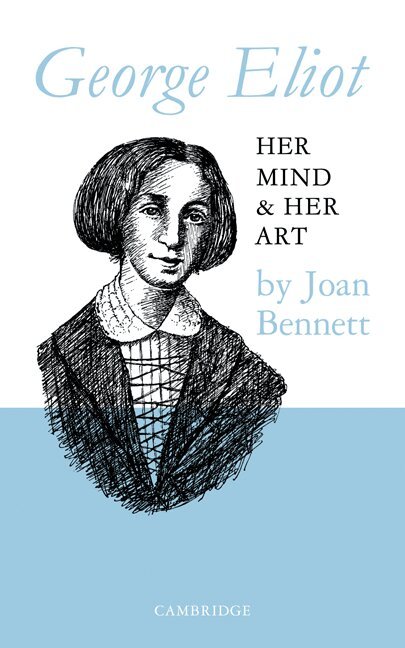
Mrs Bennett finds in George Eliot's work the beginnings of certain modern developments of the novel, notably her respect for unity of design, her interest in the complexity of human personality and experience and beneath a contemporary naturalism, a feeling towards symbolic presentation. Some of the moral problems implicit in the character-studies and situations best the minds of the best of her contemporaries: some are still relevant. And an awareness of moral problems - a novelist's acceptance of novel-writing as a serious and responsible job - is now characteristic of the best modern fiction. The first three chapters of Bennett's book are biographical and deal chiefly with the formative years. The remaining eight, after defining in general George Eliot's qualities as a novelist, discuss the novels one by one and illustrate the deeper aspects of their author's outlook.
629 kr
Skickas inom 7-10 vardagar
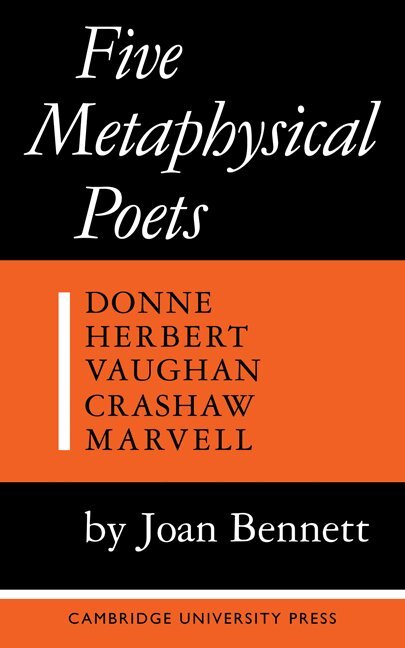
Mrs Bennett's Four Metaphysical Poets - Donne, Herbert, Vaughan, and Crashaw - was issued under a new title in 1964 with an additional chapter on Andrew Marvell. It is that text which is reprinted here. In her study Mrs Bennett has analysed, emphasised and illustrated the qualities of metaphysical poetry in general, and the peculiarities of the individual poets. She shows that, if we retain the word 'metaphysical' as a label for a poetic tradition, it is as appropriate to Marvell as it is to Vaughan, and more so than to Crashaw.
493 kr
Skickas inom 7-10 vardagar
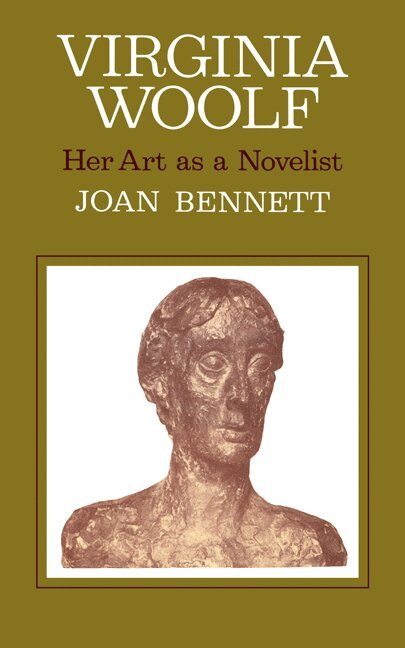
More than most novelists, Virginia Woolf benefits by an introducer. She is never, either by intention or equipment, the expected novelist. She chose the novel to adapt it deliberately and progressively to be the vehicle of her own subtle perception. Behind this study of the novels is an intense interest in the person revealed in the novelist. The criticism is warm as well as acute and the whole study is felt to be a tribute reasoned and justified - to a woman sensitive, compassionate, passionately honest and eager only for truth; to an artist quite unsparing of her own labour, finely gifted, self-effacing, serious and humourous. Mrs Bennett added two chapters on A Writer's Diary and on Virginia Woolf's critical essays for the second edition. Both can help our understanding of Virginia Woolf the novelist; the Diary by the insight it gives into her creative process and the fuller understanding we can gain of technical problems, the essays because they are about novels and novelists.
614 kr
Skickas inom 7-10 vardagar
The purpose of this edition, compiled in the 1920s, is to provide a selection of Byron's critical and satiric poetry that will illustrate fairly fully the objects of his scorn and of his admiration, as well as the evolution of his satiric style. English Bards and Scotch Reviewers and The Vision of Judgement are printed in full. The selections from Childe Harold are limited to such parts of the poem as can be described as critical; they are those in which he expresses opinions on literature or politics. Both here and in the selections from Don Juan some narrative elements are perforce not illustrated, but it is hoped, nevertheless, that enough is here given to suggest the character of the poems and to whet the appetite for more.
493 kr
Skickas inom 7-10 vardagar
This book is a study of Sir Thomas Browne and his work as a whole: of the thinker as he appears in the context of contemporary prejudice on the one hand and the growth of science and scepticism on the other: of the rational man who was at the same time deeply religious, capable of 'being in uncertainties' in a dogmatic age. From this appreciation of Browne's personality, Mrs Bennett leads us to a fresh understanding of his writings. She examines each work in detail, with commentary and quotation where these seem needed. What emerges most clearly from this treatment is the consistency of his thinking, the internal logic of all he wrote; and because Browne wrote to enlighten rather than to entertain, a just appreciation of his style depends on understanding what he was expressing and Mrs Bennett leads us to the central issues of Browne's work.