Joan E. Sieber - Böcker
Visar alla böcker från författaren Joan E. Sieber. Handla med fri frakt och snabb leverans.
7 produkter
7 produkter
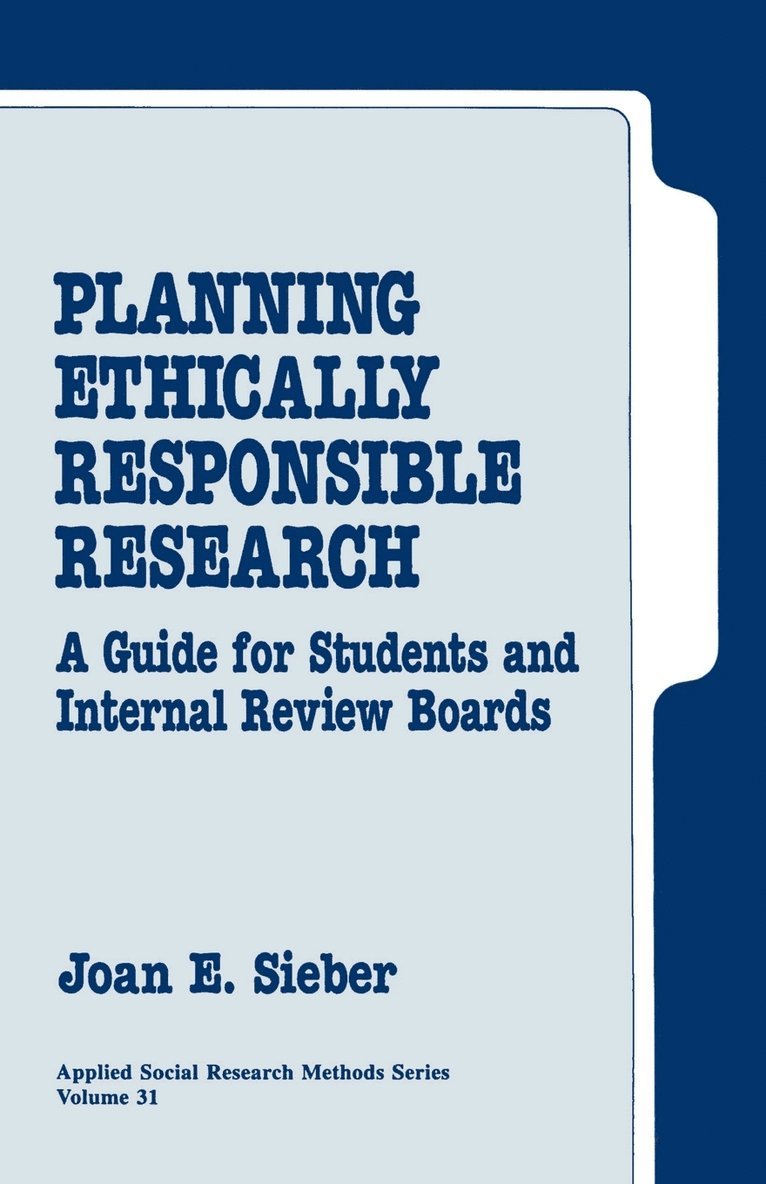
Planning Ethically Responsible Research
A Guide for Students and Internal Review Boards
Häftad, Engelska, 1992
625 kr
Skickas inom 5-8 vardagar
This book provides readers with the practical knowledge needed to plan ethically responsible social and behavioural research. It includes: detailed instructions on development of an effective protocol; methods for handling issues of consent, privacy, confidentiality and deception; ways to assess risk and benefit to optimize research outcomes; and how to respect the needs of vulnerable research populations such as children and the urban poor, including those at risk from HIV infection.
Del 133 - SAGE Focus Editions
Social Research on Children and Adolescents
Ethical Issues
Inbunden, Engelska, 1992
3 083 kr
Skickas inom 3-6 vardagar
A first in its field, this timely volume effectively bridges the gap between the legal requirements that govern research on minors and the research methodology literature in adolescent psychology. The editors skillfully bring together the insights of a group of leading researchers and scholars to address and resolve the following issues: what theory and research on human development can tell researchers about adolescents' vulnerability to several kinds of risk research and how to reduce that vulnerability; what the law says about young peoples' rights to privacy; how the relevant ethical theory or guidelines should apply to minors approaching adulthood; under what circumstances parental consent does not protect children's rights; and how one explains the research process to a young adult. Social Research on Children and Adolescents reaches a wide audience from professionals in development psychology, family studies, and education to researchers in evaluation, research methods, and sociology to students in the above fields; all will undoubtedly benefit from this book. "Social Research on Children and Adolescents is an invaluable resource for researchers who confront questions such as how to assess risks and benefits within a developmental framework, what legal constraints and ethical principles guide research practice, and how to explain research participation to youth who differ greatly in their comprehension of the enterprise. . . . The major strength of this book, aside from its effective integration of developmental theory and research ethics, is the repeated examination of concrete research problems in light of ethical principles and legal requirements. . . . [This book] will be a useful addition to the library of any social scientist who conducts psychological research with children." --Death Studies
Del 133 - SAGE Focus Editions
Social Research on Children and Adolescents
Ethical Issues
Häftad, Engelska, 1991
2 130 kr
Skickas inom 3-6 vardagar
A first in its field, this timely volume effectively bridges the gap between the legal requirements that govern research on minors and the research methodology literature in adolescent psychology. The editors skillfully bring together the insights of a group of leading researchers and scholars to address and resolve the following issues: what theory and research on human development can tell researchers about adolescents' vulnerability to several kinds of risk research and how to reduce that vulnerability; what the law says about young peoples' rights to privacy; how the relevant ethical theory or guidelines should apply to minors approaching adulthood; under what circumstances parental consent does not protect children's rights; and how one explains the research process to a young adult. Social Research on Children and Adolescents reaches a wide audience from professionals in development psychology, family studies, and education to researchers in evaluation, research methods, and sociology to students in the above fields; all will undoubtedly benefit from this book. "Social Research on Children and Adolescents is an invaluable resource for researchers who confront questions such as how to assess risks and benefits within a developmental framework, what legal constraints and ethical principles guide research practice, and how to explain research participation to youth who differ greatly in their comprehension of the enterprise. . . . The major strength of this book, aside from its effective integration of developmental theory and research ethics, is the repeated examination of concrete research problems in light of ethical principles and legal requirements. . . . [This book] will be a useful addition to the library of any social scientist who conducts psychological research with children." --Death Studies
300 kr
Skickas inom 3-6 vardagar
Del 31 - Applied Social Research Methods
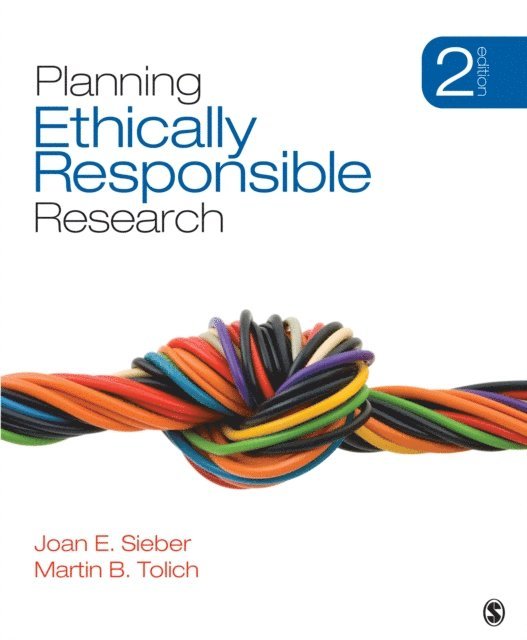
Planning Ethically Responsible Research
Häftad, Engelska, 2013
1 358 kr
Skickas
Extensively revised and updated to serve today's needs for insight and solutions to the most vexing ethical and regulatory problems faced by researchers today, Planning Ethically Responsible Research, Second Edition guides readers through one of the most important aspects of their social or behavioral research: planning ethically responsible research. Authors Joan E. Sieber and Martin B. Tolich offer invaluable, practical guidance to researchers and graduate students to understand ethical concerns within real-life research situations, satisfy federal regulations governing human research, and work with the university's Institutional Review Board (IRB). The book includes an abundance of useful tools: detailed instructions on development of an effective IRB protocol; methods for handling issues of consent, privacy, confidentiality and deception; ways to assess risk and benefit to optimize research outcomes; and how to respect the needs of vulnerable research populations.
521 kr
Skickas inom 10-15 vardagar
Social scientists are unprepared for many of the ethical problems that arise in their research, and for criticisms of their ethics that seem to ignore such cherished scientific values as objectivity and freedom of inquiry. Yet, they possess method ological talent and insight into human nature that can be used to understand and resolve these problems. The contributors to this book demonstrate that criticism of the ethics of social research can stimulate constructive development of meth odology. Both volumes of The Ethics of Social Research were written for and by social scientists to show how ethical dilemmas arise in the day-to-day conduct of social research and how they can be resolved. The topics discussed in this book include ethical problems that arise in experiments and sample surveys; the companion volume deals with the ethical issues involved in fieldwork and in the regulation and publication of research. With candor and humor, many of the contributors describe lessons they have learned about themselves, their methods, and their research participants. Collectively, they illustrate that both humanists and detenninists are likely to encounter ethical dilemmas in their research, albeit different ones, and that a blending of detenninistic and humanistic approaches may be needed to solve these dilemmas. The aim of this book is to assist irwestigators in preparing to meet some of the ethical problems that await the unwary. It offers perspectives, values, and guidelines for anticipating problems and devising solutions.
521 kr
Skickas inom 10-15 vardagar
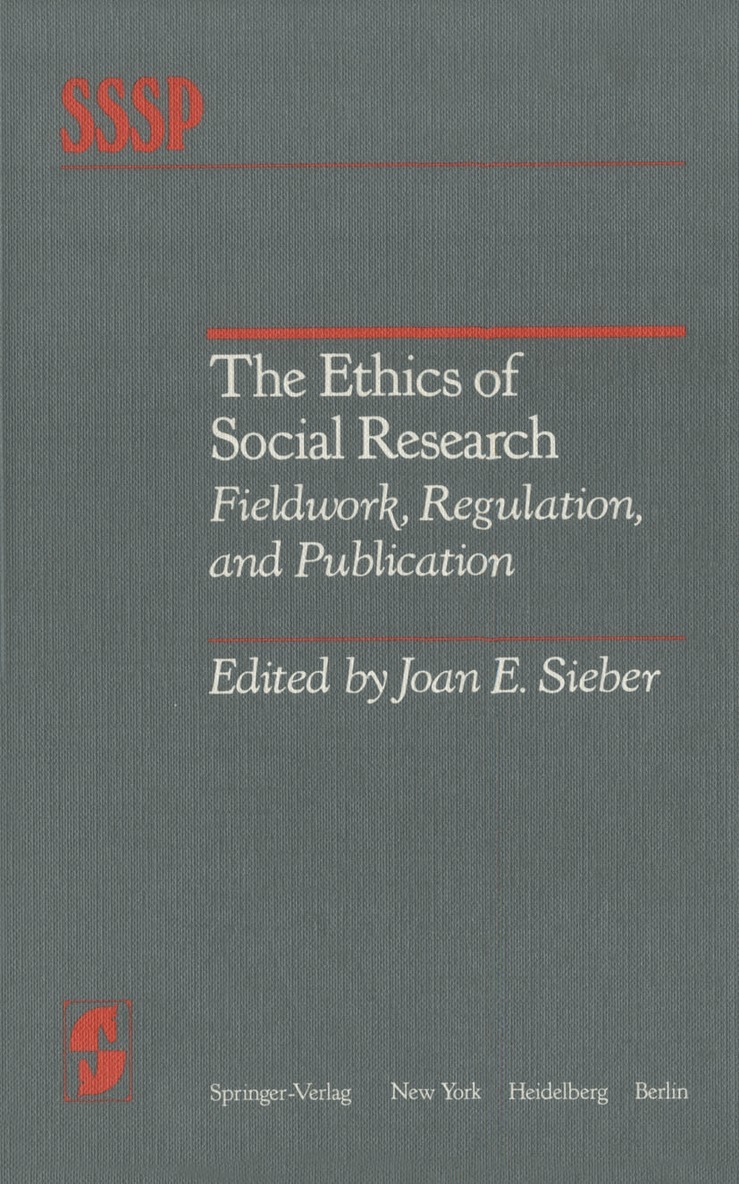
Social scientists are unprepared for many of the ethical problems that arise in their research, and for criticisms of their ethics that seem to ignore such cherished scientific values as objectivity and freedom of inquiry. Yet, they possess method ological talent and insight into human nature that can be used to understand and resolve these problems. The contributors to this book demonstrate that criticism of the ethics of social research can stimulate constructive development of meth odology. Both volumes of The Ethics of Social Research were written for and by social scientists to show how ethical dilemmas arise in the day-to-day conduct of social research and how they can be resolved. The topics discussed in the companion volume include ethical problems that arise in experiments and sample surveys; this book deals with the ethical issues involved in fieldwork and in the regulation and publication of research. With candor and humor, many of the contributors describe lessons they have learned about themselves, their methods, and their research participants. Collectively, they illustrate that both humanists and determinists are likely to encounter ethical dilemmas in their research, albeit different ones, and that a blending of deterministic and humanistic approaches may be needed to solve these dilemmas. The aim of this book is to assist investigators in preparing to meet some of the ethical problems that await the unwary. It offers perspectives, values, and guidelines for anticipating problems and devising solutions.