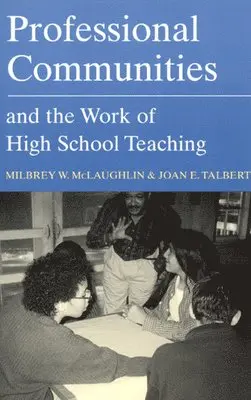
American high schools have never been under more pressure to reform: student populations are more diverse than ever, resources are limited, and teachers are expected to teach to high standards for all students. While many reformers look for change at the state or district level, the authors here argue that the most local contexts—schools, departments, and communities—matter the most to how well teachers perform in the classroom and how satisfied they are professionally. Their findings—based on one of the most extensive research projects ever done on secondary teaching—show that departmental cultures play a crucial role in classroom settings and expectations. In the same school, for example, social studies teachers described their students as "apathetic and unwilling to work," while English teachers described the same students as "bright, interesting, and energetic."With wide-ranging implications for educational practice and policy, this unprecedented look into teacher communities is essential reading for educators, administrators, and all those concerned with U. S. High Schools.
Strategic Inquiry is an innovative model for promoting teacher collaboration around identifying specific “learning gaps” that keep struggling students from succeeding. Gaps may include anything from the proper use of commas and conjunctions to concepts such as “slope” in math. The authors argue that addressing these critical learning gaps can lead to big changes in student success, in teachers’ sense of efficacy, and in school culture. The strategic inquiry model has been implemented in schools and districts around the country, including New York City, where it was rigorously evaluated with impressive results. As Common Core standards raise the bar for student learning ever higher, this proven approach promises to build teachers’ capacity for closing the gap between where struggling students are and where they need to be.
Strategic Inquiry is an innovative model for promoting teacher collaboration around identifying specific “learning gaps” that keep struggling students from succeeding. Gaps may include anything from the proper use of commas and conjunctions to concepts such as “slope” in math. The authors argue that addressing these critical learning gaps can lead to big changes in student success, in teachers’ sense of efficacy, and in school culture. The strategic inquiry model has been implemented in schools and districts around the country, including New York City, where it was rigorously evaluated with impressive results. As Common Core standards raise the bar for student learning ever higher, this proven approach promises to build teachers’ capacity for closing the gap between where struggling students are and where they need to be."
Strategic Inquiry is an innovative model for promoting teacher collaboration around identifying specific “learning gaps” that keep struggling students from succeeding.Gaps may include anything from the proper use of commas and conjunctions to concepts such as “slope” in math. The authors argue that addressing these critical learning gaps can lead to big changes in student success, in teachers’ sense of efficacy, and in school culture.The strategic inquiry model has been implemented in schools and districts around the country, including New York City, where it was rigorously evaluated with impressive results.As Common Core standards raise the bar for student learning ever higher, this proven approach promises to build teachers’ capacity for closing the gap between where struggling students are and where they need to be."
American high schools have never been under more pressure to reform: student populations are more diverse than ever, resources are limited, and teachers are expected to teach to high standards for all students. While many reformers look for change at the state or district level, the authors here argue that the most local contexts—schools, departments, and communities—matter the most to how well teachers perform in the classroom and how satisfied they are professionally. Their findings—based on one of the most extensive research projects ever done on secondary teaching—show that departmental cultures play a crucial role in classroom settings and expectations. In the same school, for example, social studies teachers described their students as "apathetic and unwilling to work," while English teachers described the same students as "bright, interesting, and energetic."With wide-ranging implications for educational practice and policy, this unprecedented look into teacher communities is essential reading for educators, administrators, and all those concerned with U. S. High Schools.