Joan Robinson – författare
Visar alla böcker från författaren Joan Robinson. Handla med fri frakt och snabb leverans.
25 produkter
Economic Philosophy
Häftad, 2021
299 kr
Lägg i varukorg
Joan Robinson (1903-1983) was one of the greatest economists of the twentieth century and a fearless critic of free-market capitalism. A major figure in the controversial ‘Cambridge School’ of economics in the post-war period, she made fundamental contributions to the economics of international …
Economic Philosophy
Inbunden, 2021
2586 kr
Lägg i varukorg
Joan Robinson (1903-1983) was one of the greatest economists of the twentieth century and a fearless critic of free-market capitalism. A major figure in the controversial ‘Cambridge School’ of economics in the post-war period, she made fundamental contributions to the economics of international …
Aspects of Development and Underdevelopment
Av Joan Robinson, Phyllis Deane
Häftad, 1979
586 kr
Lägg i varukorg
Joan Robinson shows how the economic mechanisms that produce wealth in the midst of growing misery can be understood. For this purpose she uses the classical theory of accumulation and the modern theory of international trade and finance. Her simple but penetrating analysis illuminates the problems …
Economic Philosophy
E-bok, 2021
393 kr
Lägg i varukorg
Joan Robinson (1903-1983) was one of the greatest economists of the twentieth century and a fearless critic of free-market capitalism. A major figure in the controversial ‘Cambridge School’ of economics in the post-war period, she made fundamental contributions to the economics of international …
Economic Philosophy
E-bok, 2021
384 kr
Lägg i varukorg
Joan Robinson (1903-1983) was one of the greatest economists of the twentieth century and a fearless critic of free-market capitalism. A major figure in the controversial ‘Cambridge School’ of economics in the post-war period, she made fundamental contributions to the economics of international …
Economics
An Awkward Corner
Inbunden, 2016
1882 kr
Lägg i varukorg
Originally published in 1966, this book has enduring validity. In analysing the economic situation of the late 1960s Joan Robinson discusses the contradictions which arise from the need to readjust the organisation of society to the fantastic capacity for producing material wealth that capital …
Economics
An Awkward Corner
Häftad, 2018
637 kr
Lägg i varukorg
Originally published in 1966, this book has enduring validity. In analysing the economic situation of the late 1960s Joan Robinson discusses the contradictions which arise from the need to readjust the organisation of society to the fantastic capacity for producing material wealth that capital …
Freedom and Necessity
An Introduction to the Study of Society
Inbunden, 2016
2197 kr
Lägg i varukorg
Originally published in 1970, this book examines the origins of social organizations, the development of Robinson Crusoe economies and the conception of property or rightful ownership, as well as the origins of agriculture, race and class. Discussing commerce and the nation state, capitalist …
Freedom and Necessity
An Introduction to the Study of Society
Häftad, 2018
637 kr
Lägg i varukorg
Originally published in 1970, this book examines the origins of social organizations, the development of Robinson Crusoe economies and the conception of property or rightful ownership, as well as the origins of agriculture, race and class. Discussing commerce and the nation state, capitalist …
Freedom and Necessity
An Introduction to the Study of Society
E-bok, 2016
749 kr
Lägg i varukorg
Originally published in 1970, this book examines the origins of social organizations, the development of Robinson Crusoe economies and the conception of property or rightful ownership, as well as the origins of agriculture, race and class. Discussing commerce and the nation state, capitalist …
Freedom and Necessity
An Introduction to the Study of Society
E-bok, 2016
749 kr
Lägg i varukorg
Originally published in 1970, this book examines the origins of social organizations, the development of Robinson Crusoe economies and the conception of property or rightful ownership, as well as the origins of agriculture, race and class. Discussing commerce and the nation state, capitalist …
Economics
An Awkward Corner
E-bok, 2016
733 kr
Lägg i varukorg
Originally published in 1966, this book has enduring validity. In analysing the economic situation of the late 1960s Joan Robinson discusses the contradictions which arise from the need to readjust the organisation of society to the fantastic capacity for producing material wealth that capital …
Economics
An Awkward Corner
E-bok, 2016
733 kr
Lägg i varukorg
Originally published in 1966, this book has enduring validity. In analysing the economic situation of the late 1960s Joan Robinson discusses the contradictions which arise from the need to readjust the organisation of society to the fantastic capacity for producing material wealth that capital …
Contributions to Modern Economics
E-bok, 2014
813 kr
Lägg i varukorg
Contributions to Modern Economics includes contributions to two great intellectual upheavals in economic theory: the Keynesian Revolution and the revival of the classical theory of profits led by Piero Sraffa. The formation of prices in capitalist and socialist economies and of international trade …
Economics of Imperfect Competition
Inbunden, 2026
459 kr
Lägg i varukorg
This classic and highly influential book provides unique insight into ideas of competition and the theory of the firm. First published in 1933, it builds upon the work of Alfred Marshall and Arthur Cecil Pigou and highlights both the real world application and limitations of economics, with a …
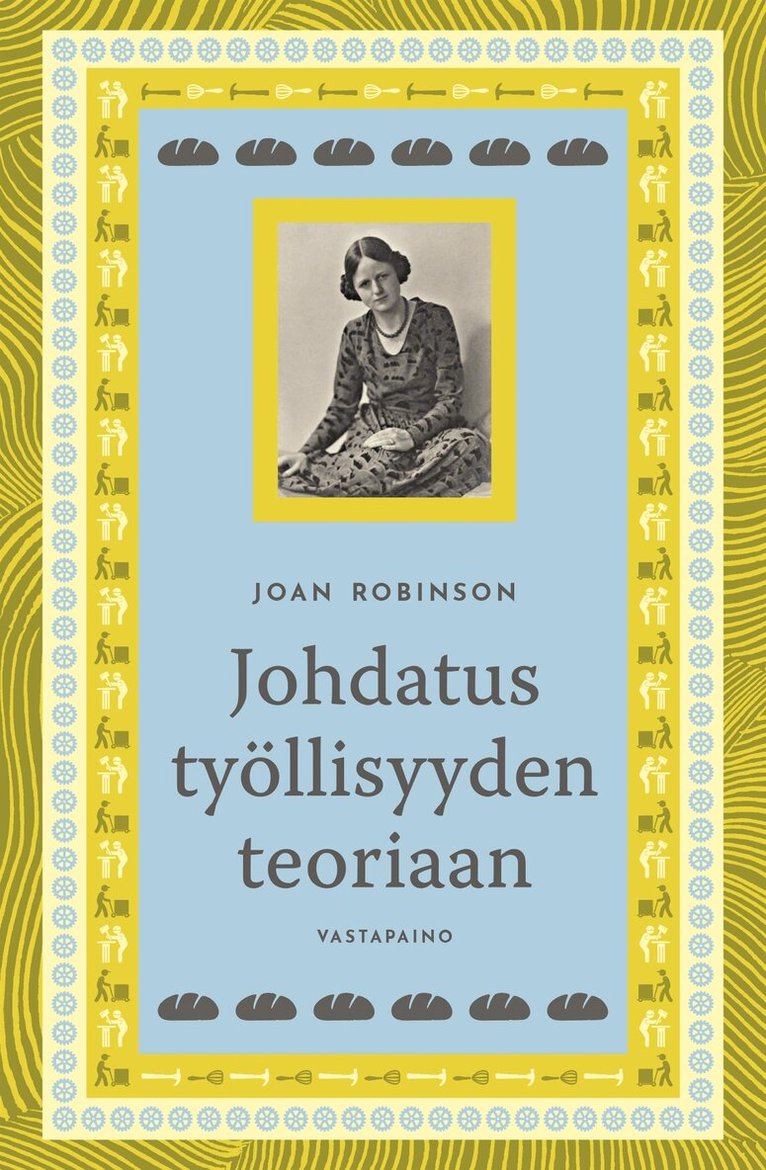
Johdatus työllisyyden teoriaan
Av Jussi Ahokas, Joan Robinson
E-bok, 2023
466 kr
Lägg i varukorg
Joan Robinson (1903-1983) oli brittiläinen ekonomisti, joka toimi professorina Cambridgen yliopistossa. Robinson oli ensimmäisten taloustieteilijöiden joukossa kehittelemässä teoriaa epätäydellisestä kilpailusta ja sen merkityksestä taloudellisessa kehityksessä. Hänet muistetaan myös …