João Seixas – författare
Visar alla böcker från författaren João Seixas. Handla med fri frakt och snabb leverans.
7 produkter
7 produkter
Häftad, Engelska, 2016
512 kr
Skickas inom 10-15 vardagar
The concept of governance has evolved into one of the most important but also controversial concepts in urban politics. While it encourages co-operation, participation and collective construction, at the same time, it has brought about new forms of public demission, oligarchic regimes and less local democracy. The dilemmas accompanying these changes are particularly relevant when observing the cities of Southern Europe, whose socio-cultural specificities very much structure local political and policy materialisations. Bringing together a team of leading scholars from across the social sciences, this volume examines the issues of urban governance in the Southern European context. Illustrated by case studies of several main cities and metropoles on the North Mediterranean coast, it introduces and critically analyses the latest theories and approaches to urban governance. It questions how the 'real' or socio-cultural notion of city seems to have been separated from that of the 'political' city and explores how more integrated socio-political forms might be developed. It looks at current structures, dynamics and cultures of governance in urban development and questions whether they are well adapted to new realities and challenges or whether there are significant imbalances causing limited or fragmented political-administrative visions. By considering both the long Mediterranean history along with the recent but enduring global economic and political developments, this book argues that Southern European cities will have to depend greatly upon its own socio-cultural networks, dynamics and cosmopolitan evolution, making the most of the region's characteristic urban strengths, as trading hubs, with rich hinterlands and large and varied population.
E-bok
Engelska, 2016584 kr
Läs direkt efter köp
The concept of governance has evolved into one of the most important but also controversial concepts in urban politics. While it encourages co-operation, participation and collective construction, at the same time, it has brought about new forms of public demission, oligarchic regimes and less local democracy. The dilemmas accompanying these changes are particularly relevant when observing the cities of Southern Europe, whose socio-cultural specificities very much structure local political and policy materialisations. Bringing together a team of leading scholars from across the social sciences, this volume examines the issues of urban governance in the Southern European context. Illustrated by case studies of several main cities and metropoles on the North Mediterranean coast, it introduces and critically analyses the latest theories and approaches to urban governance. It questions how the ''real'' or socio-cultural notion of city seems to have been separated from that of the ''political'' city and explores how more integrated socio-political forms might be developed. It looks at current structures, dynamics and cultures of governance in urban development and questions whether they are well adapted to new realities and challenges or whether there are significant imbalances causing limited or fragmented political-administrative visions. By considering both the long Mediterranean history along with the recent but enduring global economic and political developments, this book argues that Southern European cities will have to depend greatly upon its own socio-cultural networks, dynamics and cosmopolitan evolution, making the most of the region''s characteristic urban strengths, as trading hubs, with rich hinterlands and large and varied population.
E-bok
PDF, Engelska, 2016584 kr
Läs direkt efter köp
The concept of governance has evolved into one of the most important but also controversial concepts in urban politics. While it encourages co-operation, participation and collective construction, at the same time, it has brought about new forms of public demission, oligarchic regimes and less local democracy. The dilemmas accompanying these changes are particularly relevant when observing the cities of Southern Europe, whose socio-cultural specificities very much structure local political and policy materialisations. Bringing together a team of leading scholars from across the social sciences, this volume examines the issues of urban governance in the Southern European context. Illustrated by case studies of several main cities and metropoles on the North Mediterranean coast, it introduces and critically analyses the latest theories and approaches to urban governance. It questions how the ''real'' or socio-cultural notion of city seems to have been separated from that of the ''political'' city and explores how more integrated socio-political forms might be developed. It looks at current structures, dynamics and cultures of governance in urban development and questions whether they are well adapted to new realities and challenges or whether there are significant imbalances causing limited or fragmented political-administrative visions. By considering both the long Mediterranean history along with the recent but enduring global economic and political developments, this book argues that Southern European cities will have to depend greatly upon its own socio-cultural networks, dynamics and cosmopolitan evolution, making the most of the region''s characteristic urban strengths, as trading hubs, with rich hinterlands and large and varied population.
Inbunden, Engelska, 2012
1 481 kr
Skickas inom 10-15 vardagar
The concept of governance has evolved into one of the most important but also controversial concepts in urban politics. While it encourages co-operation, participation and collective construction, at the same time, it has brought about new forms of public demission, oligarchic regimes and less local democracy. The dilemmas accompanying these changes are particularly relevant when observing the cities of Southern Europe, whose socio-cultural specificities very much structure local political and policy materialisations. Bringing together a team of leading scholars from across the social sciences, this volume examines the issues of urban governance in the Southern European context. Illustrated by case studies of several main cities and metropoles on the North Mediterranean coast, it introduces and critically analyses the latest theories and approaches to urban governance. It questions how the 'real' or socio-cultural notion of city seems to have been separated from that of the 'political' city and explores how more integrated socio-political forms might be developed. It looks at current structures, dynamics and cultures of governance in urban development and questions whether they are well adapted to new realities and challenges or whether there are significant imbalances causing limited or fragmented political-administrative visions. By considering both the long Mediterranean history along with the recent but enduring global economic and political developments, this book argues that Southern European cities will have to depend greatly upon its own socio-cultural networks, dynamics and cosmopolitan evolution, making the most of the region's characteristic urban strengths, as trading hubs, with rich hinterlands and large and varied population.
E-bok
Spanska, 2015215 kr
Läs direkt efter köp
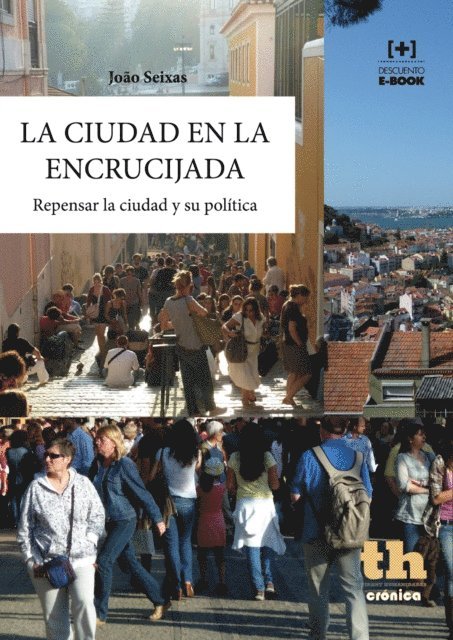
La ciudad se encuentra en una encrucijada. Es palco, escenario y actor de gran parte de nuestros actuales dilemas y posibilidades. La mayoría de las ciudades son hoy meta o incluso hiperciudades, extendidas sus influencias por vastos territorios relacionales y por las variadas escalas de cotidianeidad, de sufrimientos y de expresiones cívicas. En formas mucho más complejas pero también mucho más fascinantes de comprender y gobernarlas; más allá de viejas murallas o divisiones administrativas; de estructuras políticas y socioprofesionales corporativas; de lógicas de gobernación basadas en determinismos sencillos, en sectorialismos o en relaciones directas de causa-efecto. Entre los sesgos de la Democracia y las dudas del progreso nuevas y magníficas oportunidades de desarrollo, de justicia y de inclusión, de calidad de vida, de realización cívica? se formarán y expandirán. ¿Cómo apoyarlas y consolidarlas? Con inteligencia, estrategia y compromiso. Defendiendo principios sólidos, como el derecho a la ciudad, al hábitat, a la movilidad, a la inclusión social, al consumo sostenible, al emprendedurismo local, a la participación. Y a una ciudadanía activa, responsable y atenta. Inteligencia global, pero mucha inteligencia local. Inteligencia urbana, por tanto. Como escribió Jorge Luis Borges la ciudad nos impone el deber terrible de la esperanza.
Inbunden, Engelska, 1997
2 842 kr
Tillfälligt slut
This volume discusses the most recent results on multiparticle production. These include the differences between quark and gluon jets from LEP at CERN, the search for the disoriented chiral condensate at Fermilab, the existence (or not) of the quark-gluon plasma and the large rapidity gaps in Hera physics. In many different experimental situations, the subject of multiparticle dynamics remains alive.Main speakers: J Antos, B J May, J D Bjorken, P Sondereger, I Tserruya, R C Hwa, R Ugoccioni, A Giovannini, C Grupen, A de Angelis, G Thompson, J Kwiecinski, B Andersson.
Inbunden, Engelska, 2001
2 087 kr
Tillfälligt slut
The XVIII Lisbon Autumn School brought together physicists from different areas, ranging from QCD to condensed matter. This subject will be of ever-growing importance in the coming years. The topics covered are: Anomalies, Physical Charges, Chiral Symmetry, Vortices (Superconductivity, Solitons, Kosterlitz-Thouless Transitions), Non-trivial Topology on the Lattice, Confinement (Wilson Loops and Strings, Instantons, Abelian Higgs Model, Dual QCD).