Jocelyn Alexander - Böcker
Visar alla böcker från författaren Jocelyn Alexander. Handla med fri frakt och snabb leverans.
5 produkter
5 produkter
2 166 kr
Skickas inom 10-15 vardagar
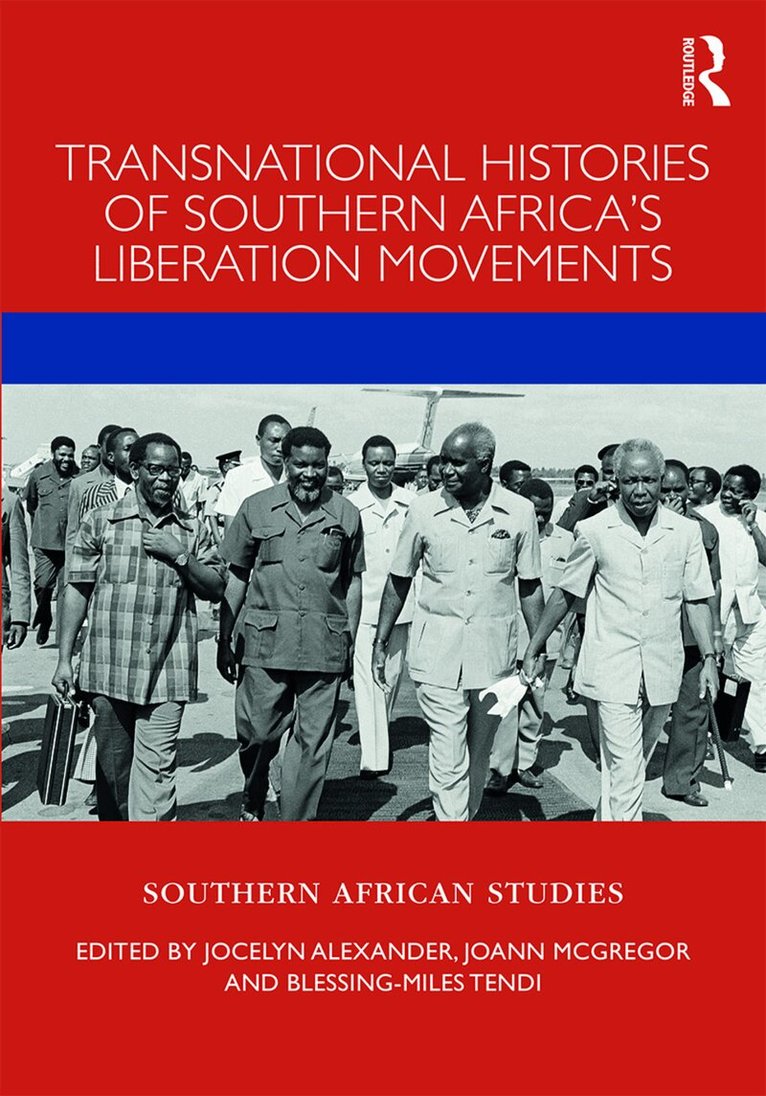
Transnational Histories of Southern Africa’s Liberation Movements offers new perspectives on southern Africa’s wars of national liberation, drawing on extensive oral historical and archival research. Assuming neither the primacy of nationalist loyalties as they exist today nor any single path to liberation, the book unpicks any notion of a straightforward imposition of Cold War ideologies or strategic interests on liberation wars. This approach adds new dimensions to the rich literatures on the Global Cold War and on solidarity movements. The contributors trace the ways that ideas and practices were made, adopted, and circulated through time and space through a focus on African soldiers, politicians and diplomats. The book also asks what motivated the men and women who crossed borders to join liberation movements, how Cold War influences were acted upon, interpreted and used, and why certain moments, venues and relations took on exaggerated importance. The connections among liberation movements, between them and their hosts, and across an extraordinarily diverse set of external actors reveal surprising exchanges and lasting legacies that have too often been obscured by the assertion of monolithic national histories. Tracing an extraordinarily diverse set of interactions and exchanges, Transnational Histories of Southern Africa’s Liberation Movements will be of great interest to scholars of Southern Africa, Transnational History, the Cold War and African Politics. The chapters were originally published as a special issue of the Journal of Southern African Studies.
2 170 kr
Skickas inom 10-15 vardagar
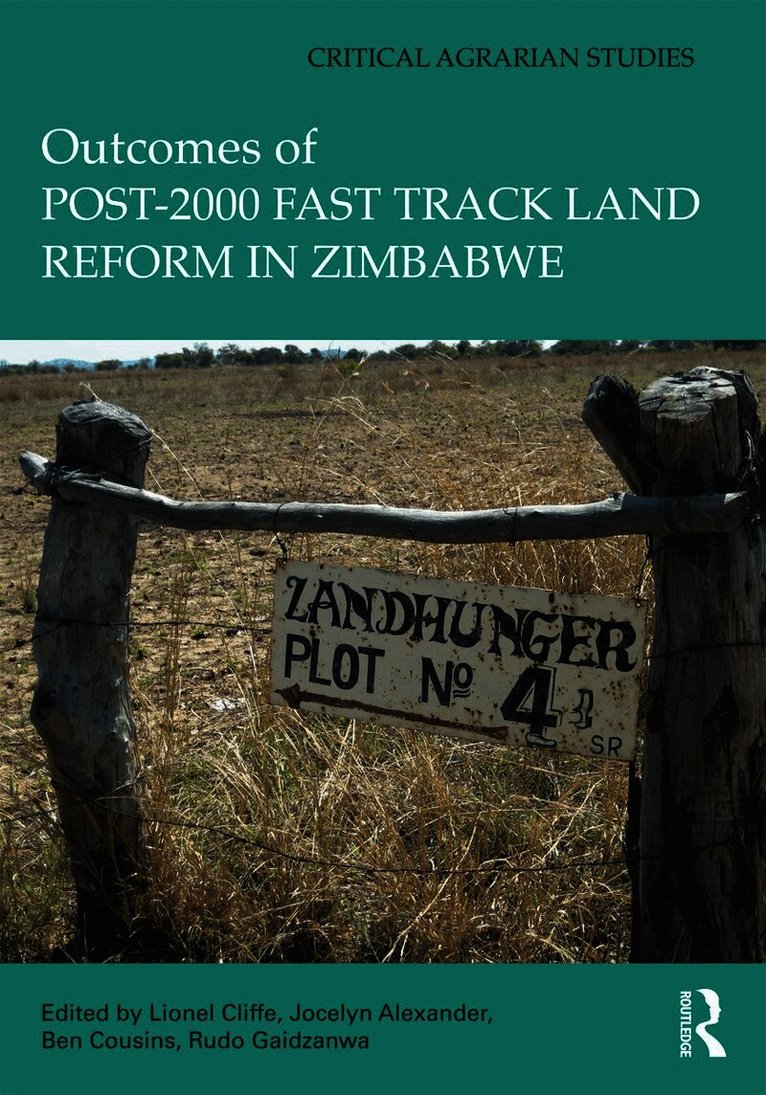
The struggle over land has been the central issue in Zimbabwe ever since white settlers began to carve out large farms over a century ago. Their monopolisation of the better-watered half of the land was the focus of the African war of liberation war, and was partially modified following Independence in 1980. A dramatic further episode in this history was launched at the start of the last decade with the occupation of many farms by groups of African veterans of the liberation struggle and their supporters, which was then institutionalised by legislation to take over most of the large commercial farms for sub-division.Sustained fieldwork over the intervening years, by teams of scholars and experts, and by individual researchers is now generating an array of evidence-based findings of the outcomes: how land was acquired and disposed of; how it has been used; how far new farmers have carved out new livelihoods and viable new communities; the major political and economic problems they and other stakeholders such as former farm-workers, commercial farmers, and the overall rural society now face.This book will be an essential starting place for analysts, policy-makers, historians and activists seeking to understand what has happened and to spotlight the key issues for the next decade.This book was published as a special issue of the Journal of Peasant Studies.
Violence and Memory
One Hundred Years in the 'Dark Forests' of Matabeleland, Zimbabwe
Häftad, Engelska, 2000
352 kr
Skickas inom 10-15 vardagar
The long-view on more recent events in Zimbabwe's history.Violence has powerfully shaped the history of Matabeleland from the 1890s to the 1980s, and silence has surrounded the history of this region of Zimbabwe, excluding it from national memory. This text aims to break the silence andredress the imbalance of Zimbabwe's national history.North America: Heinemann; Zimbabwe: Weaver Press
640 kr
Skickas inom 10-15 vardagar
Transnational Histories of Southern Africa’s Liberation Movements offers new perspectives on southern Africa’s wars of national liberation, drawing on extensive oral historical and archival research. Assuming neither the primacy of nationalist loyalties as they exist today nor any single path to liberation, the book unpicks any notion of a straightforward imposition of Cold War ideologies or strategic interests on liberation wars. This approach adds new dimensions to the rich literatures on the Global Cold War and on solidarity movements. The contributors trace the ways that ideas and practices were made, adopted, and circulated through time and space through a focus on African soldiers, politicians and diplomats. The book also asks what motivated the men and women who crossed borders to join liberation movements, how Cold War influences were acted upon, interpreted and used, and why certain moments, venues and relations took on exaggerated importance. The connections among liberation movements, between them and their hosts, and across an extraordinarily diverse set of external actors reveal surprising exchanges and lasting legacies that have too often been obscured by the assertion of monolithic national histories. Tracing an extraordinarily diverse set of interactions and exchanges, Transnational Histories of Southern Africa’s Liberation Movements will be of great interest to scholars of Southern Africa, Transnational History, the Cold War and African Politics. The chapters were originally published as a special issue of the Journal of Southern African Studies.
676 kr
Skickas inom 10-15 vardagar
The struggle over land has been the central issue in Zimbabwe ever since white settlers began to carve out large farms over a century ago. Their monopolisation of the better-watered half of the land was the focus of the African war of liberation war, and was partially modified following Independence in 1980. A dramatic further episode in this history was launched at the start of the last decade with the occupation of many farms by groups of African veterans of the liberation struggle and their supporters, which was then institutionalised by legislation to take over most of the large commercial farms for sub-division.Sustained fieldwork over the intervening years, by teams of scholars and experts, and by individual researchers is now generating an array of evidence-based findings of the outcomes: how land was acquired and disposed of; how it has been used; how far new farmers have carved out new livelihoods and viable new communities; the major political and economic problems they and other stakeholders such as former farm-workers, commercial farmers, and the overall rural society now face.This book will be an essential starting place for analysts, policy-makers, historians and activists seeking to understand what has happened and to spotlight the key issues for the next decade.This book was published as a special issue of the Journal of Peasant Studies.