Jock Macleod – författare
Visar alla böcker från författaren Jock Macleod. Handla med fri frakt och snabb leverans.
4 produkter
4 produkter
Inbunden, Engelska, 2025
1 370 kr
Skickas inom 5-8 vardagar
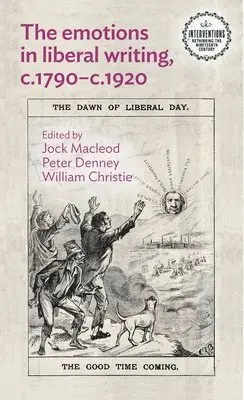
This volume from a selection of distinguished international scholars is the first of its kind to explore in depth the emotional dimensions of liberal writing in Britain over the long nineteenth century. Addressing liberal writing in the public sphere rather than high political or parliamentary liberalism, it comprises a clear, context-setting introduction and eleven substantive chapters. The chapters analyse key texts and figures from the 1790s through to the 1920s and offer several different approaches to the central concern with the emotions and liberalism. These include examining the place of the emotions in the ‘good life’; the social and political function of the emotions; emotional rhetoric in liberal writing; and liberal theories of the emotions.An electronic edition of chapter 11 is freely available under a Creative Commons (CC BY-NC-ND) licence, and can be found on our platform manchesterhive here: https://www.manchesterhive.com/display/9781526185594/9781526185594.00020.xml
Inbunden, Engelska, 2020
1 305 kr
Skickas inom 10-15 vardagar
This book comprises eleven essays by leading scholars of early nineteenth-century British literature and periodical culture. The collection addresses the many and varied links between politics and the emotions in Romantic periodicals, from the revolutionary decade of the 1790s, to the 1832 Reform Bill. In so doing, it deepens our understanding of the often conflicted relations between politics and feelings, and raises questions relevant to contemporary debates on affect studies and their relation to political criticism. The respective chapters explore both the politics of emotion and the emotional register of political discussion in radical, reformist and conservative periodicals. They are arranged chronologically, covering periodicals from Pigs’ Meat to Blackwood’s Edinburgh Magazine and the Spectator. Recurring themes include the contested place of emotion in radical political discourse; the role of the periodical in mediating action and performance; the changing affective frameworks of cultural politics (especially concerning gender and nation), and the shifting terrain of what constitutes appropriate emotion in public political discourse.
E-bok
Engelska, 20191 664 kr
Läs direkt efter köp
This book comprises eleven essays by leading scholars of early nineteenth-century British literature and periodical culture. The collection addresses the many and varied links between politics and the emotions in Romantic periodicals, from the revolutionary decade of the 1790s, to the 1832 Reform Bill. In so doing, it deepens our understanding of the often conflicted relations between politics and feelings, and raises questions relevant to contemporary debates on affect studies and their relation to political criticism.
The respective chapters explore both the politics of emotion and the emotional register of political discussion in radical, reformist and conservative periodicals. They are arranged chronologically, covering periodicals from Pigs’ Meat to Blackwood’s Edinburgh Magazine and the Spectator. Recurring themes include the contested place of emotion in radical political discourse; the role of the periodical in mediating action and performance; the changing affective frameworks of cultural politics (especially concerning gender and nation), and the shifting terrain of what constitutes appropriate emotion in public political discourse.Häftad, Engelska, 2021
1 305 kr
Skickas inom 10-15 vardagar
This book comprises eleven essays by leading scholars of early nineteenth-century British literature and periodical culture. The collection addresses the many and varied links between politics and the emotions in Romantic periodicals, from the revolutionary decade of the 1790s, to the 1832 Reform Bill. In so doing, it deepens our understanding of the often conflicted relations between politics and feelings, and raises questions relevant to contemporary debates on affect studies and their relation to political criticism. The respective chapters explore both the politics of emotion and the emotional register of political discussion in radical, reformist and conservative periodicals. They are arranged chronologically, covering periodicals from Pigs’ Meat to Blackwood’s Edinburgh Magazine and the Spectator. Recurring themes include the contested place of emotion in radical political discourse; the role of the periodical in mediating action and performance; the changing affective frameworks of cultural politics (especially concerning gender and nation), and the shifting terrain of what constitutes appropriate emotion in public political discourse.