
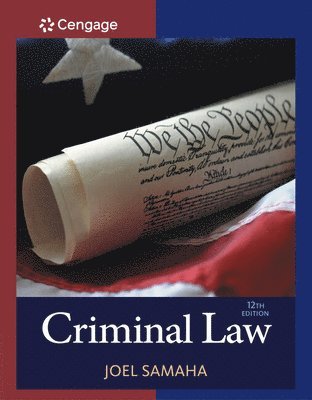
Clear and easy to understand, Joel Samaha's best-selling text helps you apply criminal law's enduring foundations and principles to fascinating, current court cases and specific crimes. With a blend of case excerpts and author commentary, the author guides you as you sharpen your critical thinking and legal analysis skills. As you progress through the book, you'll learn about the general principles of criminal liability and its defenses, as well as the elements of crimes against persons, property, society, and the state. You'll also see these principles at work in the cases and crimes that illustrate them. Featuring the latest topics and court cases, real-world illustrations, and study tools to maximize your course success (including MindTap), CRIMINAL LAW, 12th Edition will serve as a valuable reference long after you graduate. In fact, former users report that this is the only book they keep, and those who go on to law school say that it helps them in their criminal law course.
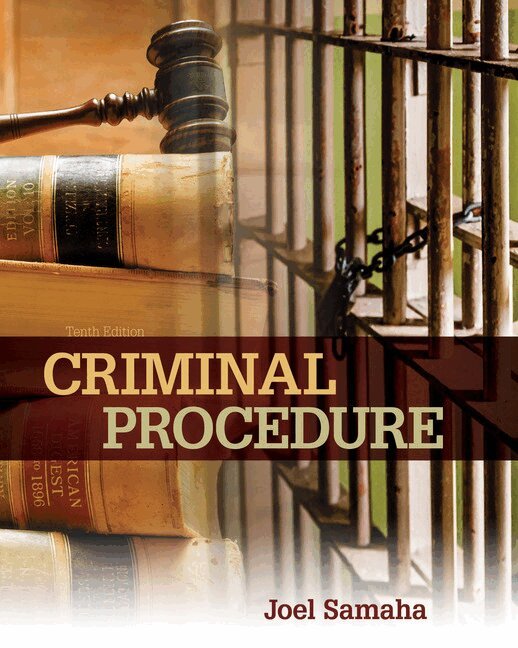
This straightforward introduction to criminal procedure combines case excerpts with clear, detailed legal discussion and analysis to equip you with a solid understanding of the field. Widely acclaimed author Dr. Joel Samaha is known for his ability to help readers grasp the complexities of law by clearly and carefully presenting all sides of an issue. CRIMINAL PROCEDURE covers the whole criminal process -- from crime prevention and investigation by law enforcement to court procedures before trial to sentencing and review by appeals courts. You'll read about criminal procedure in the digital age, law enforcement crowd control and the First Amendment, police body cams and citizen smartphone videos of police encounters, and trial judge review of search warrant applications based on digital sources such as smartphones. Other topics include the political nature of the U.S. Supreme Court and developments in forensic evidence acquisition, enhanced interrogation, and immigration law.
Law and Order in Historical Perspective: The Case of Elizabethan Essex presents a brief description of what happened in the 16th-century criminal justice system from the commission of a felony until the disposition of the case occurred. This book discusses how criminal law actually operated in a community and how the system of the criminal justice was administered. Organized into two parts encompassing four chapters, this book begins with an overview of the statistics of crime and criminals in 16th-century England. This text then examines the law-enforcement machinery in Essex. Other chapters consider how officials view law, which determines the procedures they follow in executing it. This book discusses as well the institutional effectiveness of courts. The final chapter deals with reconstructing the system of criminal justice in Elizabethan Essex. This book is a valuable resource for historians. Students and readers who are connected professionally to the law will also find this book useful.
Clear and easy to understand, Joel Samaha's best-selling text helps you apply criminal law's enduring foundations and principles to fascinating, current court cases and specific crimes. With a blend of case excerpts and author commentary, the author guides you as you sharpen your critical thinking and legal analysis skills. As you progress through the book, you'll learn about the general principles of criminal liability and its defenses, as well as the elements of crimes against persons, property, society, and the state. You'll also see these principles at work in the cases and crimes that illustrate them. Featuring the latest topics and court cases, real-world illustrations, and study tools to maximize your course success (including MindTap), CRIMINAL LAW, 12th Edition will serve as a valuable reference long after you graduate. In fact, former users report that this is the only book they keep, and those who go on to law school say that it helps them in their criminal law course.
This straightforward introduction to criminal procedure combines case excerpts with clear, detailed legal discussion and analysis to equip you with a solid understanding of the field. Widely acclaimed author Dr. Joel Samaha is known for his ability to help readers grasp the complexities of law by clearly and carefully presenting all sides of an issue. CRIMINAL PROCEDURE covers the whole criminal process -- from crime prevention and investigation by law enforcement to court procedures before trial to sentencing and review by appeals courts. You'll read about criminal procedure in the digital age, law enforcement crowd control and the First Amendment, police body cams and citizen smartphone videos of police encounters, and trial judge review of search warrant applications based on digital sources such as smartphones. Other topics include the political nature of the U.S. Supreme Court and developments in forensic evidence acquisition, enhanced interrogation, and immigration law.
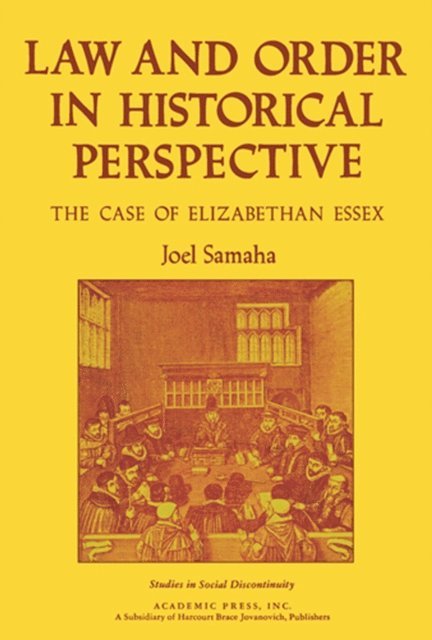
Law and Order in Historical Perspective: The Case of Elizabethan Essex presents a brief description of what happened in the 16th-century criminal justice system from the commission of a felony until the disposition of the case occurred. This book discusses how criminal law actually operated in a community and how the system of the criminal justice was administered. Organized into two parts encompassing four chapters, this book begins with an overview of the statistics of crime and criminals in 16th-century England. This text then examines the law-enforcement machinery in Essex. Other chapters consider how officials view law, which determines the procedures they follow in executing it. This book discusses as well the institutional effectiveness of courts. The final chapter deals with reconstructing the system of criminal justice in Elizabethan Essex. This book is a valuable resource for historians. Students and readers who are connected professionally to the law will also find this book useful.